
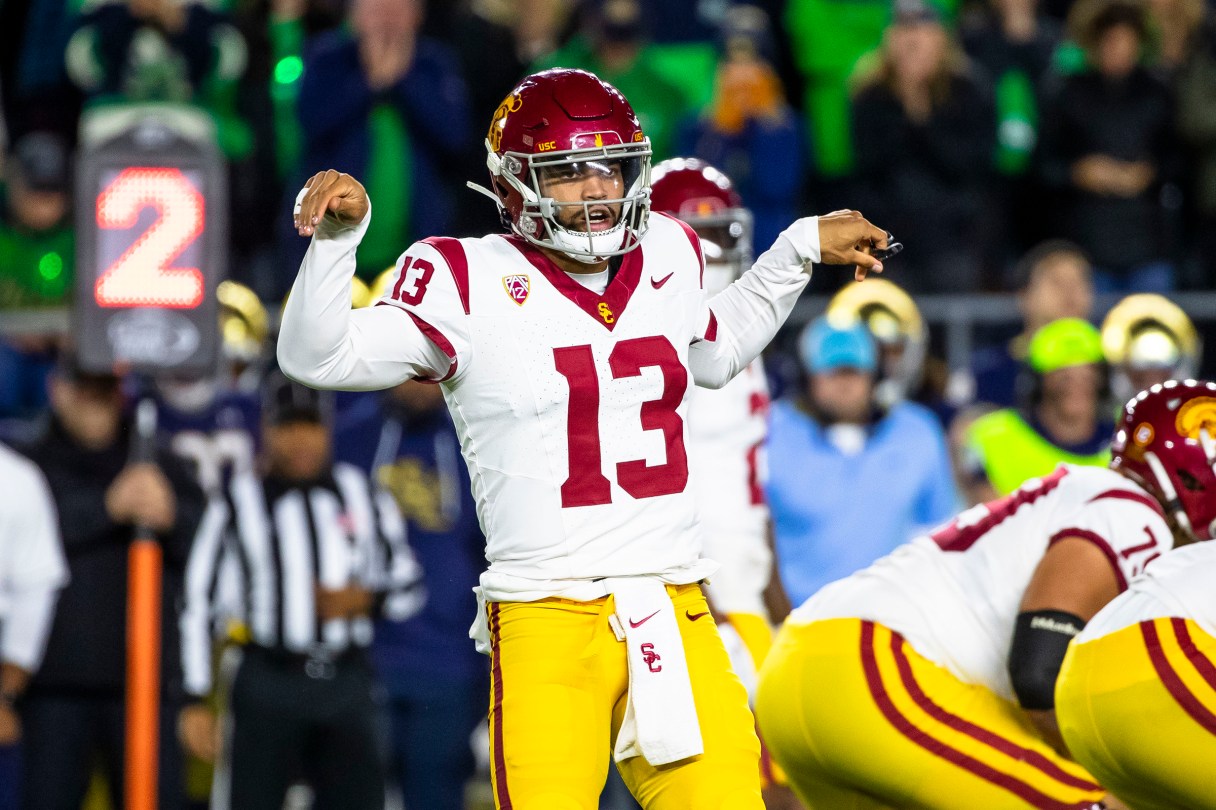
The NCAA is considering allowing head coaches to have in-game communication with one player on offense and one on defense as part of a series of proposed rule changes in football.
Coaches and athletic directors have long advocated for the NCAA to allow electronic communication from the sideline, as in the NFL, instead of forcing coaches to use hand signals or poster boards to call plays. If implemented, Friday’s recommendation by the association’s committee that oversees football rules could potentially prevent teams from stealing opponents’ signs.
While in-game sign stealing is permitted, along with studying video of past games, in-person scouting of future opponents and recording footage of opponents’ sideline activities are banned. A Michigan football staffer was accused last season of engaging in those banned activities, resulting in a suspension for Wolverines head coach Jim Harbaugh from the Big Ten Conference.
The recommendations by the rules committee need to be approved by the NCAA Playing Rules Oversight Panel, which is scheduled to discuss football proposals on April 18.
In games involving Football Bowl Subdivision teams, each team would have the option to use coach-to-player communications through the helmet to one player on the field. The communication would be turned off with 15 seconds remaining on the play clock or when the ball is snapped, whichever comes first.
The rules committee also supports a timeout when the game clock reaches two minutes at the end of each half, another NFL rule.
Committee members also supported the option of allowing teams to use tablets to view in-game video. The video could include the broadcast feed and camera angles from the coach’s sideline and coach’s end zone, but the inclusion of any data or analytics would be limited.
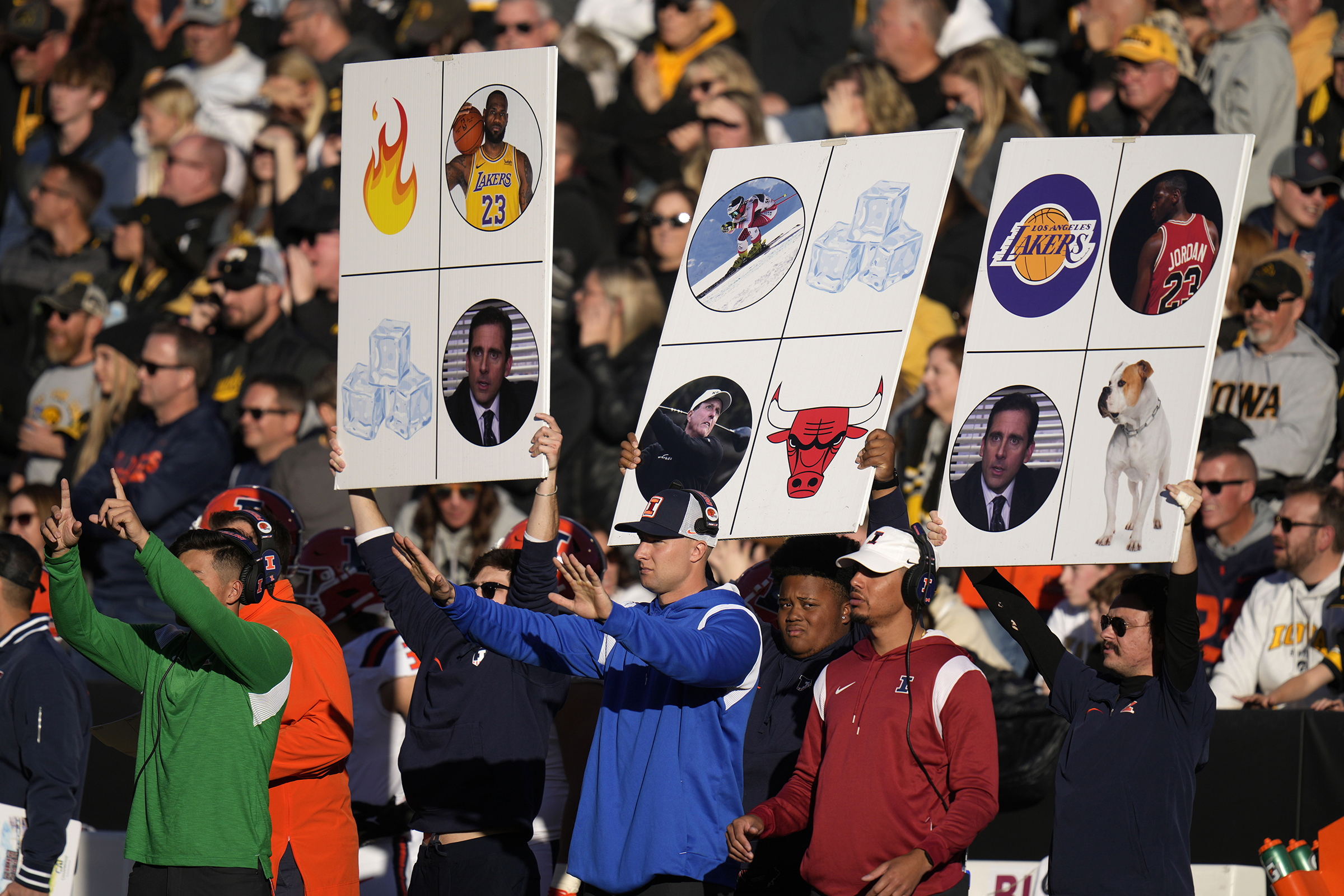 AP photo by Charlie Neibergall / Illinois football coaches use hand motions and posters to signal to their players during a Big Ten game at Iowa on Nov. 18.