
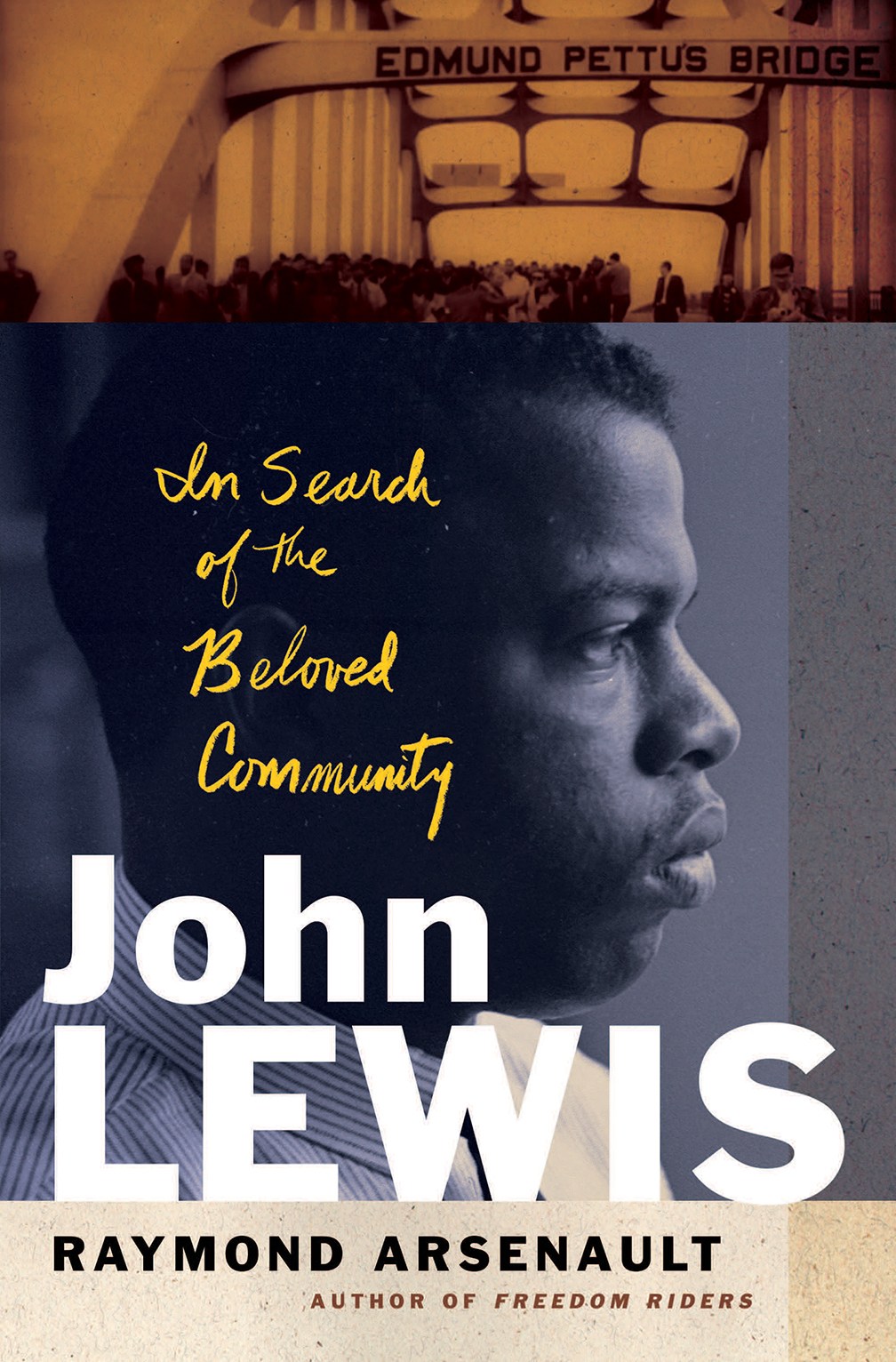
“JOHN LEWIS: IN SEARCH OF THE BELOVED COMMUNITY” by Raymond Arsenault (Yale University Press, 588 pages, $35).
With “John Lewis: In Search of the Beloved Community,” Raymond Arsenault, professor emeritus of Southern history at the University of South Florida, has produced the first comprehensive biography of the famed civil-rights leader and longtime member of the U.S. House of Representatives.
Emerging from a poor farming community outside Troy, Alabama, Lewis rose to prominence with the 1960 Nashville lunch counter sit-ins and dozens of protest events that followed, including the Freedom Rides and the infamous “Bloody Sunday,” when he received a near fatal beating on the Edmund Pettus Bridge in Selma, Alabama. Later, during more than 30 years as the representative from Georgia’s 5th district, Lewis became known as the “Conscience of Congress,” and he was still engaging in the nonviolent resistance he called “good trouble” just six weeks before his death in 2020 at age 80.
Lewis’ first formal act of protest occurred when he was 20 and attending the American Baptist Theological Seminary in Nashville. Influenced by radio sermons from Martin Luther King Jr., Lewis helped organize the first student-led sit-ins to desegregate lunch counters in Nashville department stores. Arsenault calls the sit-in on Feb. 27, 1960, which led to mass arrests, a “turning point for Nashville’s Black community, much of which rallied behind the arrested students.” As one of 82 arrested that day, Lewis was shoved into a crowded paddy wagon. “Now I knew. Now I had crossed over,” Arsenault quotes Lewis as recalling later.
In the spring of 1960, “the movement in Nashville, as in other centers of activism, was still in infancy, and no one knew where it was headed. But [Lewis] knew he wanted to be a part of this unfolding story of liberation, not just as a stage of his college-age transition to adulthood but as a lifelong commitment.” With that commitment, Lewis began six decades of the “good trouble” that fills the remainder of the book. In scenes that are vivid yet scrupulously researched — as attested in over 50 pages of chapter notes — Arsenault details the various organizations, personalities, triumphs and setbacks Lewis encountered during key moments of the civil-rights movement.