
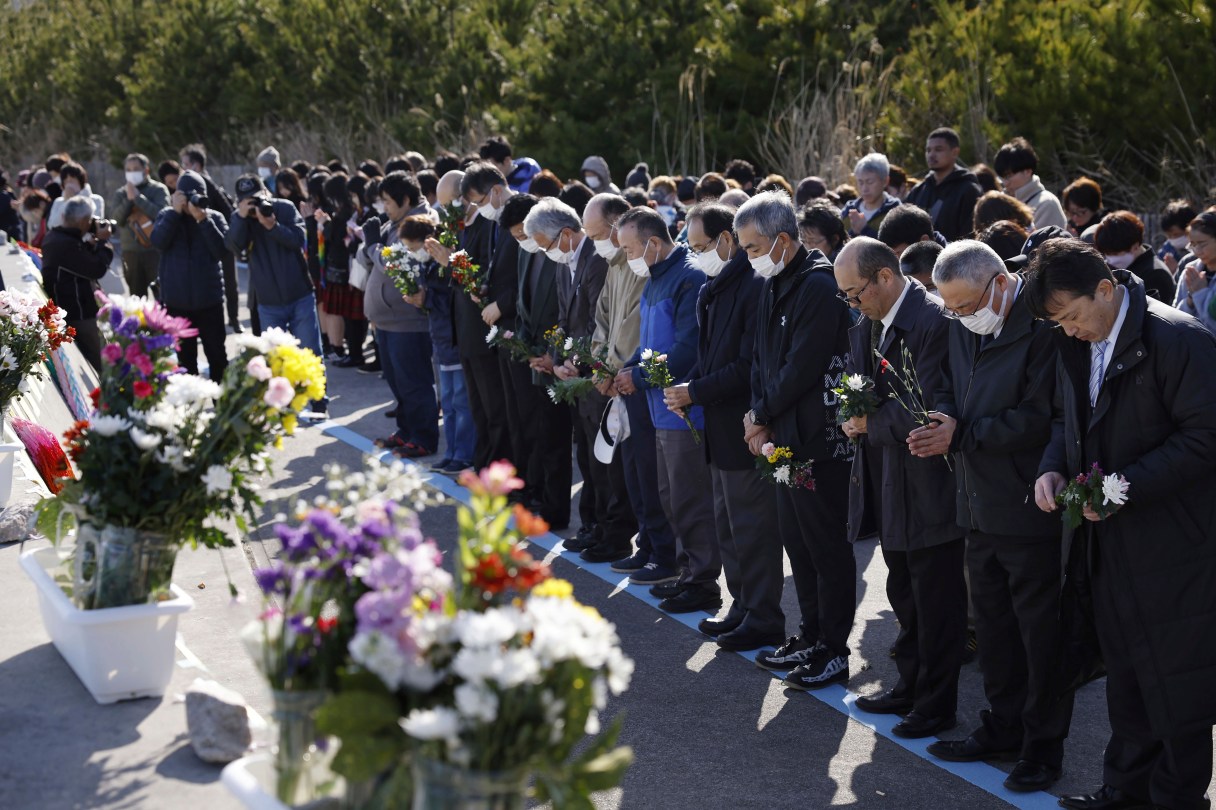
TOKYO (AP) — Japan on Monday marked 13 years since a massive earthquake and tsunami hit the country’s northern coasts. Nearly 20,000 people died, whole towns were wiped out and the Fukushima Daiichi nuclear power plant was destroyed, creating deep fears of radiation that linger today. As the nation observes the anniversary, the AP explains what is happening now at the plant and in neighboring areas.
WHAT HAPPENED 13 YEARS AGO?
A magnitude 9.0 earthquake struck on March 11, 2011, causing a tsunami that battered northern coastal towns in Iwate, Miyagi and Fukushima prefectures. The tsunami, which topped 15 meters (50 feet) in some areas, slammed into the nuclear plant, destroying its power supply and fuel cooling systems, and causing meltdowns at reactors No. 1, 2 and 3.
Hydrogen explosions caused massive radiation leaks and contamination in the area.
The operator, Tokyo Electric Power Company Holdings, says that the tsunami couldn’t have been anticipated. Government and independent investigations and some court decisions have said the accident was the result of human error, safety negligence, lax oversight by regulators and collusion.