
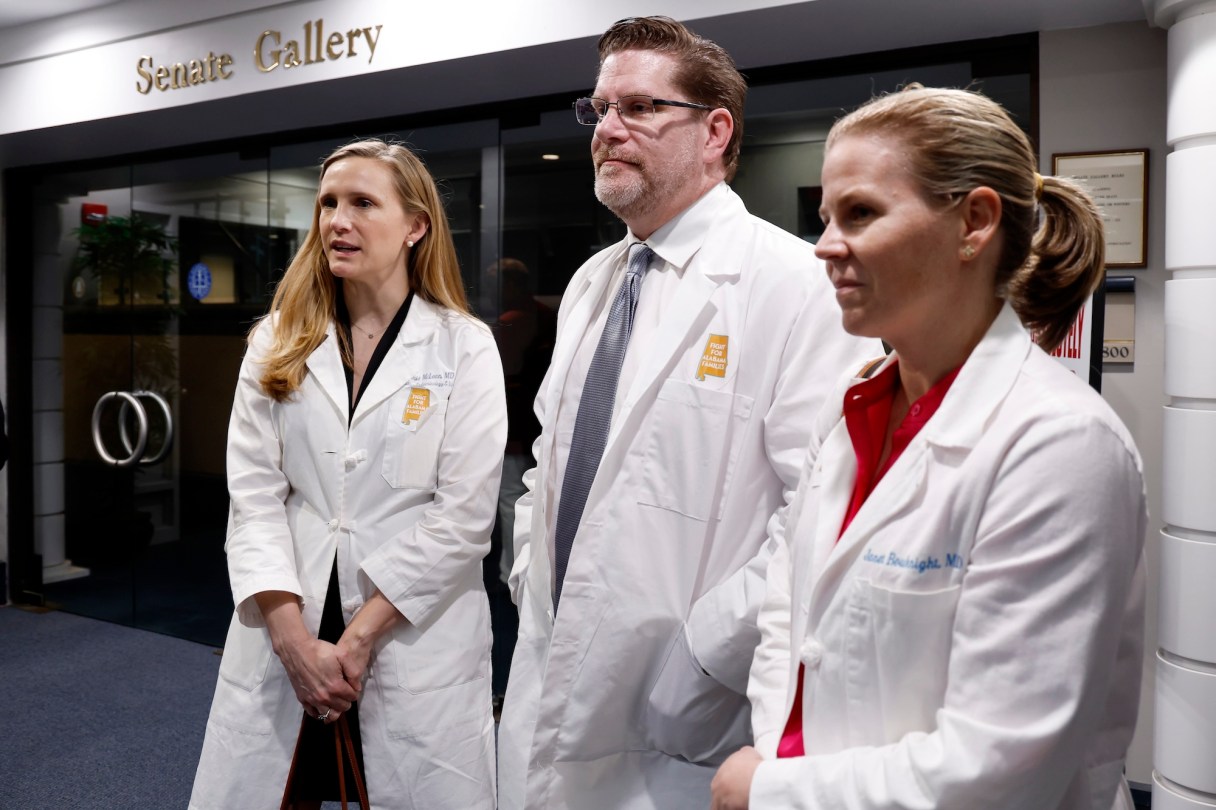
Belatedly, Alabama lawmakers have passed a bill protecting access to in vitro fertilization. The measure came two weeks after the state Supreme Court ruled that frozen embryos should be considered unborn children under the law. Three fertility clinics had suspended treatments, citing liability concerns. Would-be parents were caught in limbo.
The court decision, disruptive as it was, stemmed from a tragic case: In 2020, the embryos of three families seeking IVF were accidentally destroyed by a patient who had wandered into an unsecured storage area. The families sued the fertility center under the state’s Wrongful Death of a Minor Act and won on appeal.
The new law, which passed almost unanimously, doesn’t reverse that ruling. Rather, by protecting doctors and patients from civil and criminal liability, it allows IVF treatments to continue.
Swift bipartisan legislation on such a divisive issue is encouraging. Yet Alabama’s work is far from complete: The law expires next year, and it fails to reckon with the larger question of whether IVF can be consistent with the idea that life begins at conception, a position established by law in Alabama and other states. A legal framework that provides more clarity is necessary.
IVF treatment began in the 1970s and has resulted in hundreds of thousands of births in the U.S. It requires a combination of medication and surgery to extract eggs from a woman’s body, which are then fertilized with sperm in a lab. The fertilized egg becomes a pregnancy when it attaches to the walls of a uterus.