
Monday, November 16, 2026Nov 16

India’s new citizenship law excludes Muslims. Here’s what to know

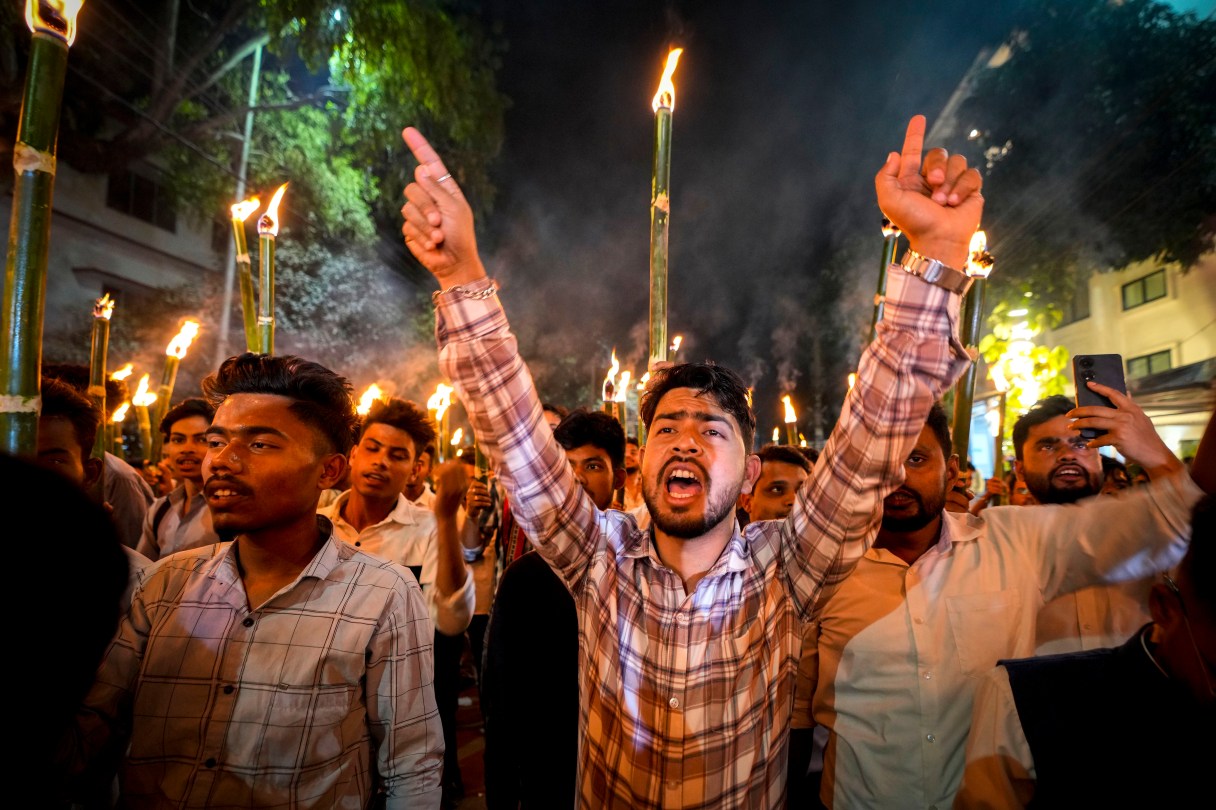
All Assam Students Union (AASU) members take out a torch procession to protest against the Citizenship Amendment Act (CAA) in Guwahati, India, Tuesday, March 12, 2024. India has implemented a controversial citizenship law that has been widely criticized for excluding Muslims, a minority community whose concerns have heightened under Prime Minister Narendra Modi's Hindu nationalist government. The act provides a fast track to naturalization for Hindus, Parsis, Sikhs, Buddhists, Jains and Christians who fled to Hindu-majority India from Afghanistan, Bangladesh and Pakistan before Dec. 31, 2014. (AP Photo/Anupam Nath)

NEW DELHI (AP) — India has implemented a citizenship law that excludes migrants who are Muslims, a minority community whose concerns have heightened under Prime Minister Narendra Modi’s Hindu nationalist government.

The rules for the law were announced Monday. It establishes a religious test for migrants from every major South Asian faith other than Islam. Critics argue that the law is further evidence that Modi’s government is trying to reshape the country into a Hindu state and marginalize Muslims.

WHAT IS THE CITIZENSHIP LAW?

The Citizenship Amendment Act provides a fast track to naturalization for Hindus, Parsis, Sikhs, Buddhists, Jains and Christians who fled to Hindu-majority India from Afghanistan, Bangladesh and Pakistan before Dec. 31, 2014. The law excludes Muslims, who are a majority in all three nations.

It also amends the old law, which prevents illegal migrants from becoming Indian citizens, and marks the first time that India — an officially secular state with a religiously diverse population — has set religious criteria for citizenship.