
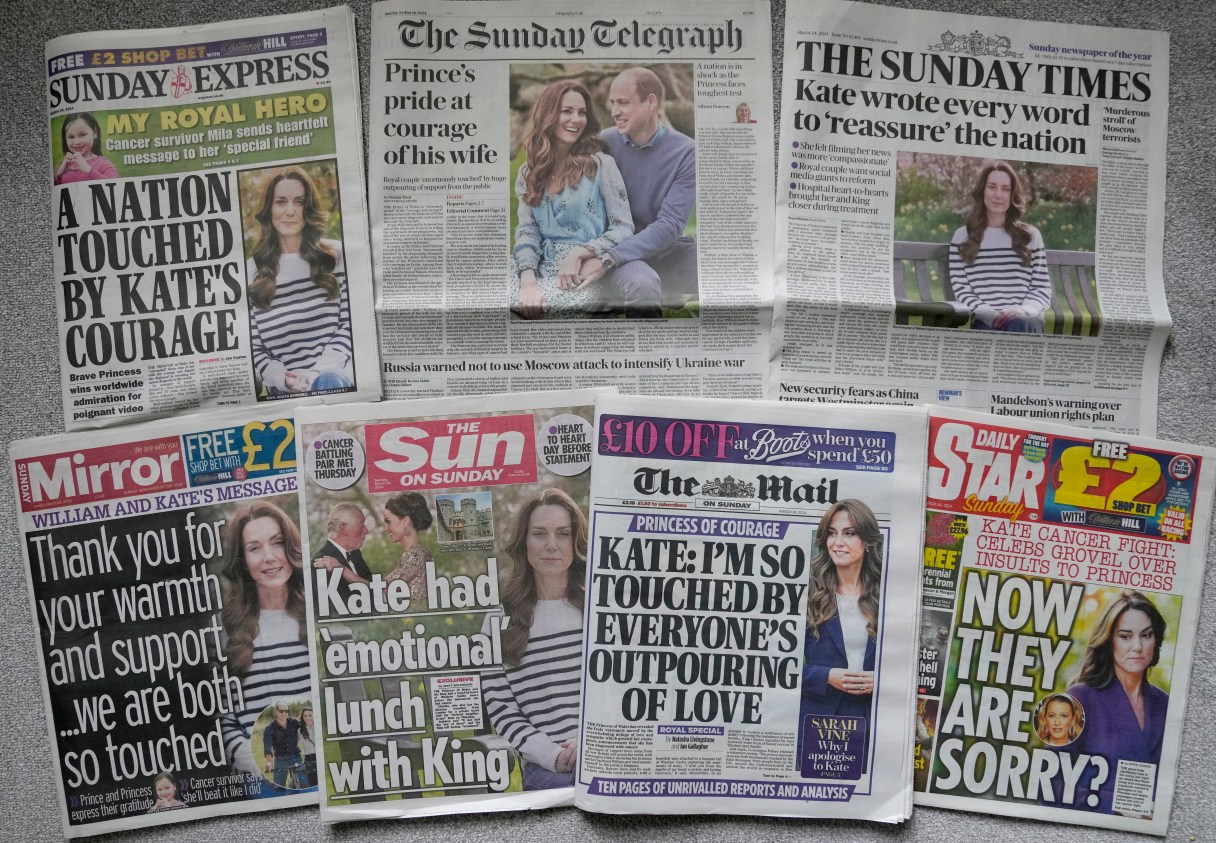
NEW YORK (AP) — A media frenzy was born on Feb. 27, when the hashtag #WhereIsKate exploded online with speculation about the whereabouts of Britain’s Princess of Wales. It opened a rabbit hole of amateur detective work, memes, bizarre theories and jokes — mixed with genuine concern about Kate’s health — into which thousands of people descended until her announcement last week that she was recovering from cancer.
The episode offered the royal family — and everyone else — a lesson in the modern world of online media: If your silence leaves an information vacuum, others will rush to fill it. And the results may be messy.
“The royal family’s mantra is never complain, never explain,” said Ellie Hall, a journalist who specializes in covering Britain’s king and his court. “That really doesn’t work in a digital age. It doesn’t take much to get the crazy things going.”
It was, in part, entertainment for some people with too much time on their hands. Except it involved real people with real lives — and, it turns out, real medical challenges.
ANATOMY OF AN INFORMATION VACUUM