
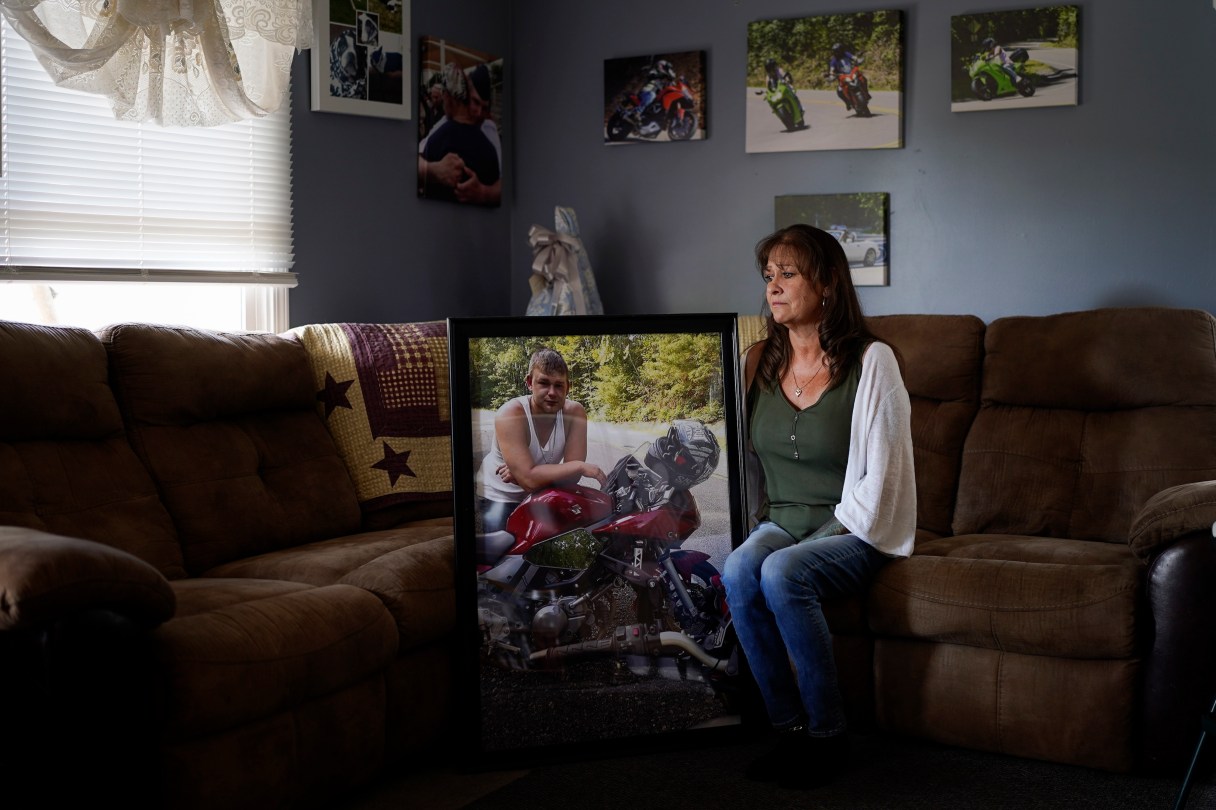
BRISTOL, Tenn. (AP) — It was in the den that Karen Goodwin most strongly felt her son’s presence: On the coffee table were his ashes, inside a clock with its hands forever frozen at 12:35 a.m., the moment that a doctor had pronounced him dead.
As Goodwin swept and dusted the room, she’d often find herself speaking to her son, a soothing one-way conversation that helped her keep his spirit alive. She’d tell him about his nephews and nieces shopping for backpacks for the new school year, or the latest from the Bristol Motor Speedway and her motorcycle ride along Highway 421, one of the most scenic routes in the state.
“I wish you had been there,” she’d say wistfully.
Austin Hunter Turner died in 2017, on a night that Goodwin has rewound and replayed again and again, trying to make sense of what happened. Something just didn’t add up. There was the race to his apartment, the panic of watching her “baby boy” struggle to breathe, the chaos of paramedics in the kitchen. Her feelings of helplessness as she prayed for him to live.
Her emotions have been painfully conflicting. There was the deep shame that Turner died of a drug overdose. The doubts when her own memory diverged with the official police narrative. More recently, anger and outrage. She now believes she has spent all these years living with a lie that has tested what was once a resolute faith in the police, paramedics and the legal system.