
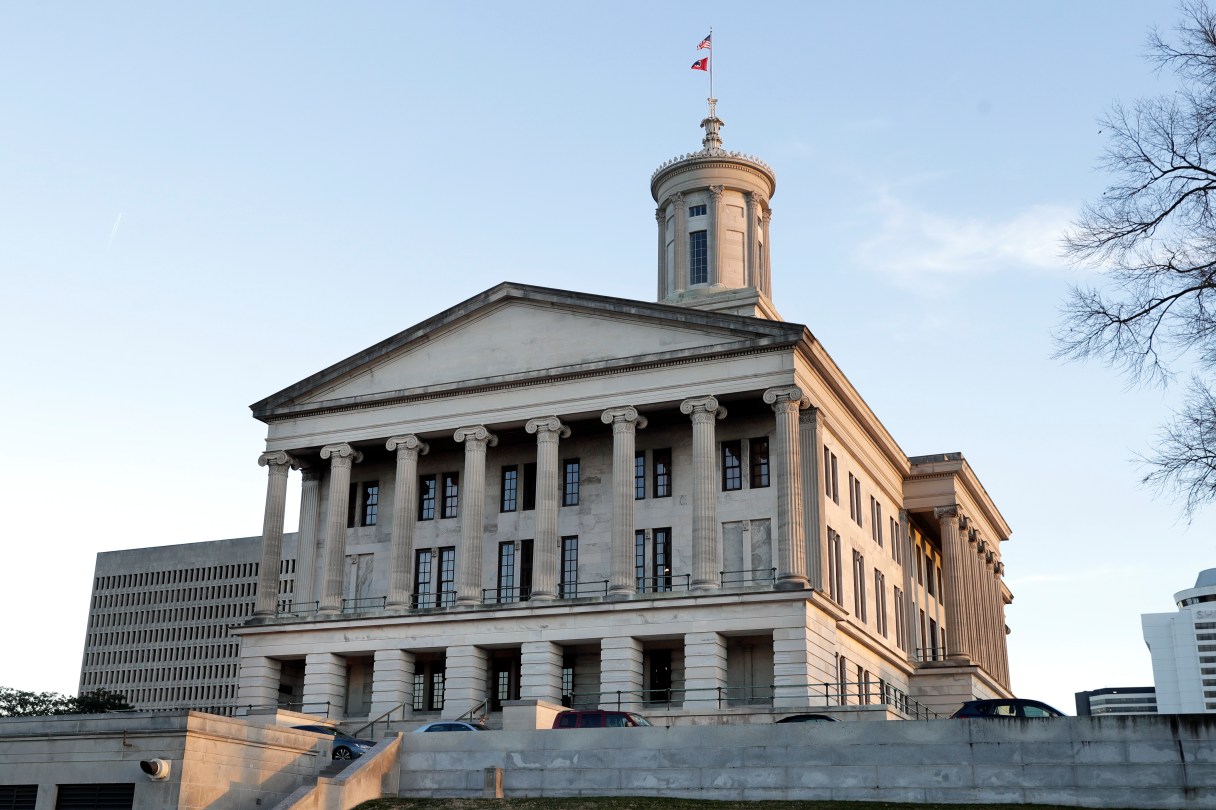
NASHVILLE, Tenn. (AP) — Republicans in the Tennessee House and Senate both plan to offer businesses new tax help worth upward of $1 billion.
But beyond broad strokes, they disagree about how much to award and what the public should know about companies that would get refunds, and what, if anything, they should do to protect the state from being sued for its current franchise-tax law and losing more money than the proposed tax relief.
Overhauling the franchise tax has been one of Republican Gov. Bill Lee’s priorities for months. According to GOP legislative leaders, a law firm representing a large group of businesses contacted the state last fall to question the legality of Tennessee’s 90-year-old franchise tax and demanded a refund. So far, the GOP-controlled Senate has passed something similar to the governor’s proposal, including $1.56 billion in one-time refunds for potentially 100,000 businesses and $393 million in annual tax breaks for a total of $1.95 billion.
Senate Republicans agreed with Lee that the big tax help offers the most protection against what they argue would be a more costly court defeat. They say the attorney general agrees.
House Republicans have been less convinced. They presented a version this week that included the ongoing tax break. But it also limits the tax refunds to $800 million; requires public disclosure of which businesses get refunds and the amounts; and reduces refund amounts for companies if they already receive certain tax credits.