
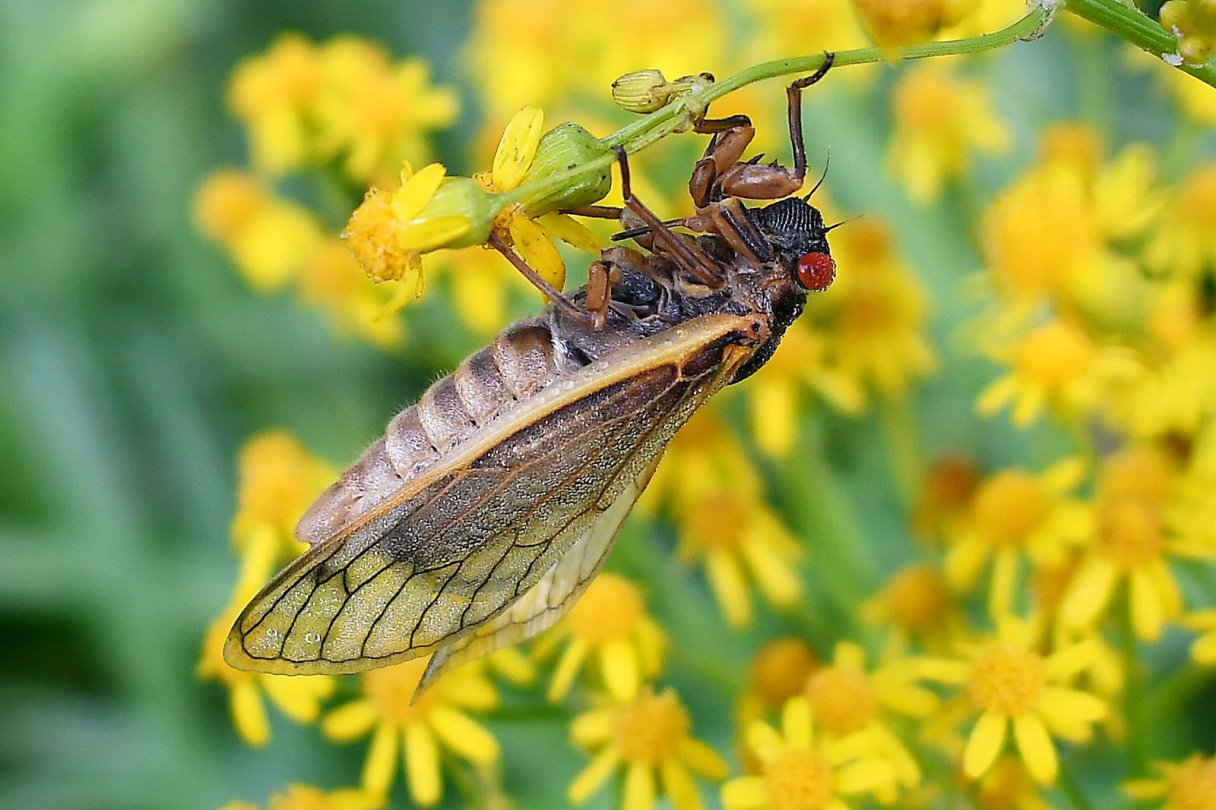

A much-anticipated double brood of cicadas — a 13-year brood and a 17-year brood of the noisy insects — has begun to emerge across the eastern U.S., Tennessee and Chattanooga as they start singing their way into summer.
The two broods of the red-eyed insects that will total in the trillions started emerging in late April, marking the first time in two centuries these two broods have emerged in the same year, according to the U.S. Forestry Service. The last time was in 1803.
These cicadas belong to periodical broods, remaining underground as nymphs until they emerge en masse and shed their exoskeletons in a 13- or 17-year cycle, according to the federal agency’s information on this year’s broods. Once they’re out of the ground, the 1-inch to 2-inch flying insects are easily spotted and heard as they live out their few weeks of life to buzz, whir, feed and breed, leaving behind the next brood for the next time around.
The 2024 emergence is of the Brood XIII, a 17-year brood in northern Illinois, southern Wisconsin, northwestern Indiana, southwestern Michigan and eastern Virginia, the federal agency said. Brood XIX, a 13-year brood concentrated in southern Illinois and much of Missouri and scattered across southeastern states stretching to Virginia, could overlap in some areas in Central Illinois.