
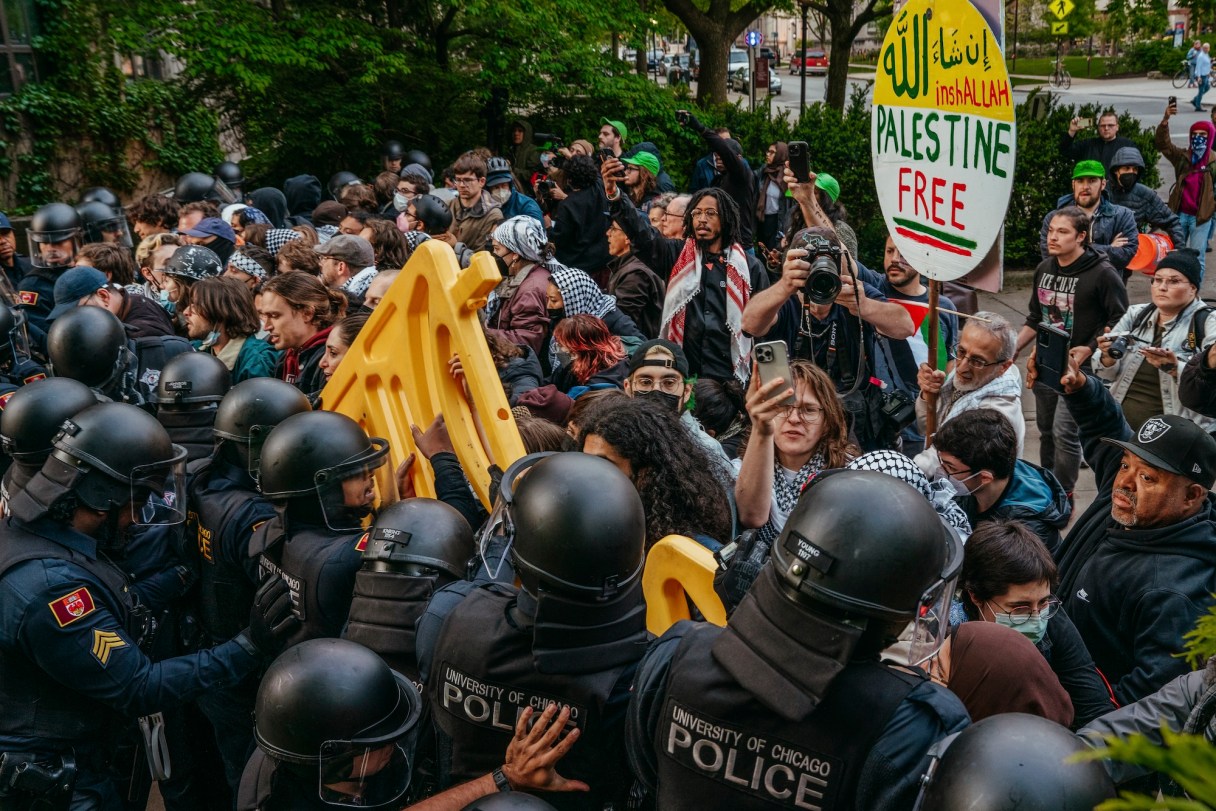
University campuses nationwide have long been the focus of political debates and battles in the form of protests and demonstrations. In recent weeks, students galvanized by their consciences have been leading an anti-war movement that our nation hasn’t seen the likes of in decades, and it is spreading like wildfire. At last count, at least 100 Gaza solidarity encampments have been launched at colleges and universities.
These students are setting up tents, staging sit-ins and raising their voices in solidarity with the people of Gaza. But their courageous actions are about more than protesting the war. They’re about demanding justice, challenging authority, and reshaping and normalizing the conversation around one of the most pressing issues of our time — freedom and liberation for Palestine.
The urgency of this moment is spurred by the reality that for more than 200 days, they, along with the rest of the world, have witnessed the Israeli government’s brutal massacring of at least 34,000 Palestinian civilians in Gaza, including more than 14,000 children.
Students feel compelled to act, knowing it’s wrong for their colleges and universities to invest their tuition funds into weapons manufacturing companies like Lockheed Martin and Boeing, enabling these institutions to profit off Israel’s military campaigns against Palestinians.
They’ve done their homework, and they know that many universities, such as Yale, aren’t obligated to disclose most of their investable assets in SEC filings, and their investment portfolios are often not publicly accessible.
That’s why two of the critical demands of many student protesters launching encampments is that their universities disclose financials and divest from weapons manufacturing companies.
These student activists deserve our gratitude, attention and support. Instead, as one student put it, “We’re often met with tear gas, threats and intimidation.”
To understand the significance of what’s happening on campuses today, we must first look back at history. In 1970, during the Vietnam War, the world was shaken by the events at Kent State University. Students protesting the war were met with violence, and four students were tragically killed by the National Guard. The Kent State shootings became a symbol of the struggle for justice and a rallying cry for those who refused to accept the status quo.
Just as the students at Kent State were protesting the violence of war, today’s students are protesting Israel’s decades-long violence and oppression of the Gazan people. They are demanding an end to Israel’s illegal occupation of Palestine, lifting the siege on Gaza and an end to violations of Palestinian human rights. Like the students at Kent State, they are too often facing criticism, pushback and violence for daring to speak out.
The significance of the current campus activism represents an unequivocal rejection of the politics of fear and division. It’s a reminder of what’s possible when people unite and organize.
Perhaps most important, it’s a testament to the power of young people, proving they can shape the course of history and create real change. They are a reminder that the future belongs to those who are willing to stand up and fight for what they believe in.
These students are on the right side of history. They inspire hope. They deserve our advocacy and solidarity. Please support their efforts, amplify their voices and join them in the fight for a better world.
Zainab Chaudry is the director of the Council on American-Islamic Relations’s Maryland office. She wrote this for InsideSources.com.