
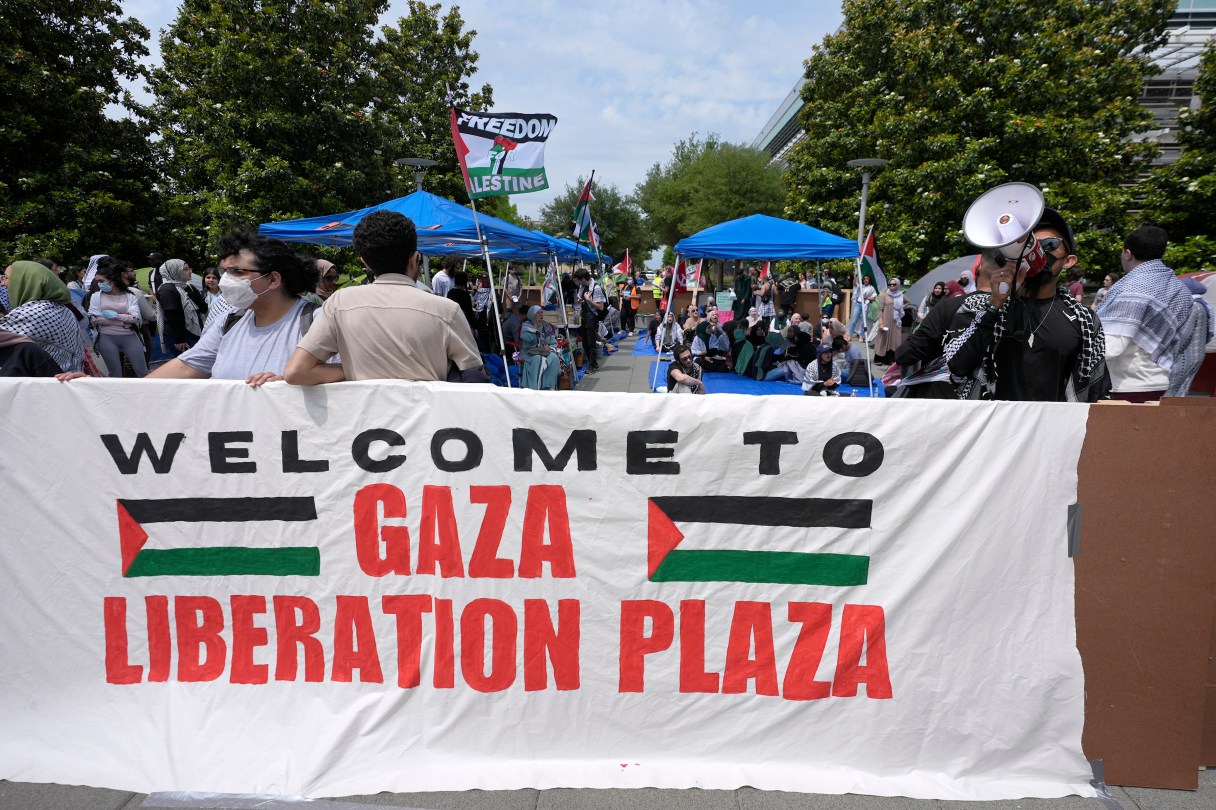
Historically, when students at American universities and colleges protest — from the Civil Rights Movement to Black Lives Matter — there’s a common refrain that “outside agitators” are to blame. College administrators and elected officials have often pointed to community members joining protests to dismiss the demands of student protesters.
Experts say it’s a convenient way for officials to delegitimize the motivations of some political movements and justify calling in law enforcement to stop direct actions that are largely nonviolent and engaging in constitutionally protected speech.
“This tactic shifts focus away from genuine grievances and portray radical movements as orchestrated by opportunistic outsiders,” said Shanelle Matthews, a professor of anthropology and interdisciplinary studies at the City University of New York and a former communications director for the Movement for Black Lives.
Over the last few weeks, students on campuses across the country have built encampments, occupied buildings and led protests to call on colleges and universities to divest their endowments from companies profiting from the Israel-Hamas war. Several college and city leaders have pointed to the threat of outsiders when describing the protests — and some have responded by cancelling or shifting plans for commencement ceremonies.
Here’s what to know about the phrase “outside agitators” used during historic student movements.