
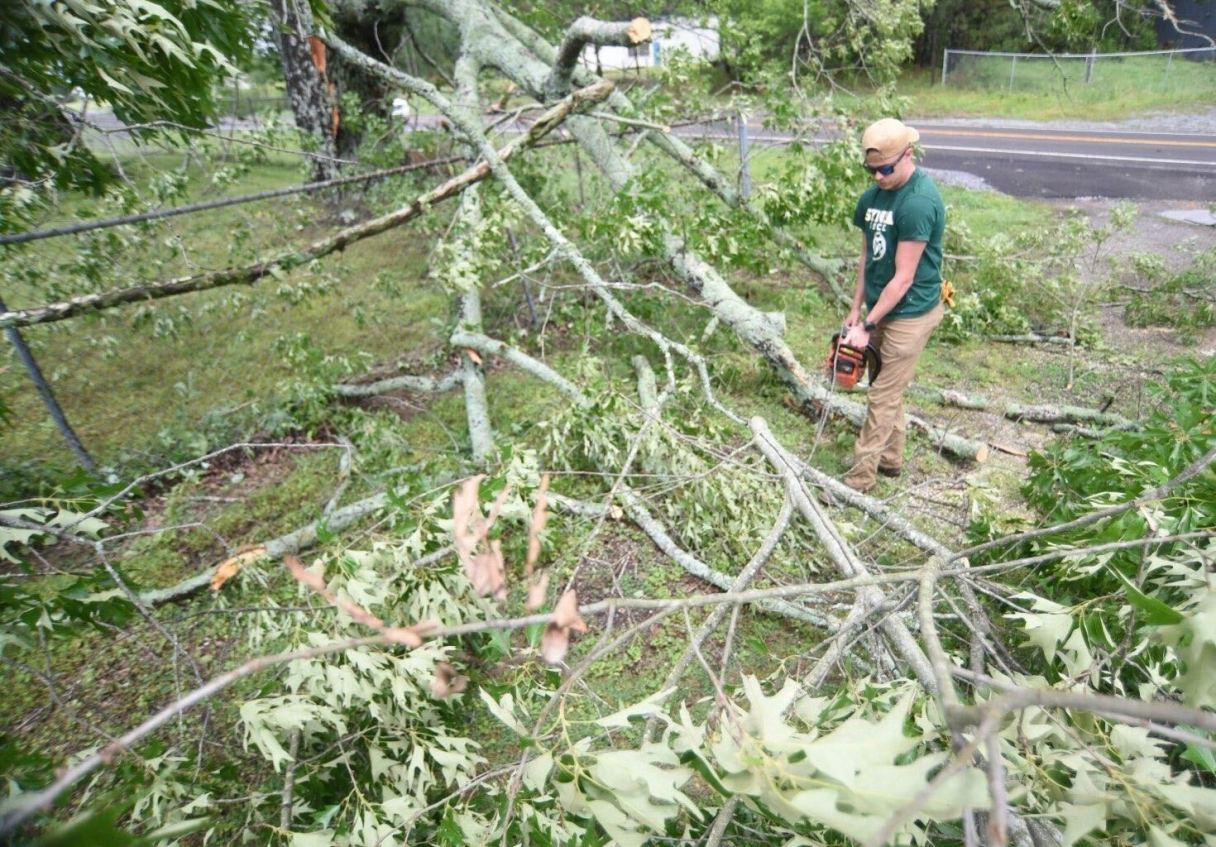

One of the violent storms that tore through Henagar, Alabama, last week has been officially deemed a half-mile-wide tornado packing winds up to 140 mph that cut a path more than 12 miles long on Sand Mountain.
Officials have also confirmed a second, weaker tornado strafed the area with winds up to 107 mph, according to the National Weather Service.
Nine tornadoes touched down in North Alabama and South Central Tennessee on Wednesday and Thursday, including one in the Jackson County seat of Scottsboro and two others on the Jackson-DeKalb county line in Henagar, said Huntir Cramer, a meteorologist at the weather service office in Huntsville, Alabama. The largest was the first storm that hit Henagar on Wednesday night, and the weakest was the funnel cloud that hit Scottsboro around the same time with winds up to 85 mph.
“It was an EF3 tornado, and the peak winds were 140 mph,” Cramer said in a phone interview. “The path length was 12.34 miles, and the maximum width was 880 yards.”
The first storm touched down at 10:57 p.m. CDT on Wednesday near Alabama highways 71 and 40 in Jackson County, then plowed eastward through Henagar along Highway 40, finally lifting at the eastern bluff of Sand Mountain just west of Hammondville in DeKalb County, Cramer said.
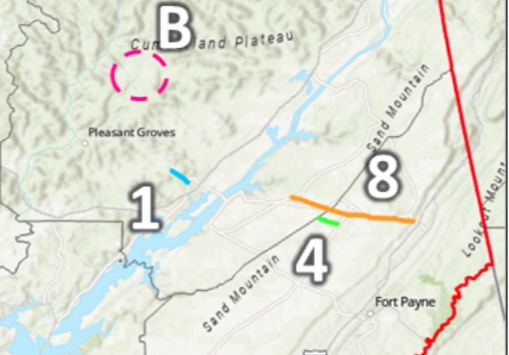
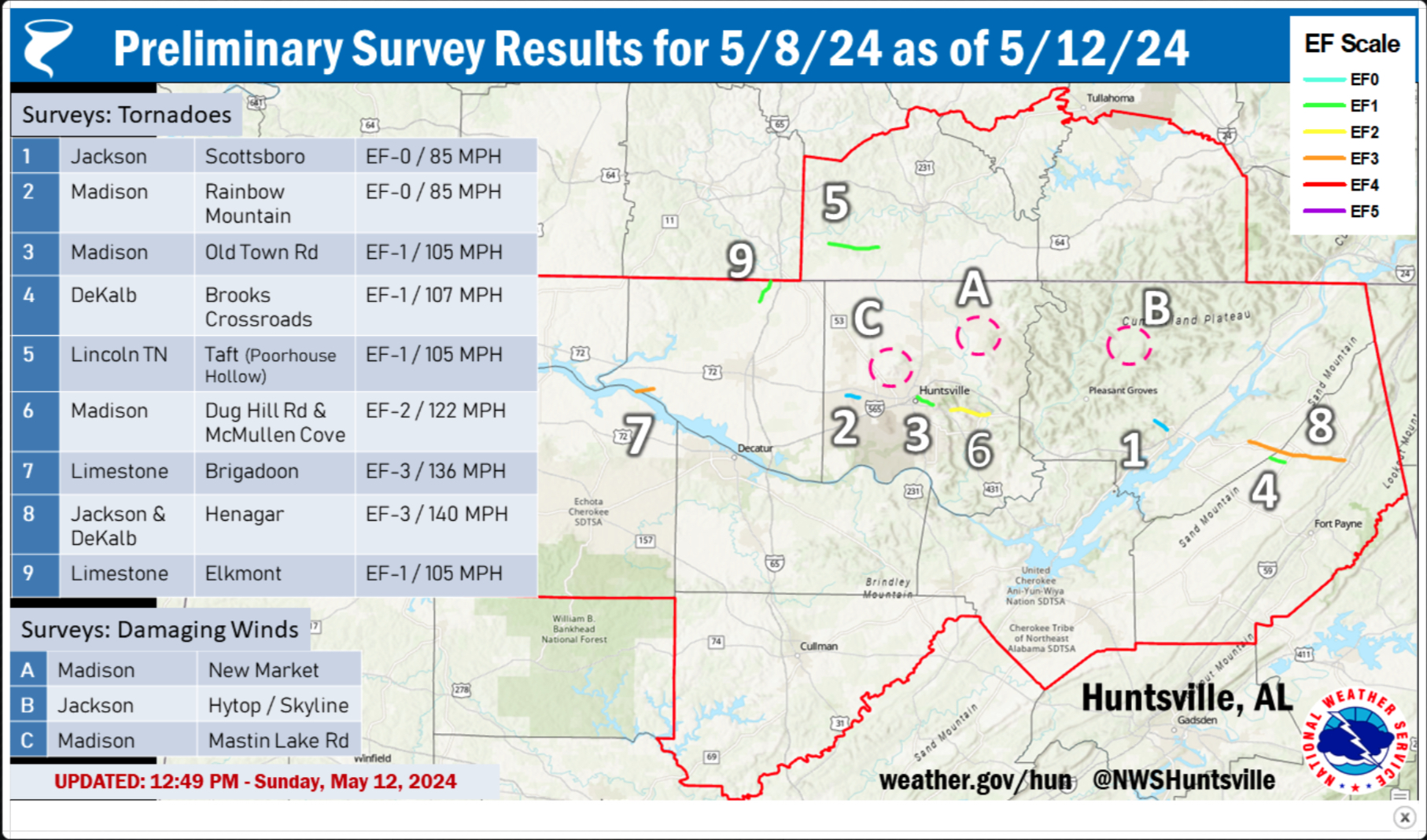
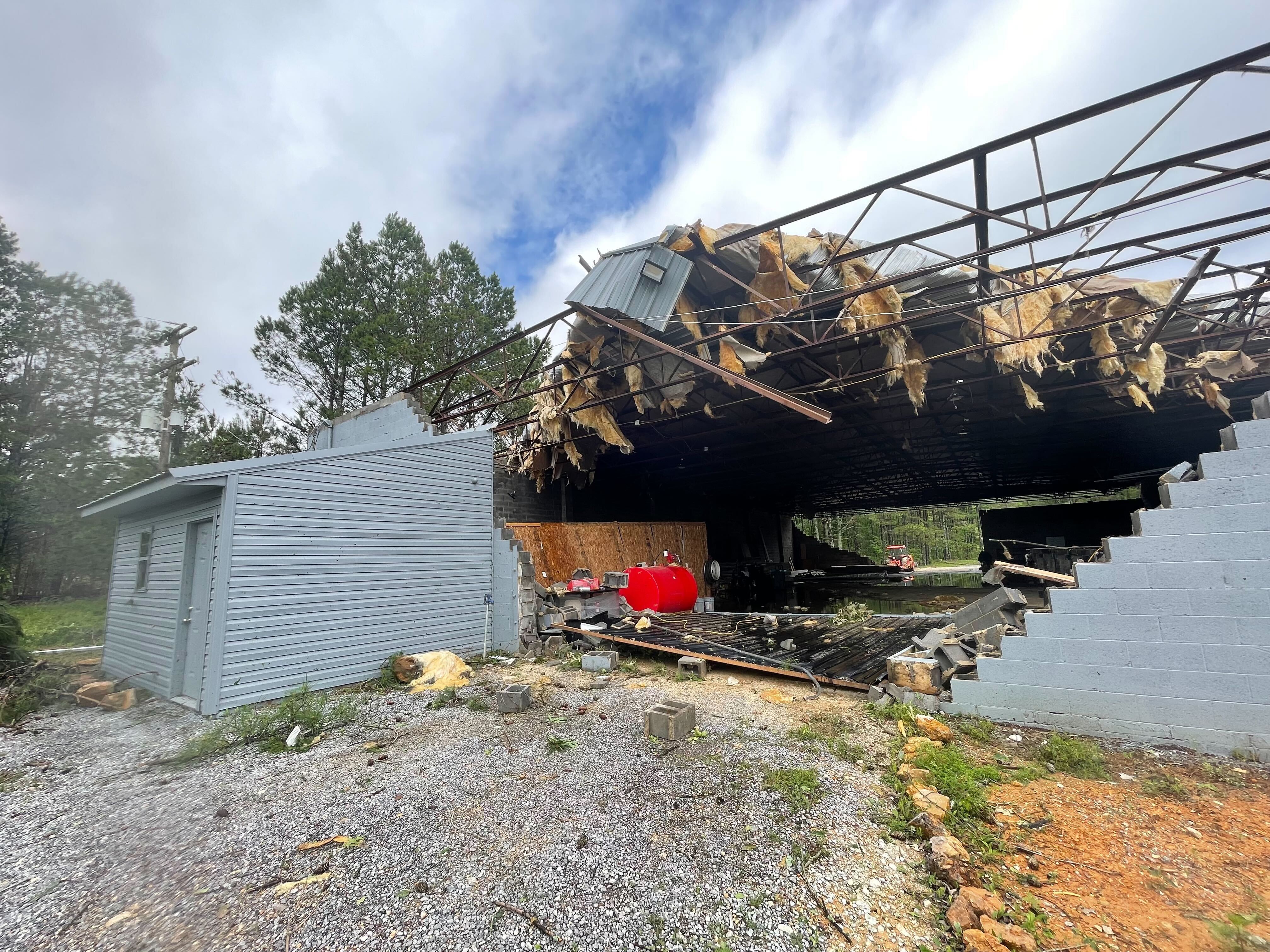
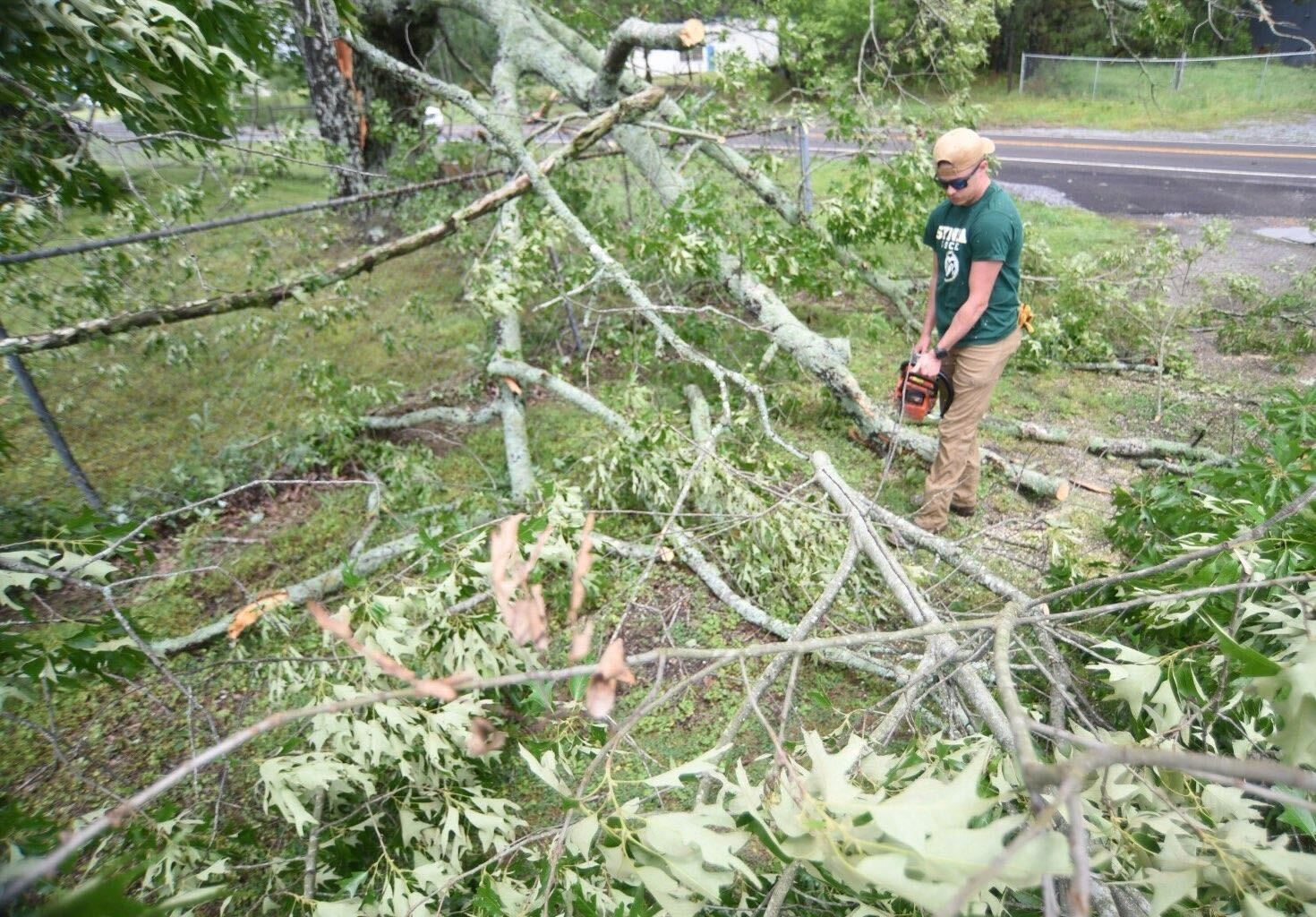
Two separate tracks were identified in the Henagar area as one storm followed another last week, she said. The second, EF1 tornado — a storm with winds ranging from 86 to 110 mph — touched down inside DeKalb County at 12:02 a.m. Thursday and continued eastward to Highway 75, weather service storm maps show.
Although the number of storms stands at nine, that could still change, Cramer said.
“In our area of Alabama, Tennessee and Georgia, we have preliminarily counted nine, but we’re still surveying,” she said.
There was no loss of life in the Northeast Alabama storms, but seven people sustained injuries in the Henagar area, Cramer said.
Preparation, education and prior experience probably helped local residents prepare and react to the storms, said Michael Posey, director of DeKalb County’s emergency management agency. The weather service assessment of the storm strength agrees with his observations on the ground, he said.
Recovery efforts shifted into high gear quickly, Posey said.
“I was initially thinking it was EF2, but as we got to the county line, there was more serious damage,” Posey said in a phone interview.
An EF2 tornado has wind speeds of 111-135 mph, while an EF3 has winds of 136-165 mph.
Posey said local emergency agencies and nonprofit organizations teamed up for a response as soon as they could get to the storm-damaged area on Sand Mountain.
“The storm happened early Thursday morning, and by the end of Friday, we had transitioned to long-term recovery and had very few unmet needs,” he said.
(READ MORE: Severe storms moving through Tennessee Valley cause school closings, delays)
The two people who received the most serious injuries in the Henager tornado are “doing OK,” he said. “They’re expected to fully recover, and everybody else had just bumps, bruises and scratches.”
Since the super outbreak in April 2011, when more than 175 tornadoes struck Alabama, Tennessee and Georgia and claimed more than 320 lives, Posey said public and private tornado shelters have sprung up across the region and most likely saved lives.
“We had one family that slept in their storm shelter the entire night, and it destroyed their house completely,” Posey said. “They might have been killed. They had experienced the 2011 storms as well, and that’s why they built the storm shelter.”
The outcome might have been much worse if officials and residents were not well prepared, he said.
Contact Ben Benton at bbenton@timesfreepress.com or 423-757-6569.