
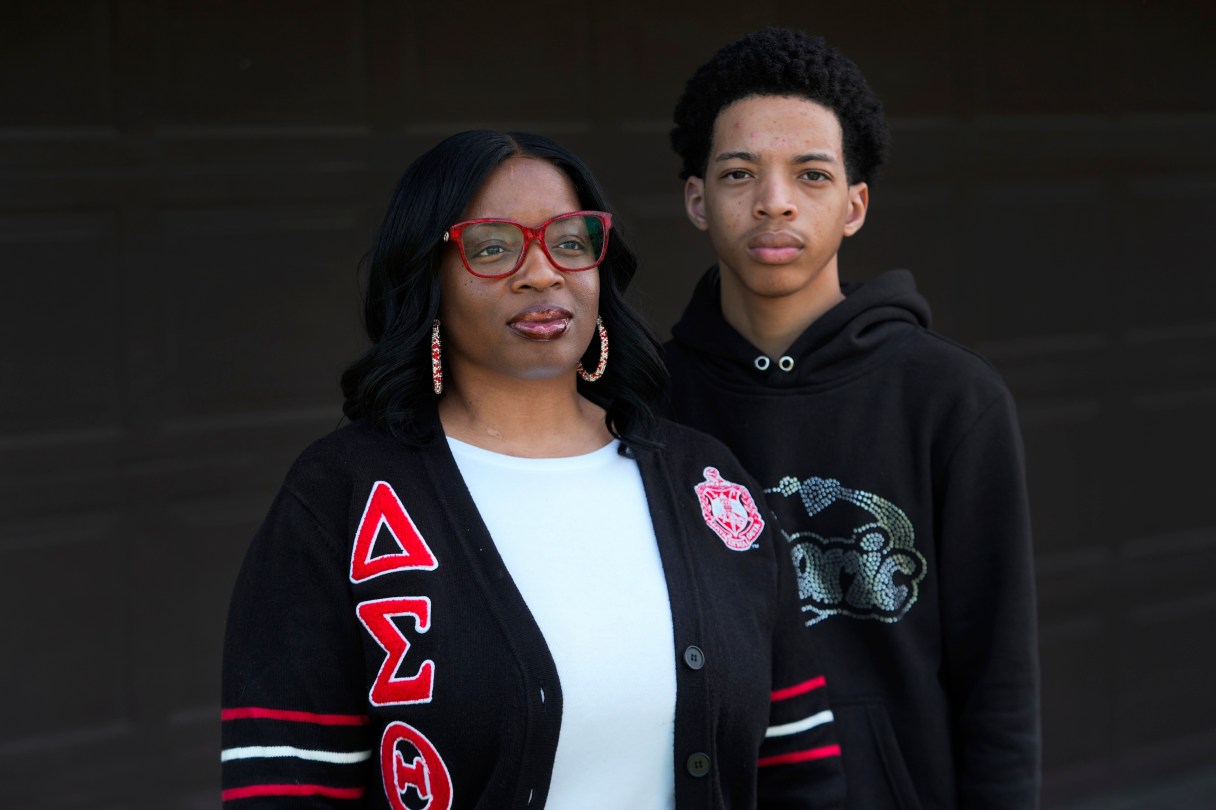
Since first grade, Julian Morris, 16, has changed schools six times, swinging between predominantly white and predominantly Black classrooms. None has met all his needs, his mother said.
At predominantly white schools, he was challenged academically but felt less included. At predominately Black schools, he felt more supported as a Black student, but his mother, Denita Dorsey, said they didn’t have the same resources and academic opportunities.
Seventy years after the Supreme Court ruled separating children in schools on the basis of race was unconstitutional, Dorsey said the options available to her family in Michigan are disappointing.
“Segregation is abolished, sure, but our schools are still deeply divided along racial and socioeconomic lines,” Dorsey said. “It makes you think: It’s been 70 years but was it worth it?”
The 1954 Brown v. Board of Education ruling and desegregation orders were only the first steps toward the elusive goal of equitable education. For some Black families, school choice has been critical in finding the best available option. And that has not meant necessarily the school with the most racial diversity.