
Just days before workers at a Mercedes-Benz plant in Alabama began voting this month on whether to unionize, Republican Gov. Kay Ivey signed a new law that would claw back state incentives from companies that voluntarily recognize labor unions.
Alabama’s move follows similar efforts in Georgia and Tennessee, where GOP leaders also have passed laws pushing against a reinvigorated labor movement.
The laws require that unions be formed only by secret ballots rather than the so-called card check process, in which employers can voluntarily recognize a union without a protracted election process. And under the laws, companies that voluntarily recognize unions risk losing state incentives, which amount to billions of dollars invested by governments to bring automakers to the region.
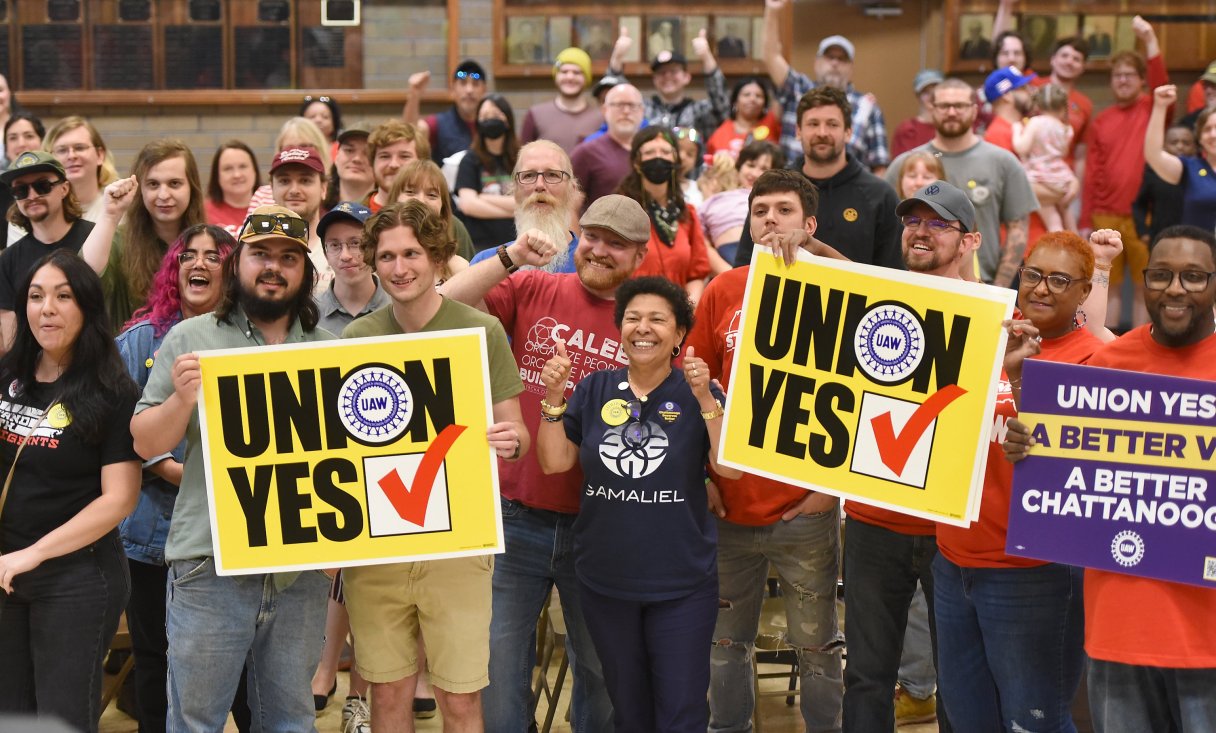
These new laws speak to the growing push of labor unions into Southern states — and the fierce opposition of pro-business GOP leaders there. For decades, the region has attracted investments from foreign automakers with lucrative tax breaks, low-cost labor and a lack of labor unions. Labor leaders hope that is changing now that workers at Volkswagen’s plant in Chattanooga overwhelmingly endorsed a union in April, becoming the first foreign auto plant in the South ever organized by the United Auto Workers.
Unions such as the UAW argue their involvement can help boost wages and improve the work environment at auto plants. But GOP forces in the South view unions as an existential threat to their manufacturing economies — of even more importance now that states are increasingly competing for electric vehicle and battery plants.