
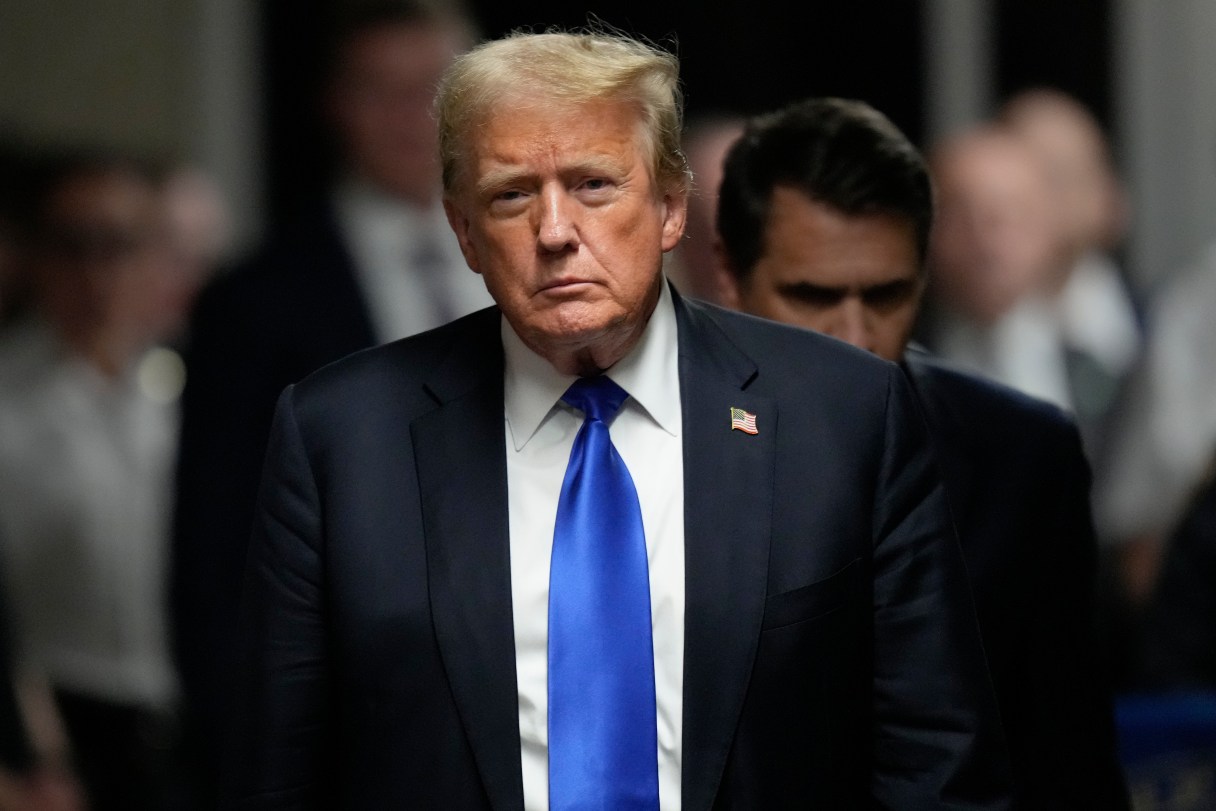
DENVER (AP) — Donald Trump may be convicted of a felony and reside in Florida, a state notorious for restricting the voting rights of people with felony convictions. But he can still vote as long as he stays out of prison in New York state.
That’s because Florida defers to other states’ disenfranchisement rules for residents convicted of out-of-state felonies. In Trump’s case, New York law only removes the right to vote for people convicted of felonies when they’re incarcerated. Once they’re out of prison, their rights are automatically restored, even if they’re on parole, per a 2021 law passed by the state’s Democratic legislature.
“If a Floridian’s voting rights are restored in the state of conviction, they are restored under Florida law,” Blair Bowie of the Campaign Legal Center wrote in a post, noting that people without Trump’s legal resources are often confused by Florida’s complex rules.
So as long as Trump isn’t sent to prison, he can vote for himself in Florida in November’s election.
“His rights depend on his sentencing,” wrote Michael McDonald, a University of Florida political scientist who’s tracked his state’s felony disenfranchisement rules, on the social media site X, formerly Twitter.