
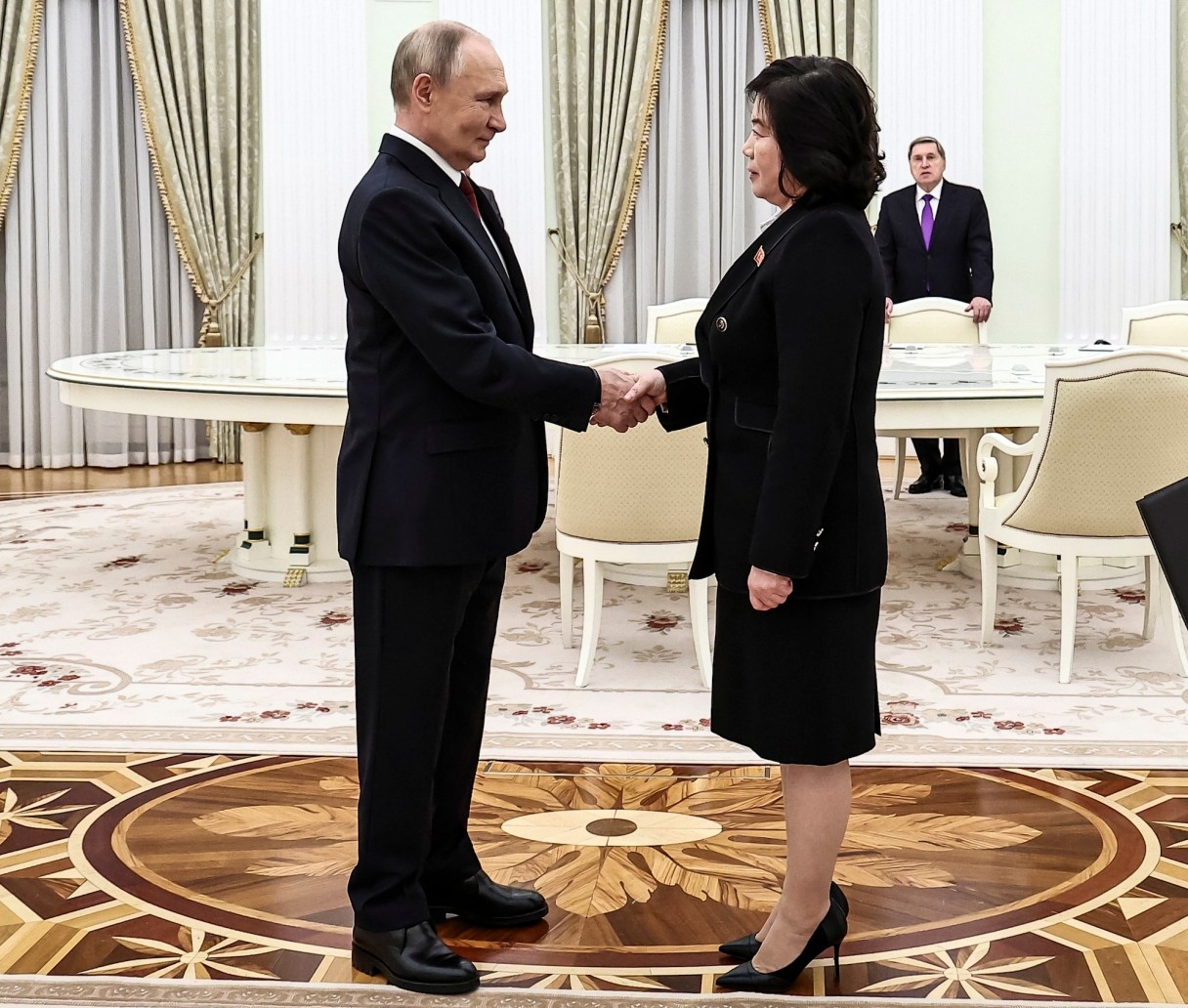
Russian President Vladimir Putin is suffering grievous manpower losses as a result of his illegal and immoral invasion of Ukraine. He has lost around 200,000 killed, double that number wounded, and at least 500,000 young men fleeing the Russian Federation to avoid the draft: a butcher’s bill of over a million.
As a result, he is turning to international sources of additional manpower — Chechens, Cubans, and, most recently and dramatically, North Koreans. At least 10,000 Korean foot soldiers are headed to the battlefields of Ukraine to fight and die in a cause that must be utterly bewildering for them. They will be strangers in a strange land indeed, and you can bet Kim Jung Un is holding their families hostage to prevent desertions.
In exchange, Kim will probably receive new advanced technology: better satellites, more precise ballistic missile guidance systems, nuclear weapons advice and more refined cyber tools.
But we should understand that this transaction is clearly an indication of Russian weakness, not strength. Putin has been essentially forced to solicit a bargain with his fellow dictator in the isolated Hermit Kingdom. What does it mean for global geopolitics?
Stepping back from the tactical impact, which will become clear as the winter unfolds, there is a larger strategic point to be made about Russia’s declining place in the international world. As John McCain said a decade ago, “Russia is a gas station masquerading as a country.” Meaning its economy is a one-trick pony, or perhaps a two-trick pony if you count oil and gas.