
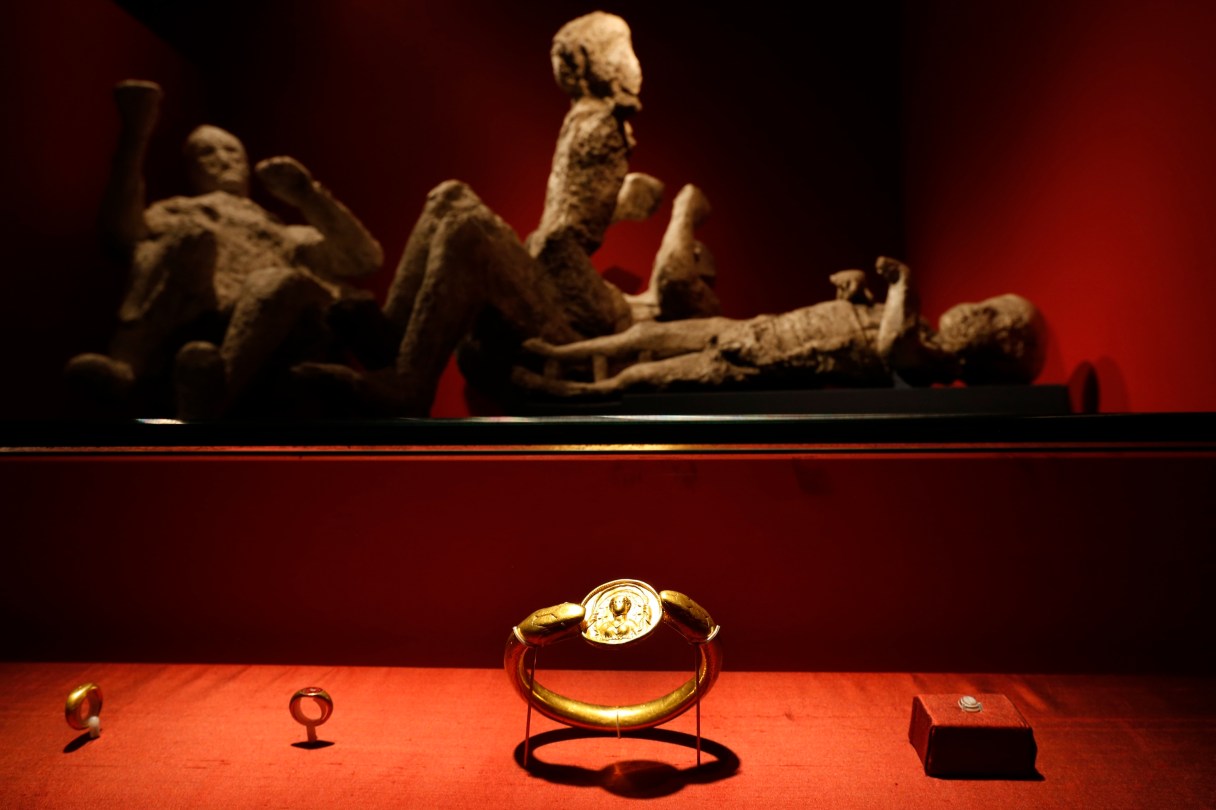
When a volcanic eruption buried the ancient city of Pompeii, the last desperate moments of its citizens were preserved in stone for centuries.
Observers see stories in the plaster casts later made of their bodies, like a mother holding a child and two women embracing as they die.
But new DNA evidence suggests things were not as they seem — and these prevailing interpretations come from looking at the ancient world through modern eyes.
“We were able to disprove or challenge some of the previous narratives built upon how these individuals were kind of found in relation to each other,” said Alissa Mittnik of the Max Planck Institute for Evolutionary Anthropology in Germany. “It opens up different interpretations for who these people might have been.”
Mittnik and her colleagues discovered that the person thought to be a mother was actually a man unrelated to the child. And at least one of the two people locked in an embrace — long assumed to be sisters or a mother and daughter — was a man. Their research was published Thursday in the journal Current Biology.