
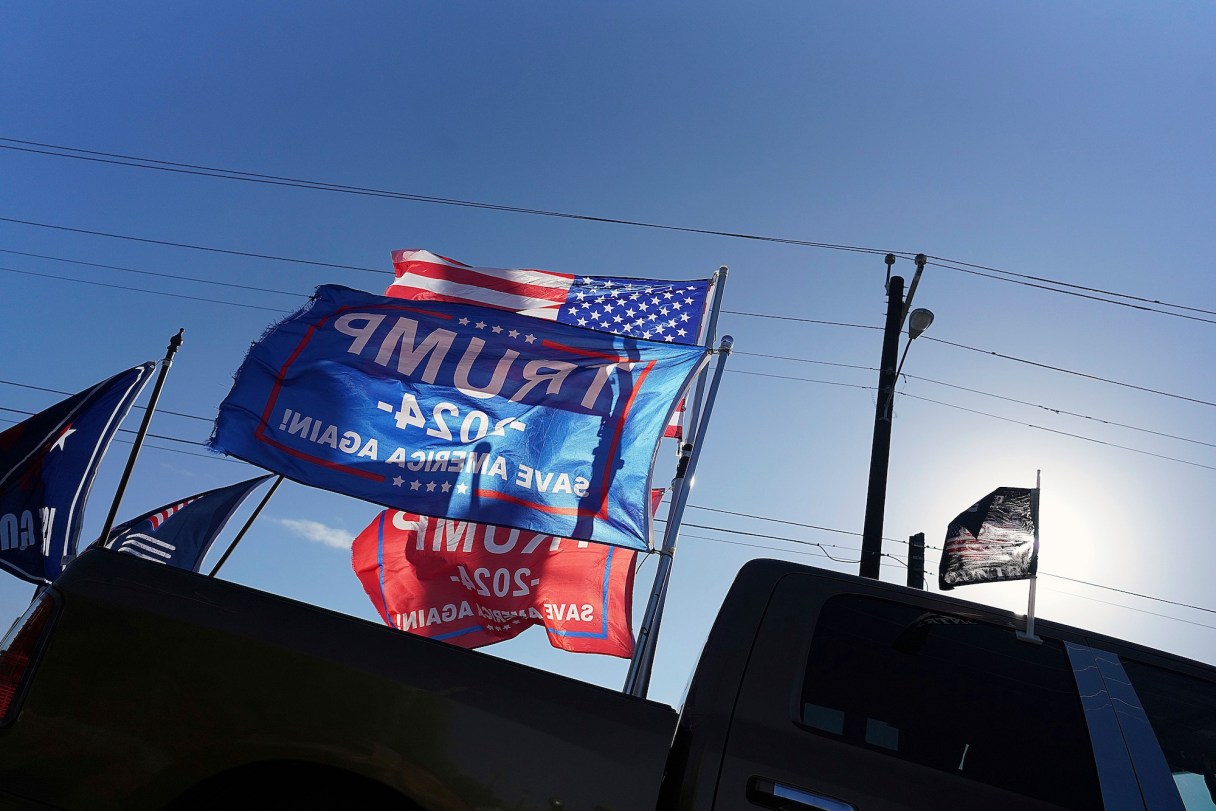
On the eve of Election Day, anthropology professor Alexander Hinton talked to me from a Trump rally, where he was already convinced the Republican candidate would win. He’d been observing the MAGA movement in a professional capacity, attending more Trump rallies than he can count, and he says Donald Trump’s supporters display an unusual fervor for their candidate. “He knows how to choreograph a show.”
Hinton’s prediction was based on Trump’s abilities as an entertainer and the way he’s inspired faith that he can lower the price of a cup of coffee and fatten Americans’ pocketbooks.
Some of the faith in the new president-elect and his economic promises comes from a sense that he “tells it like it is” – that he speaks with blunt honesty, even as he insists he won the 2020 election and propagates numerous other fictions. This paradox has confused pundits since Trump’s rise to political prominence. That he even got a chance to run for president a third time raises questions about our vulnerability to cults of personality.
Most of what passes for “telling it like it is” comes down to Trump making completely subjective judgments with a tone of certainty – that some of his enemies are “losers” or “morons” or “low IQ” or that one of his rivals somehow has a face that’s not fit for office. The Week Magazine calls it “maniacal overconfidence” which “sounds to some people like forthrightness.” In that sense, he is telling it like it is – in his own self-serving head.
The certitude can make Trump sound like he’s in the know. And some enjoy the insults hurled at other people; there’s an implication that Trump’s supporters aren’t among the morons. And focusing on categories of people such as undocumented immigrants gives some people a target on which to blame their own problems. That particular group also inspired outrage among immigrants who went through all the hurdles to enter the U.S. legally.