
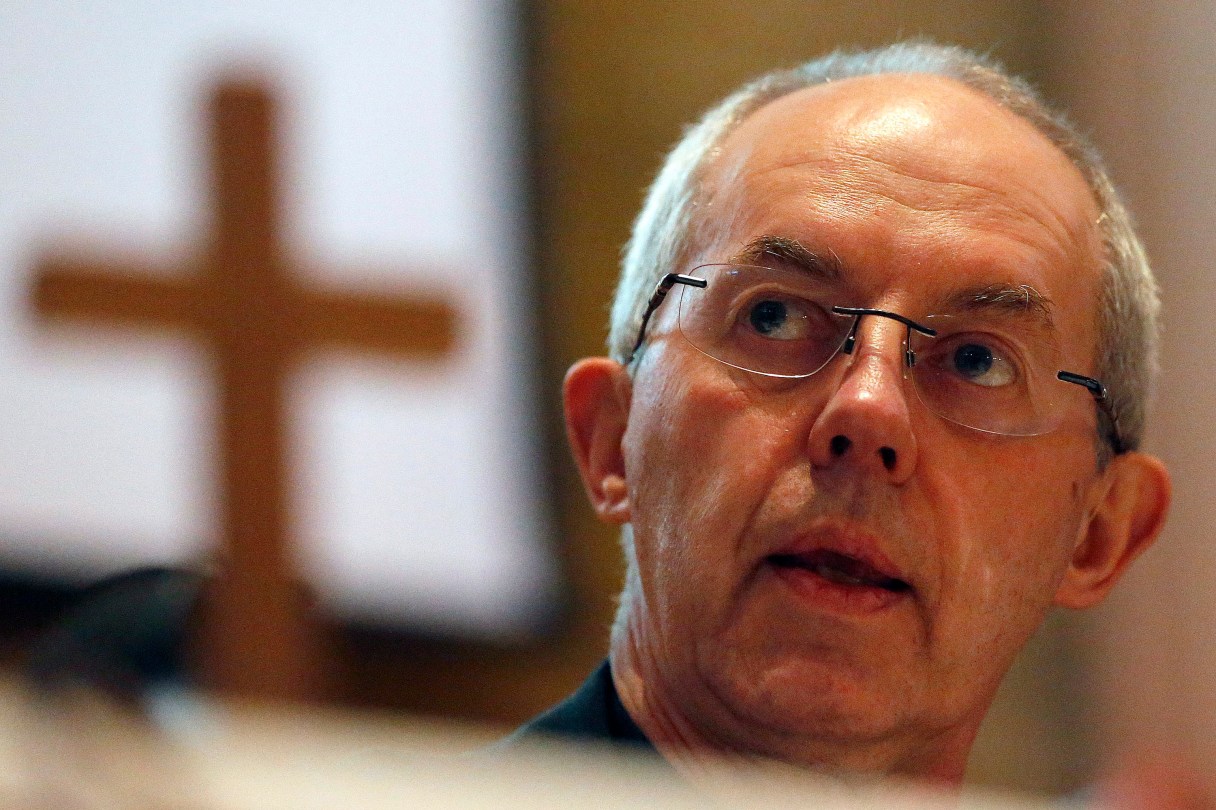
LONDON (AP) — Archbishop of Canterbury Justin Welby, head of the Church of England and spiritual leader of the global Anglican Communion, resigned Tuesday after an investigation found that he failed to tell police about serial physical and sexual abuse by a volunteer at Christian summer camps as soon as he became aware of it.
Pressure on Welby had been building since Thursday, when the archbishop’s refusal to accept responsibility for his failure to report the abuse in England and in Africa in 2013 kindled anger about a lack of accountability at the highest reaches of the church. By Tuesday afternoon, Welby acknowledged that mistake.
“It is very clear that I must take personal and institutional responsibility for the long and retraumatizing period between 2013 and 2024,” Welby said in the statement announcing his resignation. “I believe that stepping aside is in the best interests of the Church of England, which I dearly love and which I have been honored to serve.”
Welby’s resignation will send ripples around the world. The Archbishop of Canterbury is the symbolic head of the Anglican Communion, which has more than 85 million members in 165 countries, including the Episcopal Church in the United States. While each national church has its own leaders, the Archbishop of Canterbury is considered first among equals.
Welby, a former oil executive who left the industry in 1989 to study for the priesthood, was a controversial figure even before the scandal. A skilled mediator who has worked to resolve conflicts in Nigeria and elsewhere in Africa, he struggled to unite the Anglican Communion, which has been riven by sharply divergent views on issues such as gay rights and the place of women in the church.