
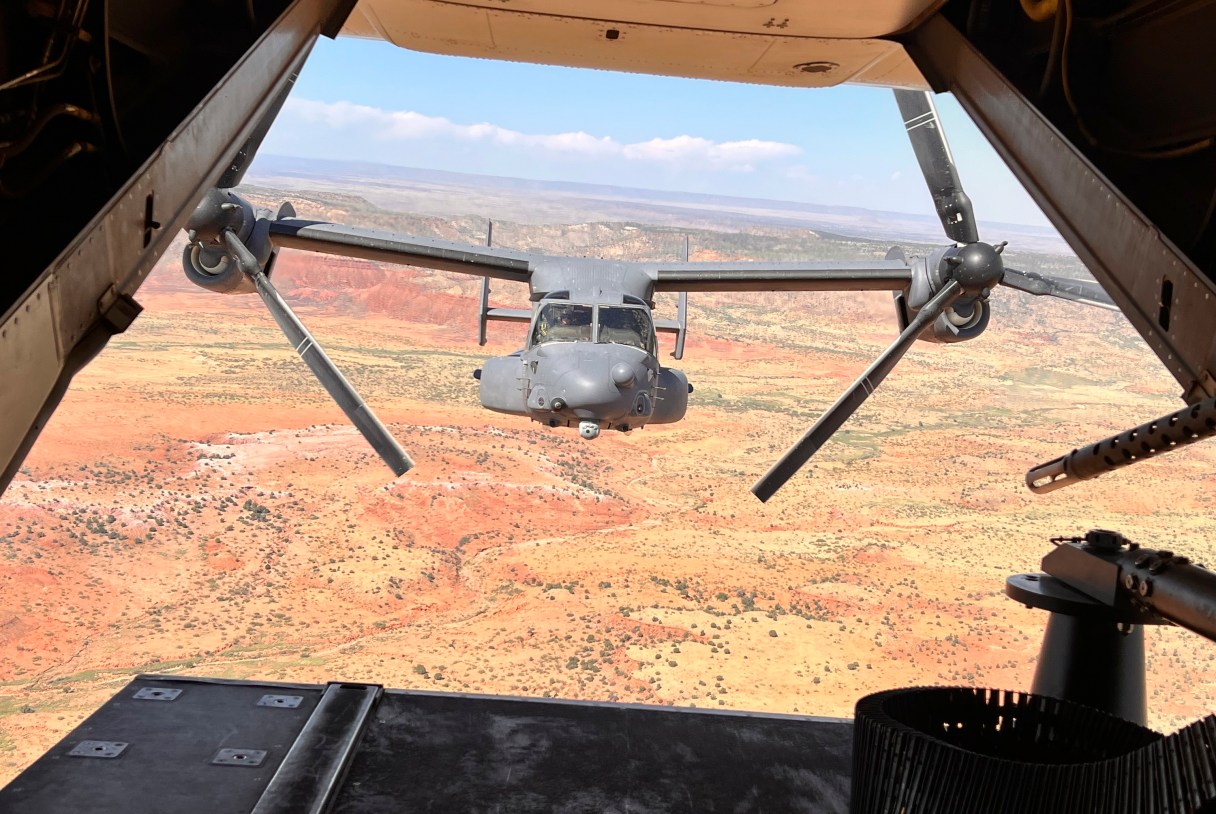
CANNON AIR FORCE BASE, N.M. (AP) — Over a New Mexico training range named the Hornet, two Osprey aircraft speed 100 feet off the ground, banking hard over valleys and hills as they close in on a dusty landing zone.
A flight engineer in the back braces a .50-caliber machine gun over the edge of the Osprey’s open ramp as desert shrubbery blurs past. The aircraft’s joints shift and rattle, and there is little steady to hold on to until the Osprey touches down with a bump, flooding seats with rust-colored dust.
After being grounded for months following a crash last November that killed eight U.S. service members in Japan, the V-22 Osprey is back in the air. But there are still questions as to whether it should be.
The Pentagon bought the V-22 Osprey more than 30 years ago as a lethal hybrid, with the speed of an airplane and the maneuverability of a helicopter. Since then, 64 personnel have been killed and 93 injured in more than 21 major accidents.
Japan’s military briefly grounded its fleet again late last month after an Osprey tilted violently during takeoff and struck the ground. And four recent fatal crashes brought the program the closest it’s come to being shut down by Congress.