
Pete Rose still isn’t going into the National Baseball Hall of Fame.
While Major League Baseball’s career hits leader’s banishment from the sport 35 years ago was often referred to as a lifetime ban, and his death this week led some to believe that would end, Rose agreed to permanent ineligibility from MLB after a probe of his betting on the game.
Anyone on the permanently ineligible list can’t be considered for election under a rule adopted by the National Baseball Hall of Fame’s board of directors in 1991. Rose’s status didn’t change when he died Monday at age 83 of natural causes in Las Vegas.
That certainly won’t stop the debate about whether the 17-time MLB All-Star with 4,256 hits deserves inclusion, or to now be posthumously inducted.
“The GREAT Pete Rose just died. He was one of the most magnificent baseball players ever to play the game. He paid the price! Major League Baseball should have allowed him into the Hall of Fame many years ago,” Donald Trump, the former U.S. president and current Republican nominee, wrote on social media, repeating a similar plea he made four years earlier. “Do it now, before his funeral!”
The board adopted the rule 1 1/2 years after Rose agreed to the ban, and the same year that he would have become eligible to be on the ballot for the first time for a permanent place at the shrine in Cooperstown, New York.
“It was obviously aimed at Pete Rose, and from that day forward and to today, my position, the position of millions of others is, ‘Yeah, we get it, he broke the cardinal rule. He should be banned from baseball under that rule for life,'” longtime broadcaster Bob Costas said Tuesday on ESPN’s “Get Up!” morning show. “But somebody got those 4,256 base hits and those three batting championships. Put him in the Hall of Fame, put it at the bottom of his plaque ‘Banned from baseball, 1989, for life.’ It’s part of the record, but he should be in as a player.”
Baseball’s longstanding Rule 21 about misconduct, which is prominently displayed in every MLB clubhouse, states any player, umpire, or club or league official or employee who bets “upon any baseball game in connection with which the bettor has a duty to perform, shall be declared permanently ineligible.”
An investigation for MLB by lawyer John M. Dowd found Rose placed numerous bets on the Cincinnati Reds to win from 1985-87 while playing for and managing the team. Rose applied for reinstatement in 1997 and met with commissioner Bud Selig in November 2002, but he never ruled on Rose’s request.
Current commissioner Rob Manfred in 2015 denied Rose’s application for reinstatement, concluding Rose continued to gamble and would be a risk to the sport’s integrity if allowed back in the game.
“Pete Rose violated what is sort of rule one in baseball, and the consequences of that are clear in the rule, and we’ve continued to abide by our own rules,” Manfred told the Baseball Writers’ Association of America in 2023. “It’s just the rules are different for players. It’s part of the responsibility that comes with the privilege of being a major league player.”
Manfred plans to retire when his current term ends in January 2029, so it is possible the next commissioner could reconsider Rose’s ban.
At the time the ban agreement was announced, A. Bartlett Giamatti, the commissioner at the time, said: “The burden is entirely on Mr. Rose to reconfigure his life in a way he deems appropriate.”
Rose repeatedly denied betting on baseball until making an admission in his 2004 autobiography, “Pete Rose: My Prison Without Bars.”
“The ultimate tragedy is the one that he experienced, because he had all sorts of blessings and advantages and talents, and to end up living a life for the past 35 years that was so frustrating and abysmal must have been a terrible sentence for him,” former commissioner Fay Vincent told The Associated Press this week.
“At the end, how can you not feel very sorry for a guy who suffered from sort of a human failing, which is an excessive belief in his infallibility, and he kept testing that. …. Kept being punished, and he never got a lesson,” he said. “The lesson was stop doing what you’re doing.”
Rose directly appealed to the Hall of Fame in 2016 to restore his eligibility, arguing the lifetime ban he agreed to was never intended to keep him from Cooperstown.
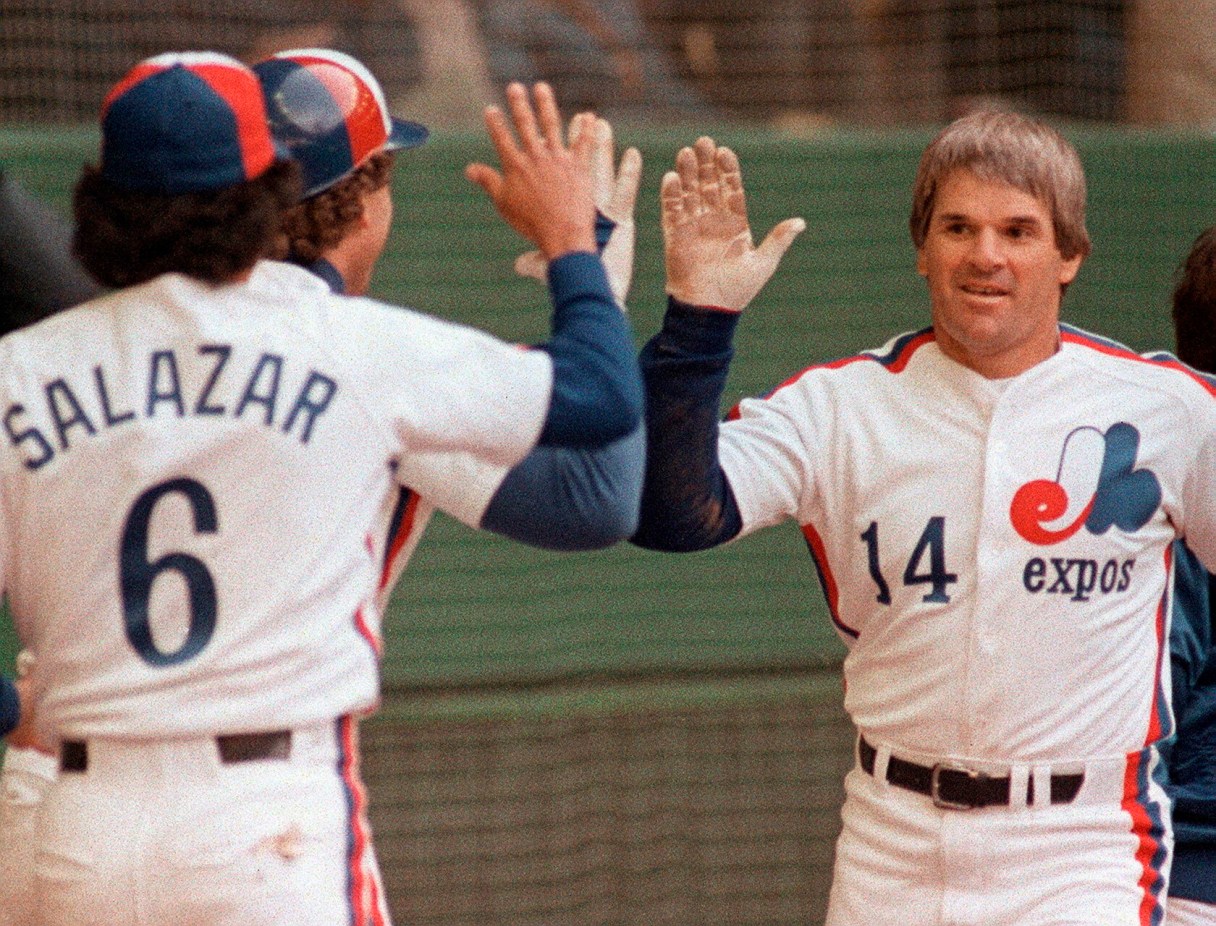
Even though the player who was the 1963 National League rookie of the year, 1973 MVP and 1975 World Series MVP isn’t in the Hall of Fame, Rose’s accomplishments are found all over the facility that houses it. The museum has the bats from his 3,000th and 4,000th hits, as well as the helmet he wore when he topped Ty Cobb’s mark of 4,191 hits on Sept. 11, 1985. There is also a Montreal Expos cap Rose wore in 1984, when he set the record for games played; he finished with 3,562 in 24 seasons.