
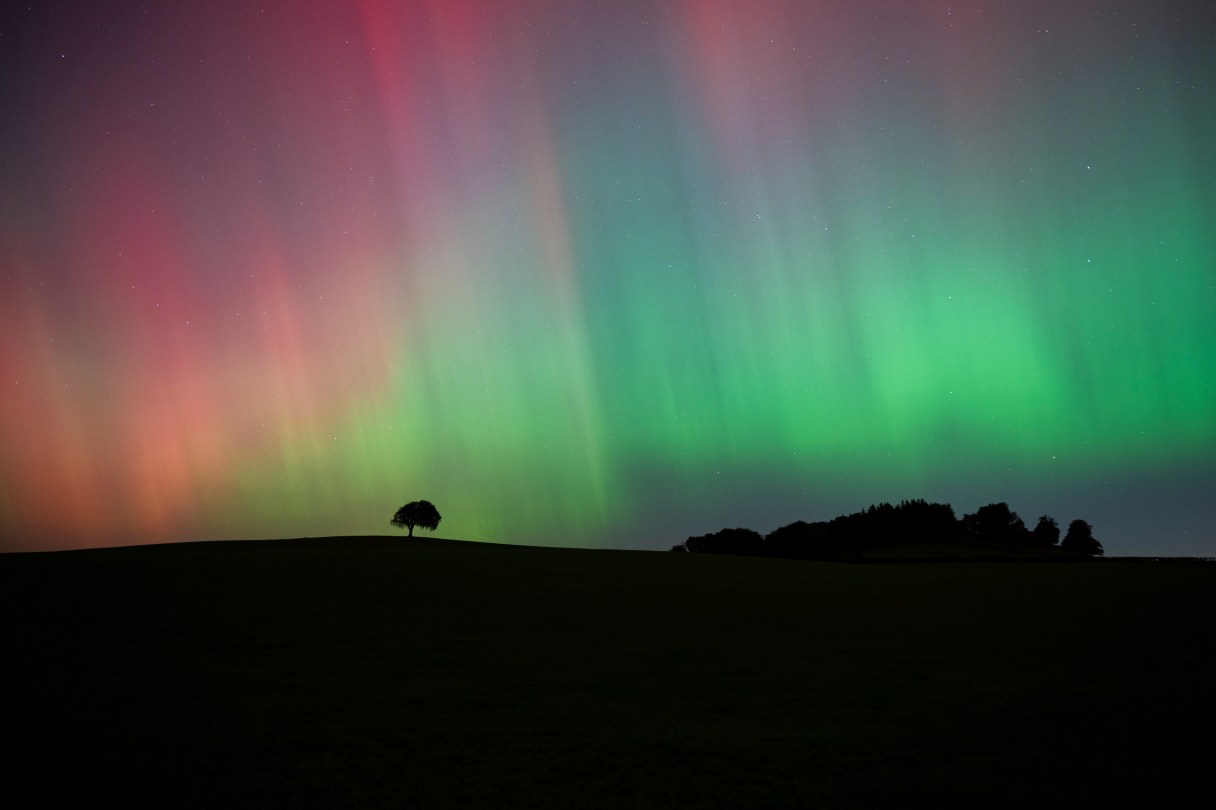
Another in a series of unusually strong solar storms hitting Earth produced stunning skies full of pinks, purples, greens and blues farther south than normal, including into parts of Germany, the United Kingdom, New England and New York City.
“It was a pretty extensive display yet again,” said Shawn Dahl, a space weather forecaster at the U.S. National Oceanic and Atmospheric Administration’s Space Weather Prediction Center. He said the center has gotten reports of northern lights sightings as far south as New Mexico. “It’s been a wonderful year.”
There were no immediate reports of disruptions to power and communications.
NOAA issued a severe geomagnetic storm alert on Wednesday after after an outburst from the sun was detected earlier in the week. Such a storm increases the chance of auroras — also known as northern lights — and can temporarily disrupt power and radio signals.
NOAA’s Friday forecast shows continued higher-than-normal activity, but the chances for another overnight show are slim farther south of Canada and the northern Plains states.