
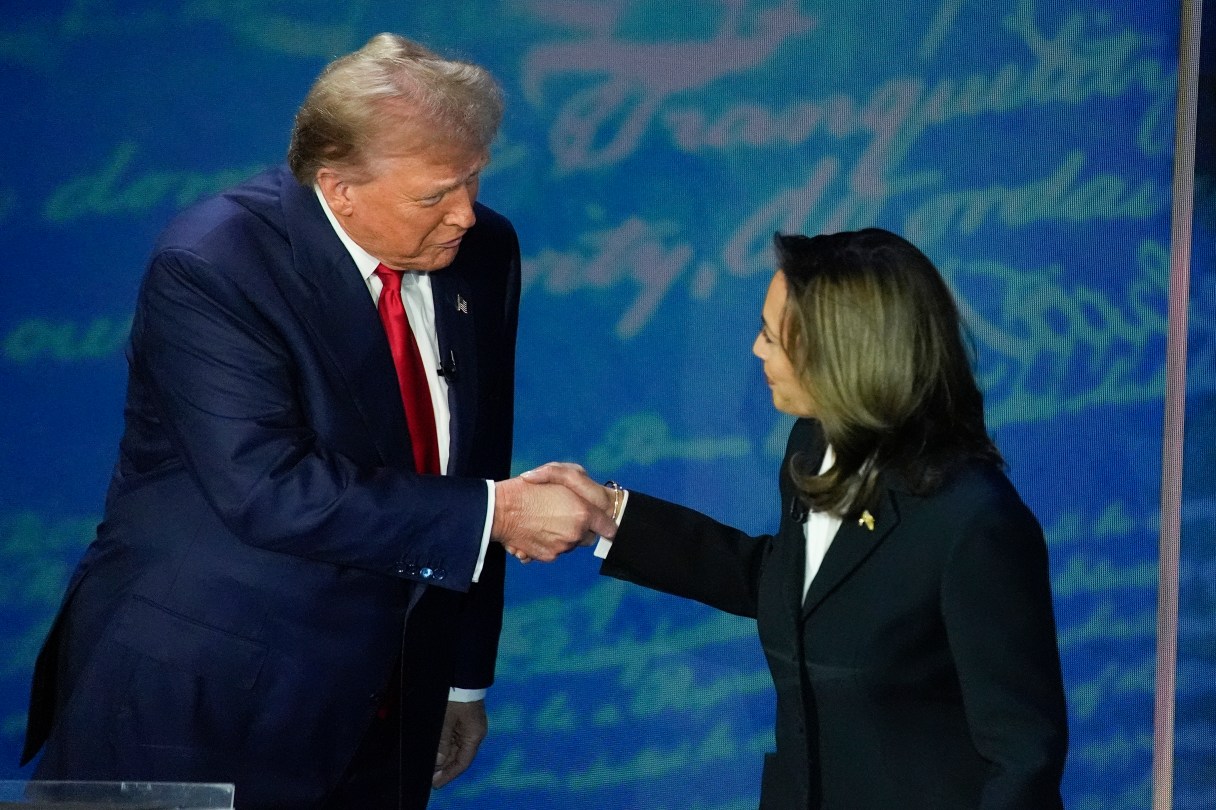

For the third presidential campaign in a row, we find ourselves unable to endorse a candidate from either major political party to lead the country for the next four years.
Although one of the two will be the next president of the United States, neither former President Donald Trump nor Vice President Kamala Harris deserve our backing because of their major flaws.
Let there be no doubt that this page has not changed in its history of support for conservative and smaller government, less regulation, the free market and traditional values.
Former President Trump believes in some of that, some of the time. But he believes all the time in what’s best for himself, has declared he will act on his own desires if he returns to the White House and has not articulated a vision for the country much beyond deporting millions of illegal immigrants.
To be sure, we admired some of what the Republican did during his one term in office, from making the country energy independent to withdrawing the U.S. from the Iran nuclear deal and the Paris climate accords to securing the Southern border to cutting taxes (though we supported only the business tax cut) to speeding a COVID-19 vaccine to appointing three solid choices to the U.S. Supreme Court, which in turn returned the decision on abortion to the states.