
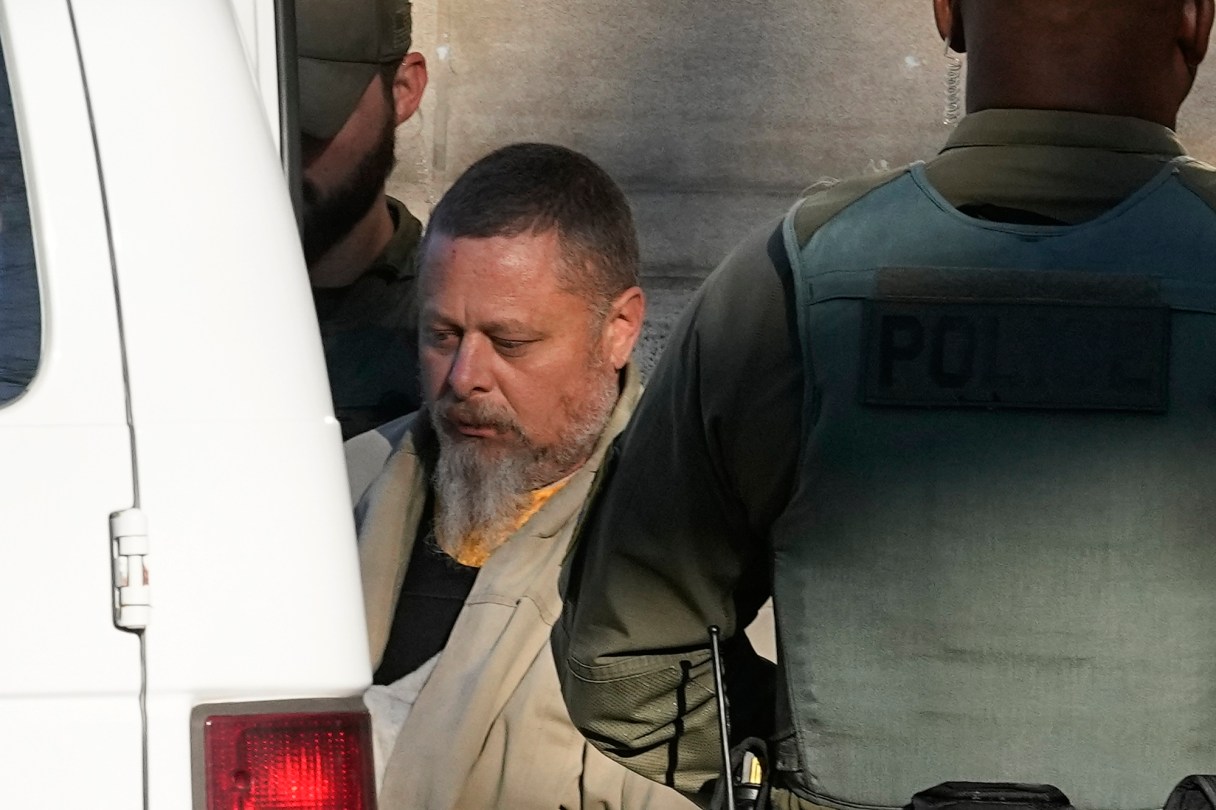
DELPHI, Ind. (AP) — A man charged with killing two teenage girls in a small Indiana community forced them off a hiking trail before cutting their throats, a prosecutor said Friday, telling jurors that the evidence includes an unused bullet and video recorded on the eldest girl’s phone.
“The last thing the girls saw was Richard Allen’s face,” Carroll County prosecutor Nicholas McLeland said.
And they heard his “chilling words: ‘Girls, down the hill,'” while Allen was wielding a gun, McLeland said. “Out of fear the girls complied.”
Richard Allen, 52, is charged with two counts of murder as well as two additional counts of murder while committing or attempting to commit kidnapping. The trial is a spectacle in Delphi, a town of 3,000, with people lining up in the morning chill to secure a seat in the courtroom.
Allen, a pharmacy technician, was arrested in October 2022, more than five years after the deaths of 13-year-old Abigail Williams and 14-year-old Liberty German, a case that had vexed police and inspired much speculation by true-crime enthusiasts. The outsized media attention in the small community prompted a specially appointed judge to pick jurors in Fort Wayne, nearly 100 miles (160 kilometers) away.