
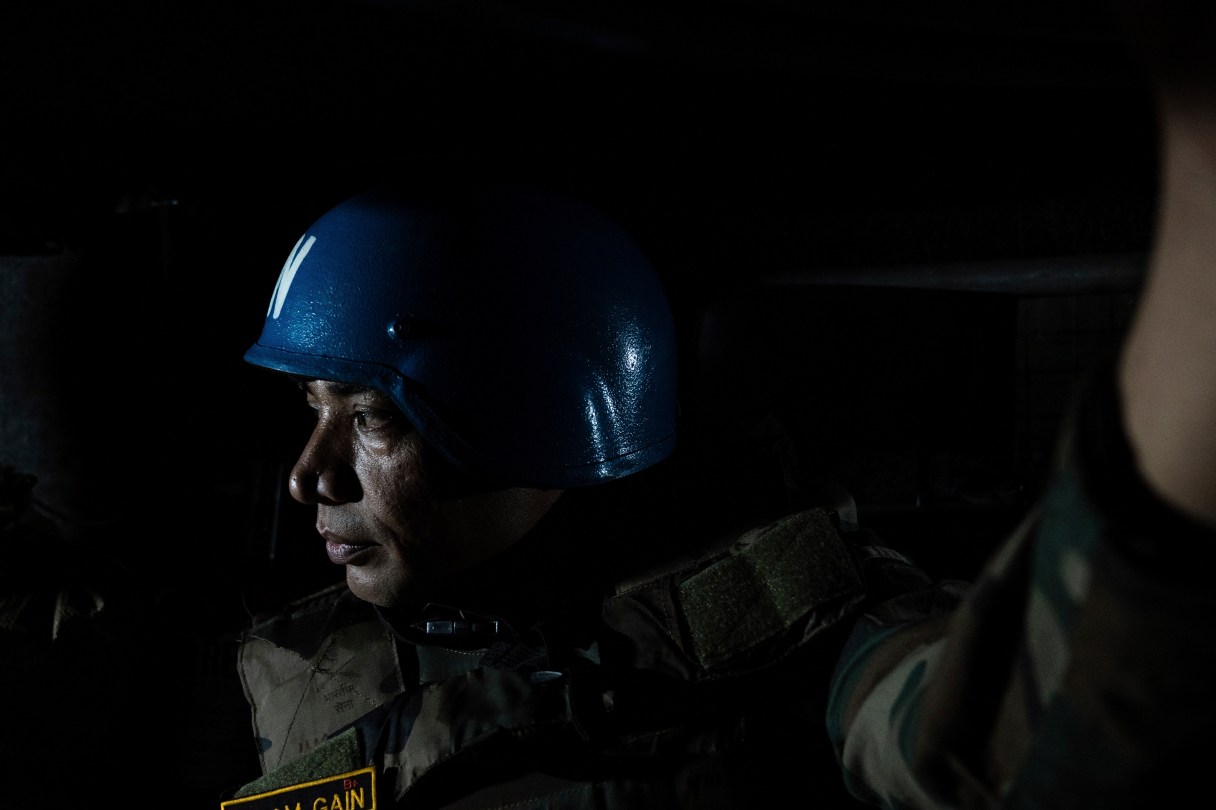
GOMA, Congo (AP) — The end of one of the world’s deadliest and yet most shadowy wars is as difficult to predict as the end of the large peacekeeping force meant to contain it.
Congo desperately wants stability in its mineral-rich east, of intense interest to the global economy. But political friction means the government wants the longtime United Nations peacekeeping force there to get out.
That would leave the vast region, overrun with dozens of armed groups including one affiliated with the Islamic State organization, with even less defense for millions of displaced civilians. But frustration has become so high with the peacekeepers that many Congolese want them gone, too.
The Associated Press witnessed the dilemma on a rare visit and night patrol with the U.N. force now known as MONUSCO, which entered Congo more than two decades ago and has 14,000 peacekeepers on the ground.
It patrols a landscape that feels far from the authority of Congo’s government, with its dirt roads churned into slippery mud in pounding rains and residents long accustomed to feeling that, security-wise, they are on their own. Some of the region’s armed groups are self-defense collectives.