
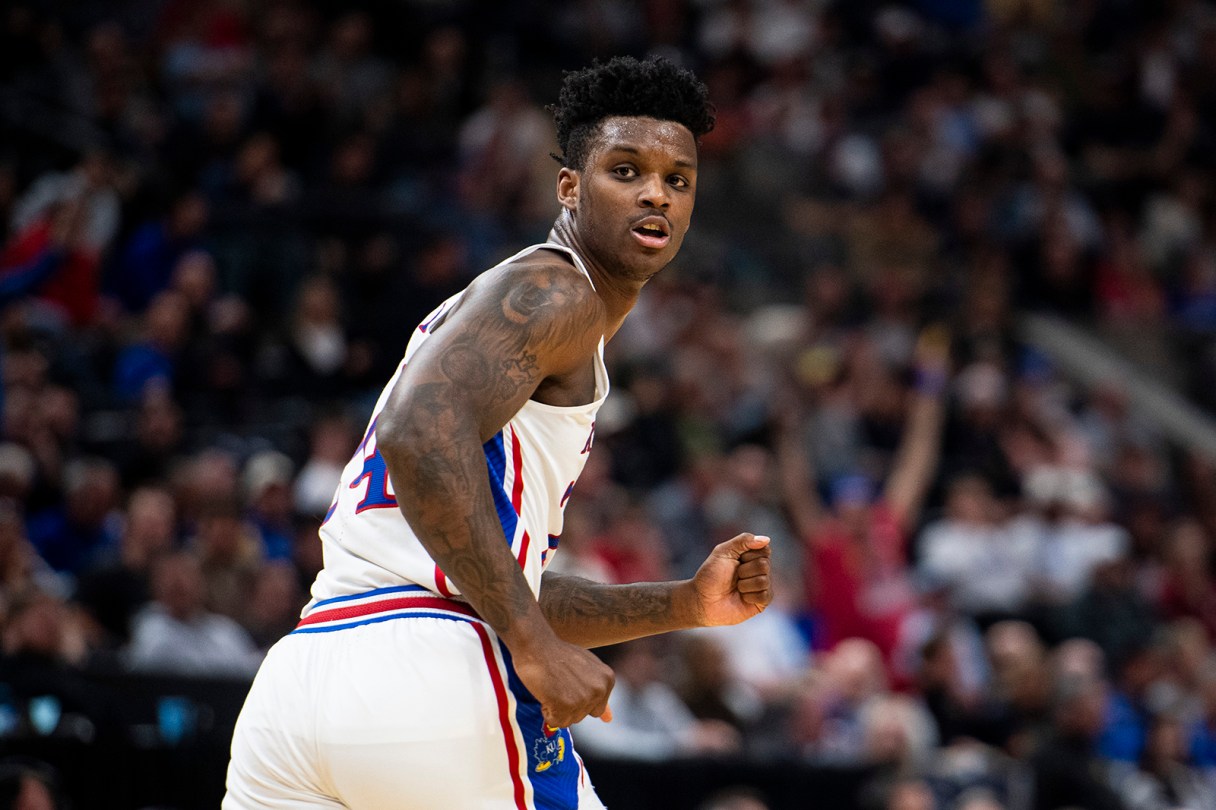
LAWRENCE, Kan. — KJ Adams Jr. is sitting in a corner of Hadl Auditorium, just down the hallway from Allen Fieldhouse, the historic home of the top-ranked University of Kansas men’s basketball team — and the place the senior forward has called home for the past four years.
He is a rarity these days, when college athletes are allowed to transfer freely, often in the pursuit of lucrative name, image and likeness contracts that could make a handful of them instant millionaires. Adams joined the Jayhawks out of high school, played important minutes on an NCAA tournament championship team as a freshman, and has never wavered in his commitment to the program.
“I think it would be cool if more guys stayed four years,” Adams says, glancing around the room at eight newcomers — including six transfers — who form the backbone of the 2024-25 Jayhawks. “You miss all the guys that have come and gone.”
Even at Kansas, a destination program for so many, Adams has played with 32 scholarship teammates during his collegiate career.
Yet such roster change is a fact of life in major college basketball, perhaps more than in football or any other sport due to small number of players on a team. Entire lineups and even rosters can change almost overnight for a program, and players who started for that team one season can be starting against it the next.