
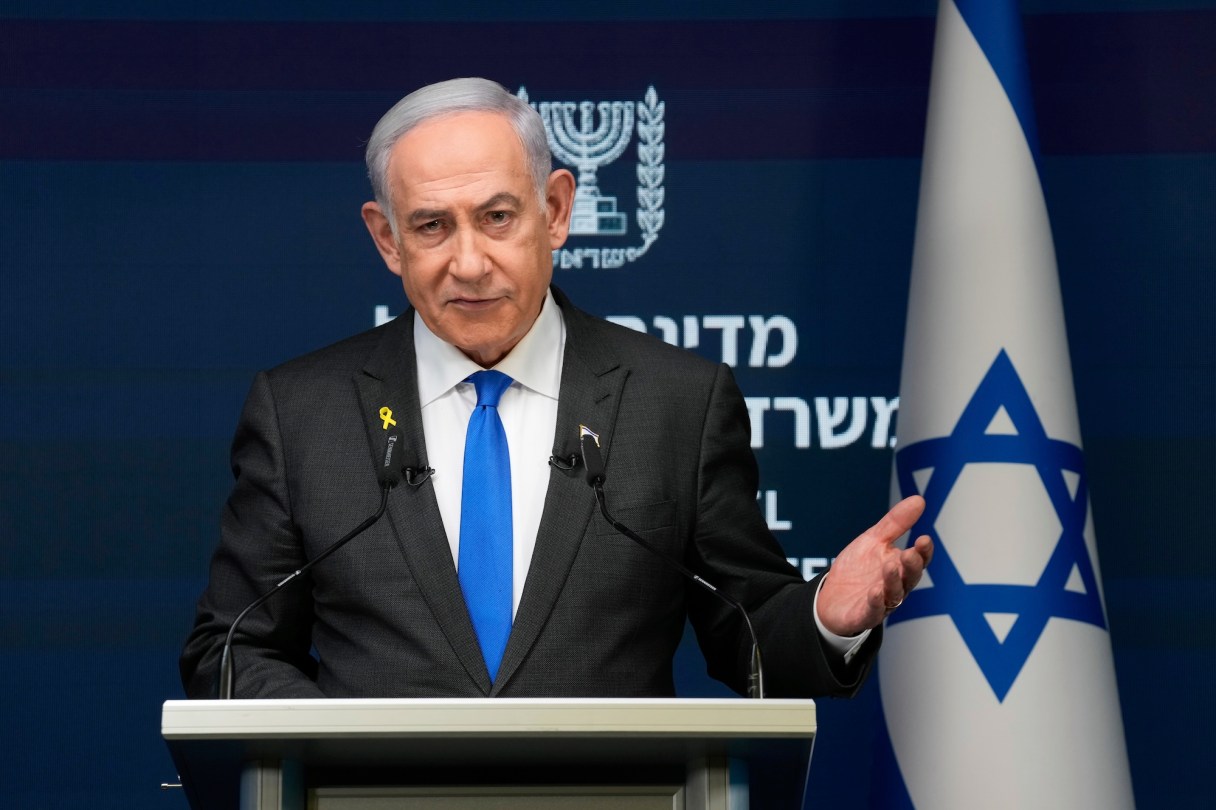
There’s no job on earth less attractive than being a head of state forced to decide between cutting a hostage deal with terrorists that risks encouraging repetition, or consigning innocents to be murdered. Israel’s Prime Minister Benjamin Netanyahu knows this dilemma better than anyone. To get a single soldier back in 2011, he traded more than 1,000 Palestinian prisoners, including Yahya Sinwar, the current Hamas leader who more than a decade later masterminded the mass hostage grab of Oct. 7.
So why was there so much anger against Netanyahu this weekend, rather than empathy for the burden he carries, after six hostages were killed by their minders in a Gaza tunnel? Hamas is, after all, the villain of this piece; it’s both kidnapper and executioner. Yet Netanyahu’s refusal to agree to a cease-fire provoked the largest street protests of the war to date, as well as a nationwide strike by Israel’s biggest trades union and the shuttering of malls and businesses in sympathy.
Judging by the language of the protesters and hostage families, the answer lies in a profound lack of trust in the prime minister’s motivations as he makes these decisions of life, death, war and peace for others.
Netanyahu’s 180-degree change of approach to dealing with hostage takers may be one source of that mistrust. In the one-for-1,027 swap of 2011, for example, he said he was agreeing to release even Hamas prisoners jailed for killing Israelis because “the state of Israel does not abandon its soldiers and citizens.” Now, he says Israel must do exactly that, rather than “surrender” to Hamas.
A second reason lies in the details of what such a surrender would mean. Hamas has been heavily degraded as a fighting force, so no Israeli troops would be waving white flags. The capitulation Netanyahu is ruling out would instead be very specific to the cease-fire negotiations, which have stalled over his late addition of a demand that Israeli forces should retain control of the so-called Philadelphi corridor.