
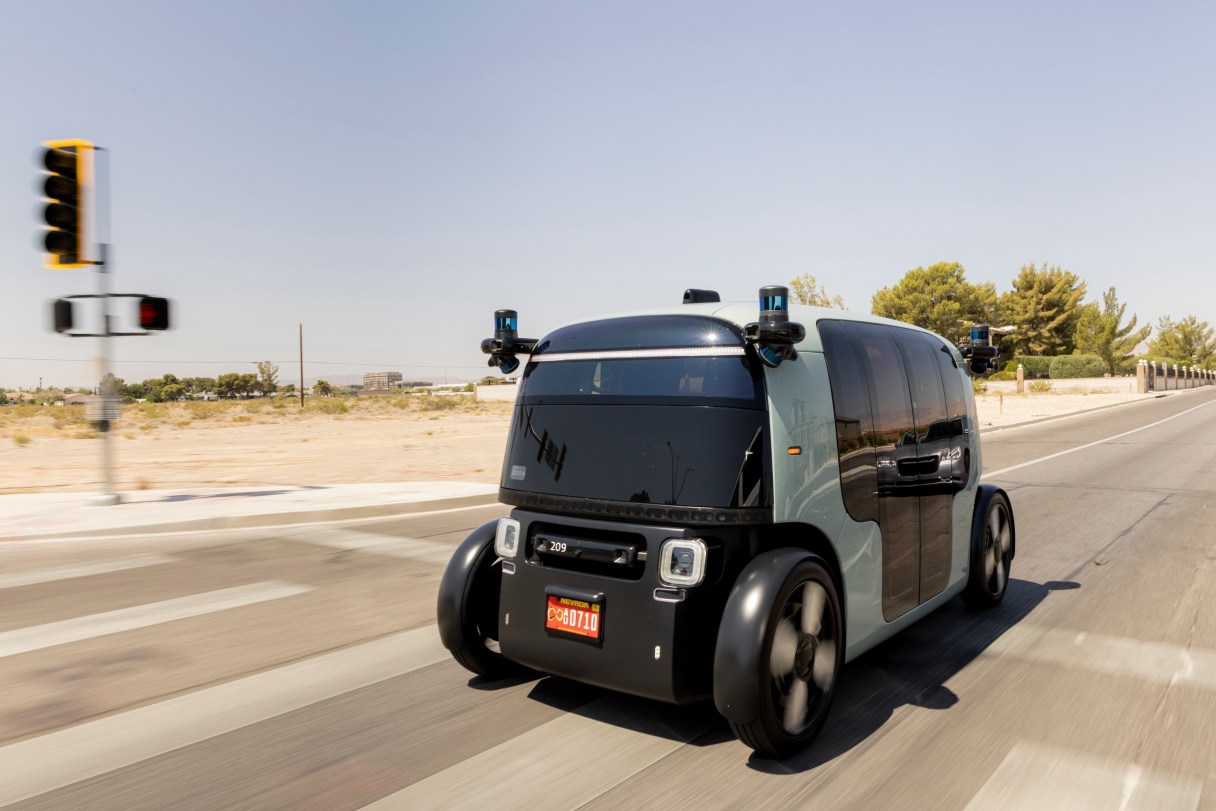
LAS VEGAS — In places like San Francisco, Phoenix and Las Vegas, robot taxis are navigating city streets without a driver behind the steering wheel. Some don’t even have steering wheels.
But some of the cars are sometimes guided by someone sitting at a command center in Foster City, California, operated by Zoox, a self-driving car company owned by Amazon. Like other robot taxis, the company’s self-driving cars sometimes struggle to drive themselves, so they get help from human technicians sitting in a room about 500 miles away.
Inside companies like Zoox, this kind of human assistance is taken for granted. Outside these companies, few realize that autonomous vehicles are not completely autonomous.
For years, companies avoided mentioning the remote assistance provided to their self-driving cars. The illusion of complete autonomy helped draw attention to their technology and encourage venture capitalists to invest the billions of dollars needed to build increasingly effective autonomous vehicles.
“There is a Wizard of Oz flavor to this,” said Gary Marcus, an entrepreneur and an emeritus professor of psychology and neural science at New York University who specializes in artificial intelligence and autonomous machines.