
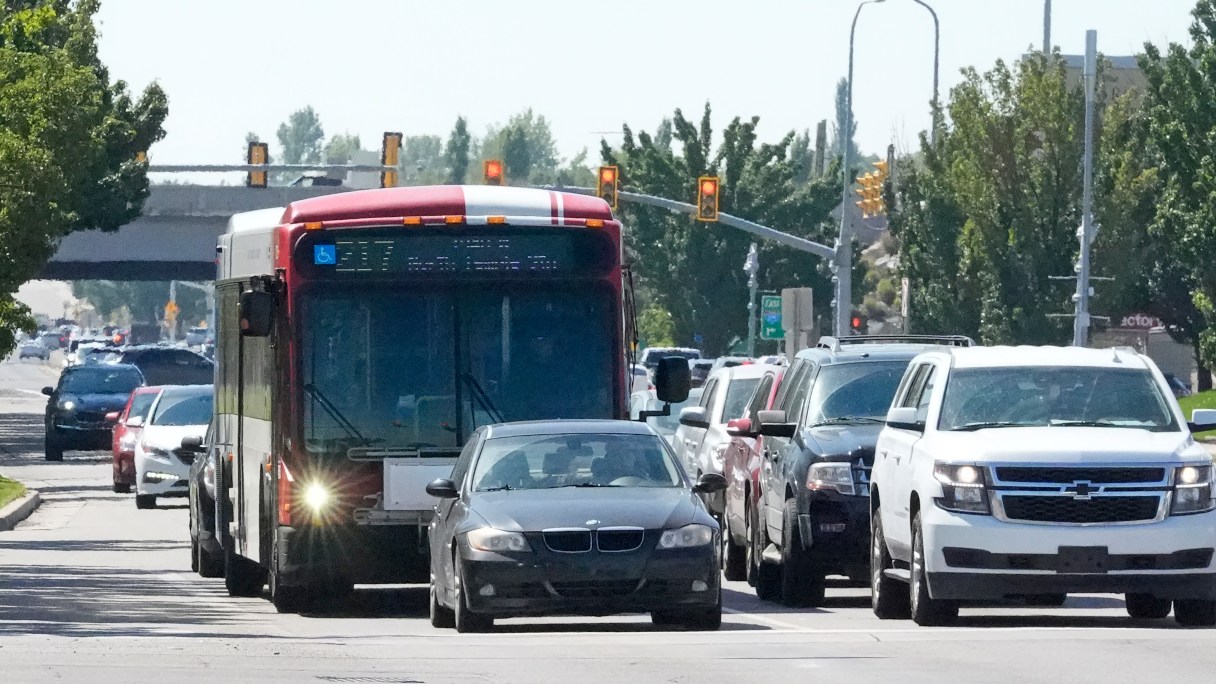
The secret to avoiding red lights during rush hour in Utah’s largest city might be as simple as following a bus.
Transportation officials have spent the past few years refining a system in which radio transmitters inside commuter buses talk directly to the traffic signals in the Salt Lake City area, requesting a few extra seconds of green when they approach.
Congestion on these so-called smart streets is already noticeably smoother, but it’s just a small preview of the high-tech upgrades that could be coming soon to roads across Utah and ultimately across the U.S.
Buoyed by a $20 million federal grant and an ambitious calling to “Connect the West,” the goal is to ensure every vehicle in Utah, as well as neighboring Colorado and Wyoming, can eventually communicate with one another and the roadside infrastructure about congestion, accidents, road hazards and weather conditions.