
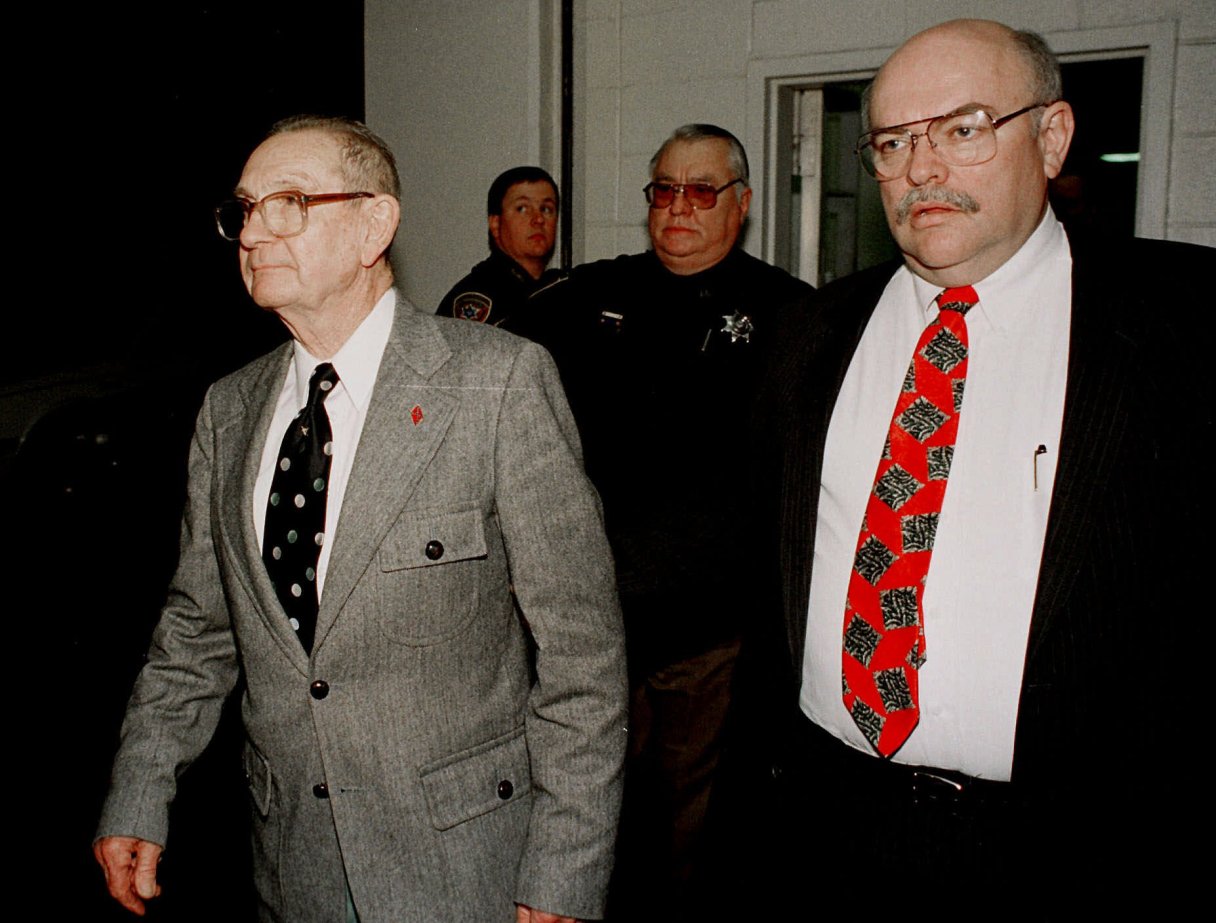

Q. What was the Chattanooga area’s connection to the quest to bring white supremacist and murderer Byron De La Beckwith to justice?
A. De La Beckwith was as a resident of Walden on Signal Mountain when he was arrested Dec. 17, 1990, on a warrant out of Mississippi charging him with the 1963 assassination of civil rights leader Medgar Evers.
What unfolded for nearly the next year was De La Beckwith’s fight to avoid extradition back to Mississippi. He eventually lost that fight. On Feb. 5, 1994, De La Beckwith was convicted of murdering Evers and sentenced to life in prison, according to a story in the next day’s edition of the Chattanooga Free Press.
Author Reed Massengill believes the assassination of Evers and quest to bring De La Beckwith to justice remains relevant today, according to a news release. Massengill will speak about the newest edition of his 1994 book, “Portrait of a Racist: Byron De La Beckwith and the Assassination of Medgar Evers, (University of Tennessee Press, $29.95; $23.96 on Kindle)” at noon Wednesday at the East Tennessee History Center in Knoxville.