
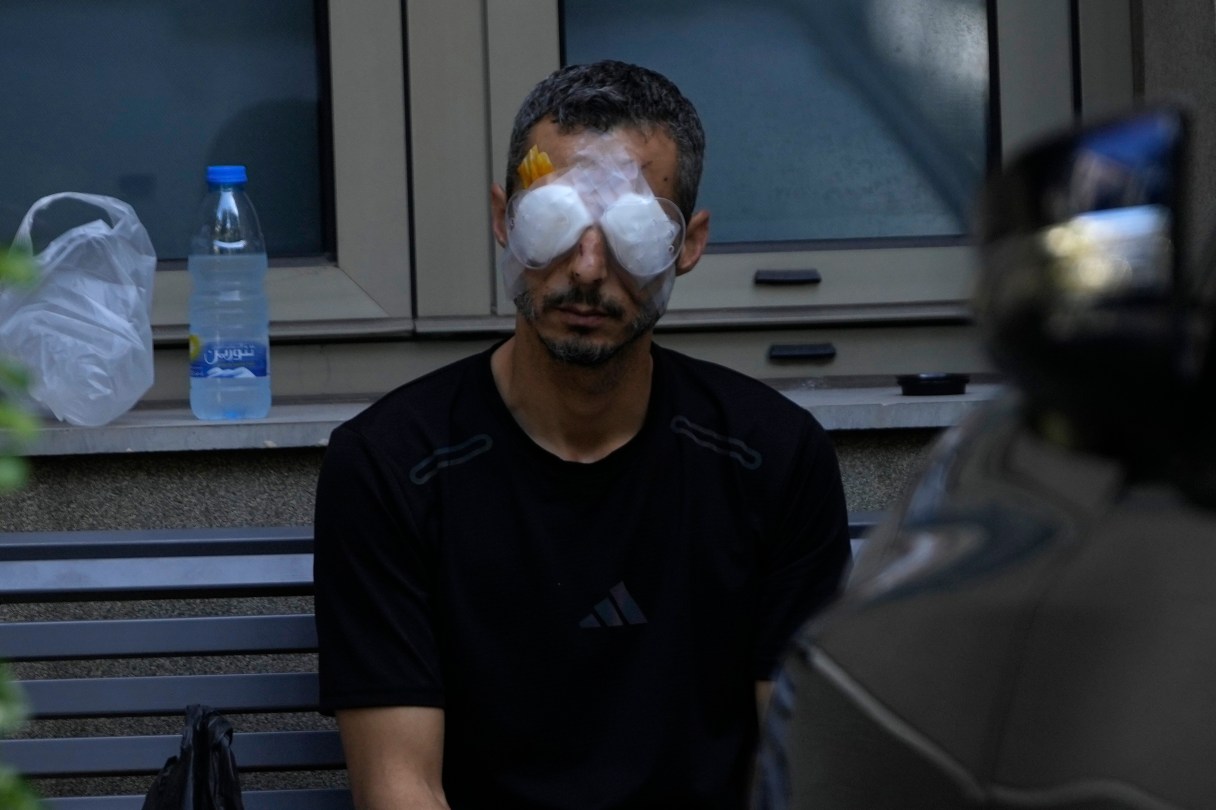
CAIRO (AP) — This week saw a dizzying escalation in the nearly yearlong conflict between Israel and Lebanon’s Hezbollah. First came two days of exploding pagers and walkie-talkies used by Hezbollah — deadly attacks pinned on Israel that also maimed civilians around Lebanon.
Hezbollah’s leader vowed to retaliate, and on Friday the militant group launched a wave of rockets into northern Israel. Later in the day, the commander of Hezbollah’s most elite unit was killed in a strike in Beirut that killed dozens more people.
Early Sunday, the cross-border attacks ramped up. Hezbollah launched more than 100 rockets deeper into northern Israel, with some landing near the city of Haifa, and Israel launched hundreds of strikes on Lebanon.
Many fear the events are the prelude to an all-out war between Israel and Hezbollah, the Iranian-backed Shiite group that is Lebanon’s most powerful armed force. A war threatens to bring devastation in Lebanon, heavy missile fire into Israeli cities, and further destabilize a region already shaken by the war in Gaza.