
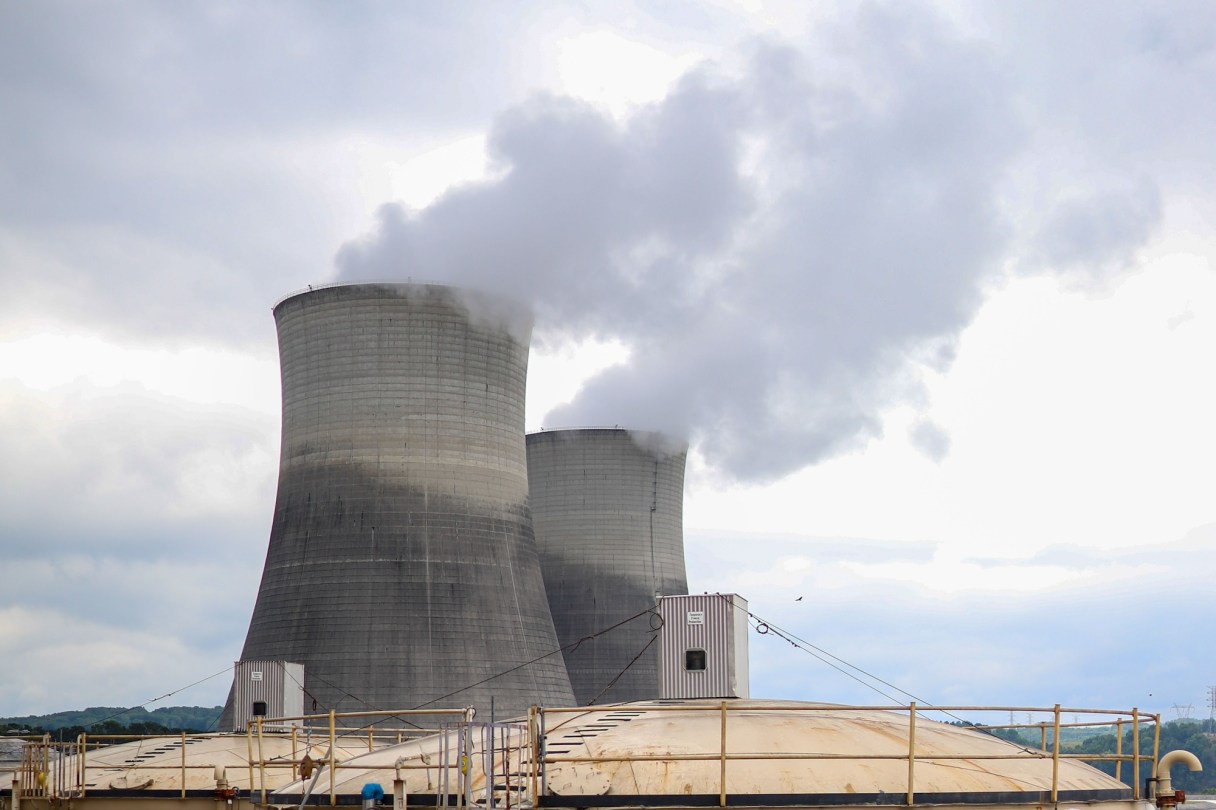
It’s National Clean Energy Week, and it should be noted nuclear energy is one sector fulfilling its promise of providing clean, emissions-free power for our country. It’s also supporting U.S. jobs, innovation and strengthening our entire economy. In fact, Tennessee is helping lead the way in this effort. Our two nuclear power plants — Sequoyah and Watts Bar — provided 45% of total in-state electricity and the majority of the state’s carbon free power in 2022, according to the latest data from the U.S. Energy Information Administration,
Tennessee has deep historical ties to the nuclear industry and is fostering new growth through policies, partnerships and infrastructure investments to help cement its role as a leader in clean energy development. This support can be seen in the state’s energy policies, which offer business incentives benefiting nuclear-related companies, such as tax credits, workforce development grants and financial support for infrastructure development in energy projects.
In addition, Oak Ridge National Laboratory (ORNL) is one of the leading research institutions for nuclear technology and supports commercial nuclear power through collaboration with private companies, universities and government agencies to advance nuclear innovation, including small modular reactors (SMRs) and next-generation reactors. Tennessee has two well-established university programs with the University of Tennessee and Vanderbilt University, which offer nuclear engineering programs and nuclear waste management programs. Tennessee Tech is also adding a nuclear program as part of its superb engineering curriculum.
Also, a number of projects have been announced which are clear examples of expanding Tennessee’s role in the nuclear sector. Gov. Bill Lee recently unveiled the Orano uranium enrichment project in Oak Ridge. This project, coupled with a TVA/GE Hitachi partnership in Roane County, could be the first SMR in the nation to provide power to the grid. Other SMR projects include X Energy’s fuel fabrication facility, and Kairos Power’s construction of an advanced reactor, both in Tennessee. These projects show our state is putting its money where its mouth is in leading the safe deployment of next-generation nuclear reactors.
Given how important nuclear energy is to our state and national economy — not to mention our clean energy future — recent policy wins in Congress will help ensure we can continue to invest in and grow our nuclear power infrastructure through both public and private partnerships. In a bipartisan effort, and the help of Sens. Hagerty and Blackburn, Congressmen Chuck Fleischmann and others, Congress recently passed — and President Biden signed into law — the Fire Grants and Safety Act. This bill included critical nuclear permitting reform legislation known as the Advanced Nuclear for Clean Energy (ADVANCE) Act. The ADVANCE Act will help usher in several sweeping changes at the regulatory level aimed at growing America’s nuclear capabilities. Among other reforms, it will help streamline and simplify the currently onerous permitting and licensing process for advanced nuclear reactors. It will also help reduce license fees for innovative nuclear reactor designs and institute an 18-month timeline for the National Environmental Policy Act review process for new nuclear projects.
Tennessee recognizes the critical importance of clean, reliable power for long-term economic development and conservation of our state’s beautiful natural resources. Emissions-free nuclear energy is going to make sure Tennessee’s businesses, homes and communities have a reliable and clean energy source for now and the future of our state.
Steve Jones, a resident of Anderson County, is a member of the Tennessee Nuclear Energy Advisory Council.