
KANSAS CITY, Mo. — Kansas City Royals manager J.J. Picollo sat in the home team’s dugout on an unseasonably warm autumn afternoon at Kauffman Stadium, waiting for his club to face the Detroit Tigers in a matchup of American League Central Division rivals that few thought would be fighting for the postseason this year.
Both had losing records last season, and the Royals had fallen so far from the halcyon days of their 2014 and 2015 pennants that they were coming off a 106-loss campaign that was arguably the worst season in the history of the franchise.
Neither the Royals nor the Tigers were fighting for the division title, though. The Cleveland Guardians were busy putting that race to rest. But they were firmly in the mix for one of the three wild-card playoff berths awarded to teams in each league, and giving Major League Baseball exactly what it wanted when it expanded its postseason field a couple of years ago.
“I like that more teams get in. I think it’s made it more interesting for our fans,” said Picollo, who has worked in various roles for the franchise since 2006. “There’s more fans coming to the games — watching games — than there typically is. There’s several teams on the fringes that could make a move. So the fan base is engaged, and I think that’s awesome for the game.”
There are myriad reasons that MLB has become relevant again this season, from the pitch clock and rules changes that have shortened games to historic performances by the likes of Shohei Ohtani of the Los Angeles Dodgers and Aaron Judge of the New York Yankees.
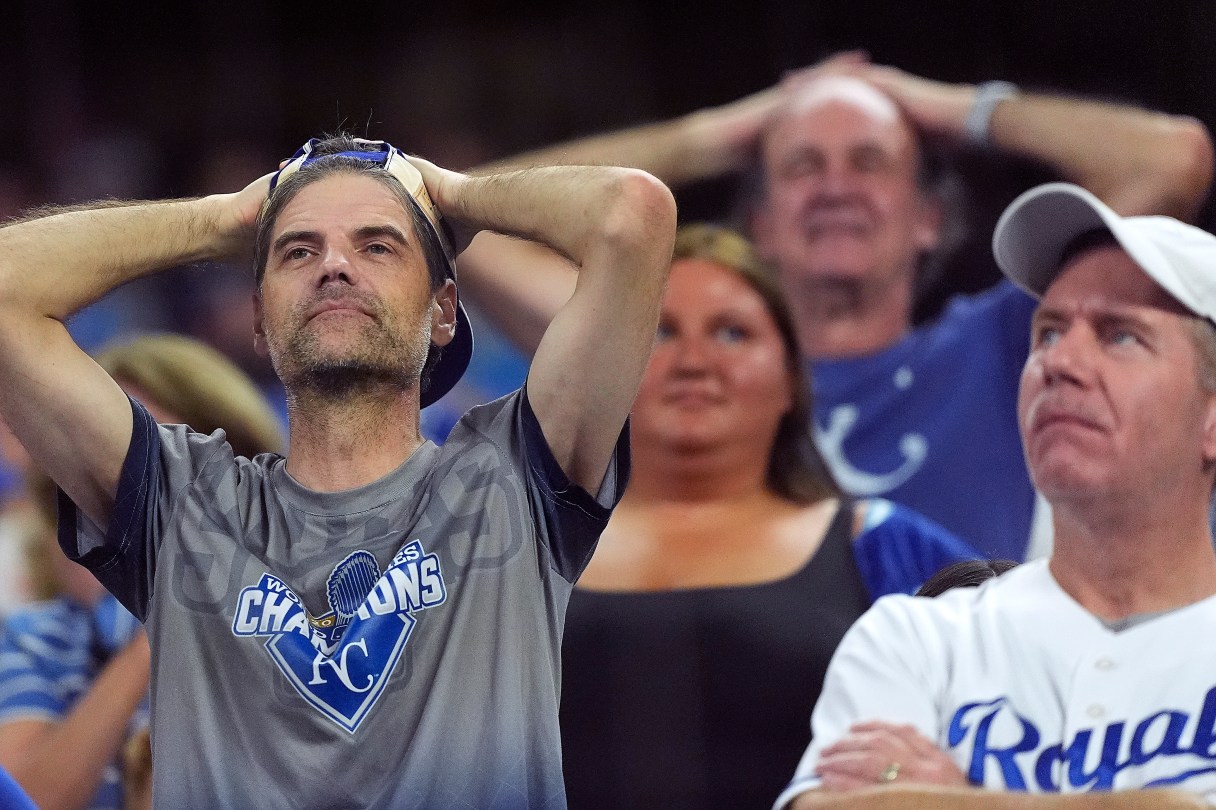
Yet the fact remains that many fans shut down once their team is out of contention — for the Royals, that’s been about mid-May lately. The expanded playoffs means more fan bases are engaged deeper into the year; with just more than a week to go in the regular season, seven were still alive for the three AL wild cards and five were fighting for the three National League wild cards.
“I think it’s done exactly what they wanted it to do, which is keep a lot of people interested, and a lot of teams in it,” said Atlanta Braves manager Brian Snitker.
The Braves’ run as NL East champions ended this year as their streak of division titles was stopped at six straight. The Philadelphia Phillies ran away with it this time, but Atlanta was still alive for a wild card.
In fact, the Braves were battling another division rival — the New York Mets — for one of the available spots.
“You know who hates it? My mom,” said Boston Red Sox manager Alex Cora, whose brother, Joey, happens to be the third-base coach for the Tigers, which meant one of Iris Amaro’s favorite teams might have made the playoffs at the expense of the other.
“Let’s see who Iris is actually pulling for,” Cora said with a grin. “I think it’s good for the sport, regardless.”
Boston was bounced from contention for a postseason spot by midweek, but the Tigers persist.
MLB has changed its playoff format several times. From 1969 to 1993, division winners went straight to the league championship series, and the winners met in the World Series. The wild card was instituted in 1994 along with a division realignment to give more teams a chance, and a second wild card in 2012 expanded the playoffs to 10 teams.
At that point, each league’s wild cards played a one-game, winner-take-all showdown for a spot in the divisional round.
“I was involved in two wild cards where it was win or go home,” said Baltimore Orioles manager Brandon Hyde, whose team is bound for the playoffs despite falling short against the rival New York Yankees in the AL East title race. “That was like the Super Bowl, it felt like, that one night.”
Two years ago, a third wild card in each league expanded the playoffs to 12, and the play-in game was replaced by best-of-three series featuring those three teams and the lowest-seeded division winner. And while it brought two more teams into the mix, it also forced a team that won its division after a 162-game slog to play an extra series just to reach the divisional round.
That particular element of the expanded playoffs doesn’t sit well with everyone.
“If you win your division, you shouldn’t have to play in a wild-card series,” Mets outfielder J.D. Martinez said. “I like the idea of a single-game wild card, not a three-game (series). I played in two of them, and they were electric. They were unbelievable. They were some of my favorite experiences, those two wild-card games. There’s just so much. It’s like a Game 7.”
Even fans of the same team, and one still alive because of the expanded playoff format, have mixed feelings about it.
“I’m not a fan,” said Charlies Devries, a Braves fan from Atlanta. “There is no real reason for it. I like the old way of doing it. I like the one-game wild-card tiebreaker. It doesn’t make it any more exciting in the last part of the season.”
“I kind of like the new format,” countered Jack Mixon, a Braves fan from Hall County, Georgia. “It’s nice to see (the Braves) try to win another World Series. The end of the season is now really exciting because any mistake could cost us the playoffs.”
With just more than a week left in the season, that was the case for a dozen teams still fighting for wild cards.