
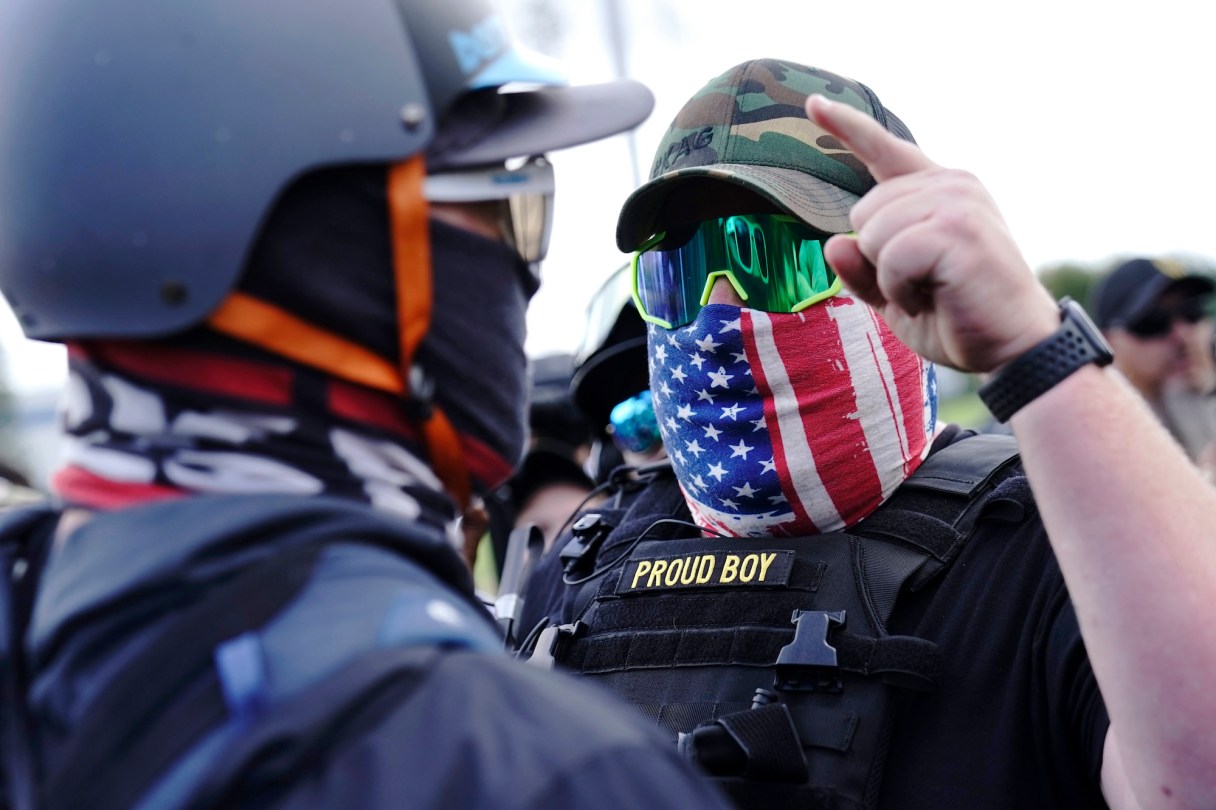
Remember during the 2020 presidential race when Donald Trump refused to disown right-wing violent extremists, instead telling the Proud Boys to “stand back and stand by”? We might now know what they’ve been standing by for.
After the rioters at the U.S. Capitol failed to disrupt the transfer of the presidency a few months later, and the nation turned its attention elsewhere, American University’s Cynthia Miller-Idriss warned in an interview with The New York Times: “A lot of people want to see Jan. 6 as the end of something. I think we have to consider the possibility that this was the beginning of something.” But then came successful prosecutions of many of the participants, yielding more than 1,000 convictions as of this month. The sense grew that the worst of mob violence was behind us.
Not so. Recent investigations have shown that right-wing militias generally, and the Proud Boys in particular, are reorganizing, perhaps with more supporters than ever.
It’s important to understand just how violent these groups are. Our research team at UC Davis has conducted a large, annual, nationally representative survey on support for and willingness to engage in political violence since 2022. That year we gathered data directly from supporters of the Proud Boys and the militia movement (and six other right-wing extremist organizations and social movements).
More than 40% of the Proud Boys and militia supporters we surveyed thought that “having a strong leader for America [was] more important than having a democracy,” and majorities thought the 2020 election had been stolen from Donald Trump. More than a third thought that violence was justified to return Trump to the presidency — in 2022. They were endorsing the violent overthrow of a legitimately elected government that had been in office for more than a year.