
(Editor’s note: Last of three parts)
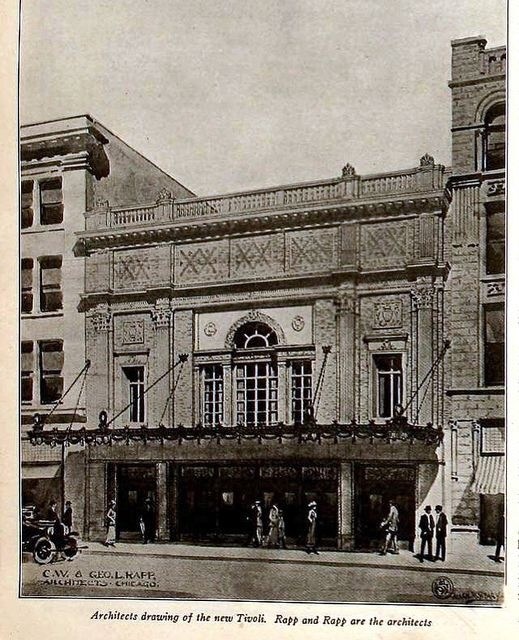
The Chattanooga News headline on Friday, March 18, 1921, said, “Saturday is the day and 1 p.m. is the hour announced for the opening of the South’s most beautiful theater — the Tivoli.” Excitement surged. Newspapers in the region carried the program of upcoming events, and patrons purchased tickets weeks early so that they might be witnesses to the historic opening of Chattanooga’s tribute to culture and music, enhanced by a glorious interior reflecting Italy’s own Tivoli theater. Tickets entitled the attendee to be seated in lush seats on the floor level of the theater or in one of the two balconies, reached by beautiful stairs and equal in comfort and viewing joy to “any playhouse in any city.”
With the structure’s total cost of more than one million dollars, the promoters proclaimed that a single phase of the Tivoli’s construction surpassed the average cost of an “ordinary photoplay home.” Attendees entered the theater, paused to admire the architectural design and had to agree with the management: “It was sumptuously fitted up, upholstered, decorated and designed.”
Events on Saturday began at 1 p.m. with the overture, “Orpheus in the Underworld,” performed by the Tivoli symphony orchestra conducted by I.R. Summers. After news updates, the Tivoli crew presented a surprise prologue, “A Cinderella Fantasy,” with scenic and lighting effects unlike any Chattanooga had ever seen. As the audience finished its applause, the theater darkened for Cecil D. DeMille’s silent drama film, “Forbidden Fruit,” which had premiered only two months earlier in New York City, starring Clarence Burton, Agnes Ayers and Theodore Roberts. Following that feature presentation, Mae Murray, a renowned film star, stepped on stage and shared her impressions of the theater and her first visit to Chattanooga. At 3 p.m., the entire program repeated for a new group of ticketholders.
The theater fell dark briefly until late afternoon, when patrons decked in formal attire began lining up an hour prior to the scheduled opening at 7 p.m. The presentation began with a repeat of earlier pieces — “Orpheus in the Underworld,” “A Cinderella Fantasy” and “Forbidden Fruit,” after which events took a new turn. Mae Murray reappeared, but this time was joined by “other visiting stars” with their introductions, comments and promises of “returns to the Scenic City.”
Milton B. Ochs, master of ceremonies, came on stage accompanied by Mayor Alexander Chambliss and other city officials for a formal opening ceremony and dedication. Following Mayor Chambliss’s comments, Professor Spencer McCallie entertained the audience with stories of a Tivoli theater in a town of the same name and described some of the similarities between the Italian structure and Chattanooga’s newest landmark. Ochs introduced various film studio executives, promoters and distributors along with reporters from several national newspapers. Amidst thunderous applause and a standing ovation, the ceremony ended — only to be repeated at 9:30 p.m. for a second seating of arts and cultural enthusiasts.
The Tivoli’s opening spurred an announcement on the same evening. Charles E. James shared with the press that he was entertaining bids for the construction of a five-story, steel-girded, fireproof building to be erected as soon as a contract could be inked for the 90-foot lot on Broad Street next to the new theater. The annex to the current James Building would feature four upper floors for offices while the lower level could feature several small stores or one large enterprise. James said he was “confident that the space will be in demand immediately when the business public notes the crowds on Broad Street after the opening of the Tivoli.”
The choice of a steel component was based upon the speed of erection, “the economy of space as compared to that required for concrete,” and the fact that metal fabrication was now competitive in cost with that of concrete. The front of the new structure would match the current James Building with its white brick walls, trimmed in cream terra cotta.
When asked about the Provident Life and Accident building, Charles James declared that it would remain with its current two stories since adding additional floors would restrict the light enjoyed by James Building tenants. In effect, both the current and new James buildings would bask in “free light on all three sides and four sides above the height of the theater.” Excavation would begin immediately, followed by establishment of primary concrete foundations and sidewalks with windows to light the basement.
Chattanooga’s 1920’s looked promising.
Linda Moss Mines is the Chattanooga-Hamilton County historian. For more on local history, visit Chattahistoricalassoc.org.