
1. President Donald Trump’s so-called “trade war.”
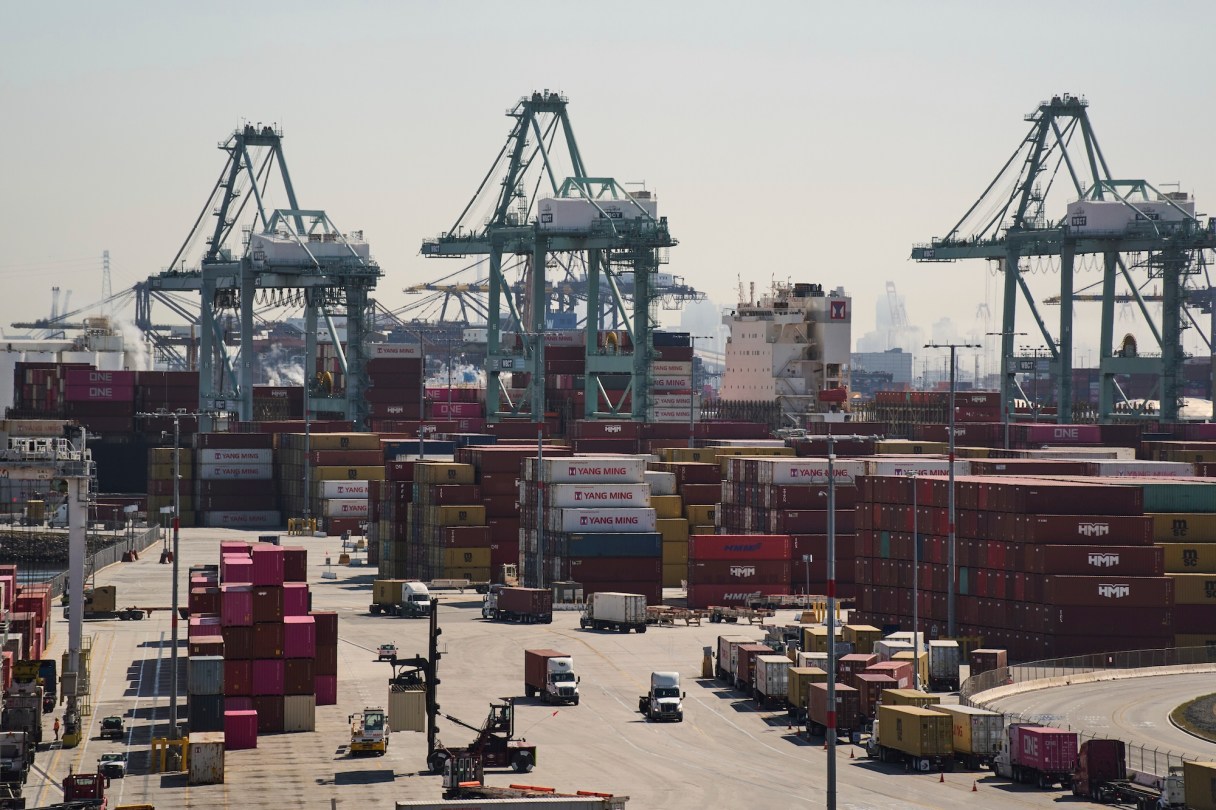
Many call the American effort to obtain either tariff parity or a reduction in the roughly $1 trillion trade deficit and 50 years of consecutive trade deficits a “trade war.” But then what do they call the policies of the past half-century by Europe, Asia, China, and others to ensure asymmetrical tariffs, pseudo-health and security trade restrictions, and large surpluses?
A trade peace? Trade fairness?
2. Do nations prefer surpluses or deficits?
Why do most nations prefer trade surpluses and protective tariffs?
Are Europe, Asia, China, and others suicidal in continuing their trade surpluses and protective or asymmetrical tariffs?
Is the United States uniquely brilliant in maintaining a half-century of cumulative trade deficits? Do Americans alone discover the advantages of a $1 trillion annual trade deficit and small or nonexistent tariffs?
Why don’t America’s trading partners prefer deficits like ours — given we supposedly believe they are either advantageous or perhaps irrelevant?
3. Would our trade partners prefer to trade places with us?
Would our trade partners prefer to have America’s supposed benefits of a $1-trillion trade deficit? Would the United States then “suffer” like they do by running up $200 billion annual surpluses?
4. What if wages went up at the rate of the stock market?
What would now be the reaction of the stock market if over the last decade wages had increased at the rate of stocks — and the stocks at the rate of wages?
5. Is Wall Street’s meltdown a fear of what might happen in the future? Or is it reacting to March’s latest jobs report that there were 93,000 more jobs created than predicted? Did the furor arise over the March inflation report that the annualized inflation rate dipped to 2.6% per year?
6. Is the frenzy caused by the Trump economic agenda?
Is Wall Street’s worry that Trump’s impending tax cuts, more deregulation, greater budget cuts, and continued efforts to eliminate budget deficits and reduce national debt will stall economic growth?
7. What about North American neighbors?
If the U.S. was running a $63 billion-plus trade surplus with Canada, refusing to meet its NATO requirements to spend 2% of GDP on defense, and instead spent only 1.37%, would Canada become concerned?
If Mexico were running a $171 billion trade deficit with the U.S., if Americans in Mexico were sending over $60 billion per year out of Mexico to the U.S., and if American drug dealers were making $20 billion by selling fentanyl and opioids to Mexico, would Mexico be angry?
8. Is the Trump agenda bad economic news?
Is the current panic over tariffs amplified by Trump’s other policies?
Is the outrage due to the targeting of about $200 billion in budget cuts or plans to shave off $500 billion from the annual budget?
9. Was the Biden record preferable?
Should Trump try to match former President Joe Biden’s $7 trillion addition to the national debt? Should he return to allowing 12 million illegal aliens into the country?
10. Why the negotiations and why now?
Why are 70 countries now wishing to negotiate tariffs with America either down to zero or reciprocally to the same rate as ours?
Is that a good thing? If so, why did our trade partners not wish to lower their trade barriers far earlier?
Did they suddenly and spontaneously decide they were acting unfairly and, on their own prompt, now want to make amends?
What’s next?
If there soon is a rush of nations to cut a deal with the U.S. and not to be left out of the American market, will there follow another hysterical Wall Street spasm — but not to sell, but instead to buy stocks at bargain prices?
Victor Davis Hanson is a historian at the Hoover Institution, Stanford University.