
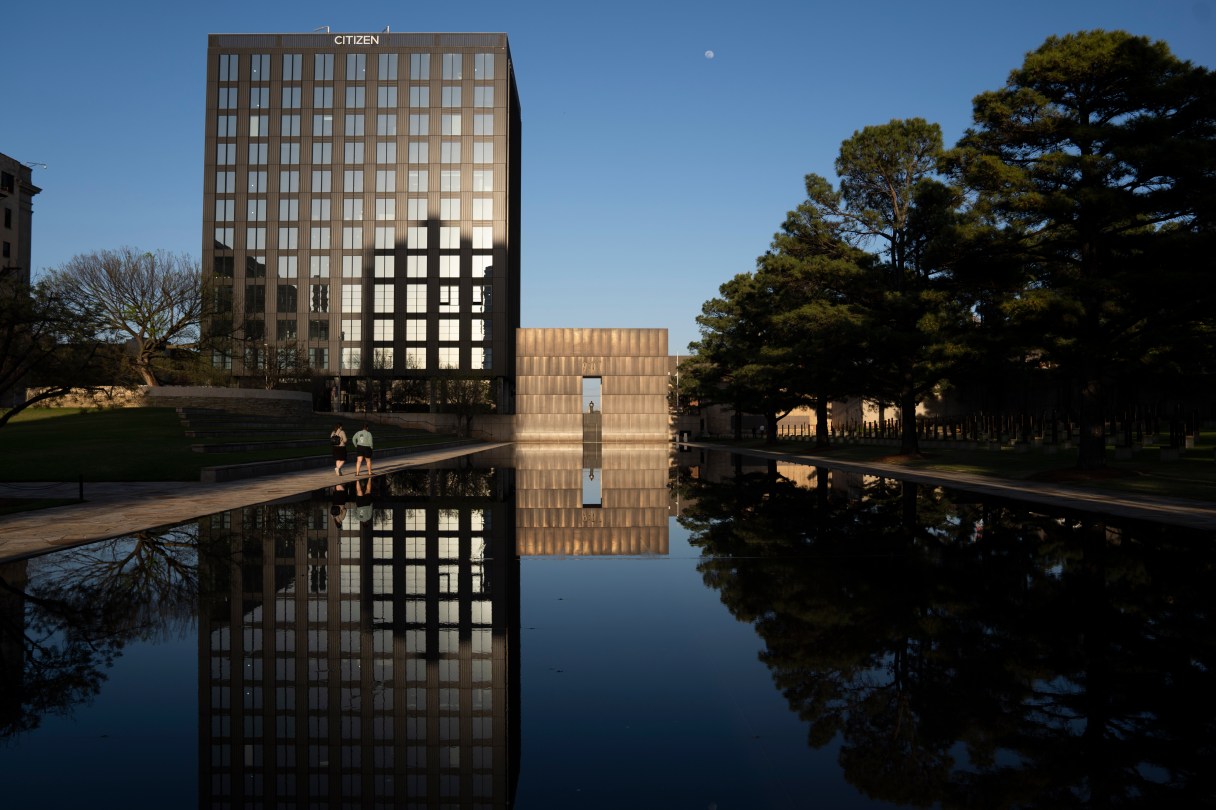
OKLAHOMA CITY (AP) — Thirty years after a truck bomb detonated outside a federal building in America’s heartland, killing 168 people in the deadliest homegrown attack on U.S. soil, deep scars remain.
From a mother who lost her first-born baby, a son who never got to know his father, and a young man so badly injured that he still struggles to breathe, three decades have not healed the wounds from the Oklahoma City bombing on April 19, 1995.
The bombers were two former U.S. Army buddies, Timothy McVeigh and Terry Nichols, who shared a deep-seated hatred of the federal government fueled by the bloody raid on the Branch Davidian religious sect near Waco, Texas, and a standoff in the mountains of Ruby Ridge, Idaho, that killed a 14-year-old boy, his mother and a federal agent.
And while the bombing awakened the nation to the dangers of extremist ideologies, many who suffered directly in the attack still fear anti-government rhetoric in modern-day politics could also lead to violence.
A 30-year anniversary remembrance ceremony is scheduled for April 19 on the grounds of the Oklahoma City National Memorial Museum.