
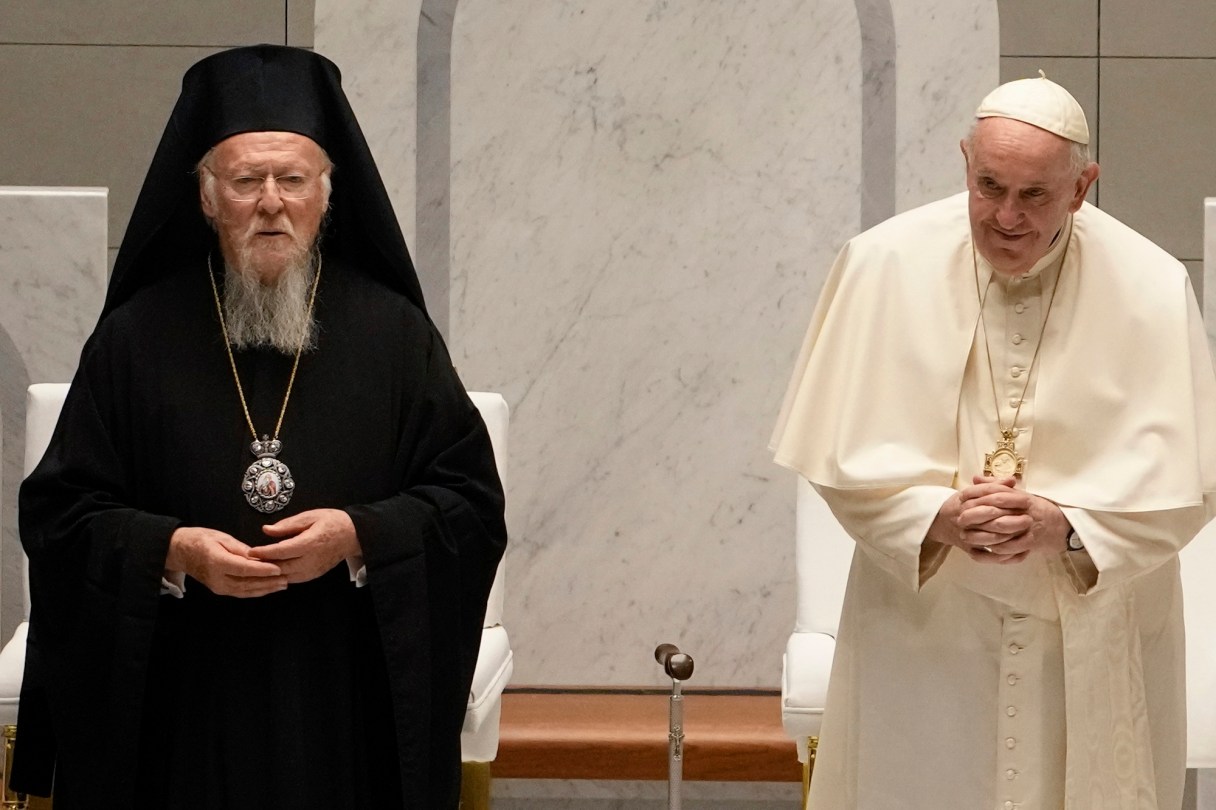
ATHENS, Greece (AP) — For more than 400 years, Catholic and Orthodox churches have used different ways to determine the date of Easter. But this Sunday will mark a special moment for Christians, as the churches celebrate of Jesus’ resurrection on the same day.
What’s more, top religious leaders — including Pope Francis — are expressing a desire to keep it that way. But the unusual alignment has stirred underlying mistrust between the two major Christian communions.
Calendars and calculations differ
The movable date for Easter follows a seemingly straightforward rule: the Sunday following the first full moon on or after the spring equinox. But the two churches started using different calendars after Pope Gregory XIII’s adaptation in 1582, when the Western church adopted the Gregorian calendar while the Eastern Orthodox Church kept the older Julian one.
Moreover, each church uses its own ecclesiastical calculations for lunar cycles and the equinox, which don’t neatly match scientific projections.