
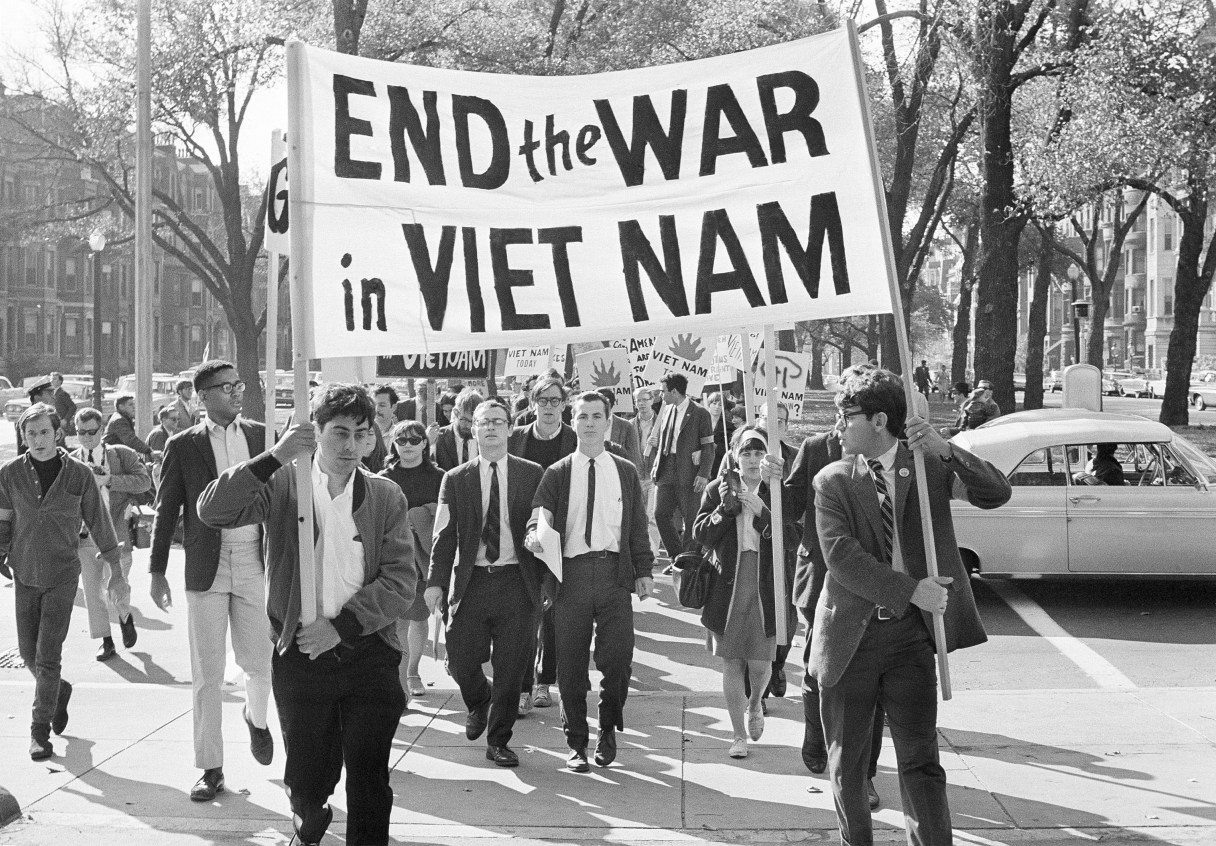
NEW YORK (AP) — Out of the many Vietnam War protests she performed at in the 1960s and 1970s, Judy Collins can never forget one in Washington, D.C., where she stood before thousands and sang Bob Dylan’s “Masters of War.”
“It was just me, and Bruce Langhorne playing the guitar, for this huge event. … And everybody knows the words and very quickly they all start singing along,” she says, remembering the “amazing” spirit of those rallies. “It does trigger something in the brain to hear those songs. They make you say, ‘I must be able to contribute something.’”
The end of the Vietnam War, 50 years ago, also helped wind down an extraordinary era of protest music.
For Collins and such contemporaries as Joan Baez, Pete Seeger and Peter, Paul and Mary, bringing the troops home was a mission that carried them around the country, and the world. The journey was shared with like-minded audiences who joined in on “Masters of War,” “Give Peace a Chance,” “Blowin’ in the Wind” and other standards — as if to say the songs belonged as much to the movement as they did to the singer.
The causes have endured, and proliferated: arms control and apartheid, women’s rights and globalization, climate change and police violence. And protest songs have been written for them, from Kendrick Lamar’s “Alright” to Steve Van Zandt’s “Sun City.” But few, if any, have entered the collective cultural memory like the music of decades ago: Protest songs are as common as ever, protest anthems are rare.