
The pilots of a U.S. Army helicopter that collided with a passenger jet over Washington in January would’ve had difficulty spotting the plane while wearing night vision goggles, experts told the National Transportation Safety Board on Friday.
The Army goggles would have made it difficult to see the plane’s colored lights, which might have helped the Black Hawk determine the plane’s direction. The goggles also limited the pilots’ peripheral vision as they flew near Ronald Reagan Washington National Airport.
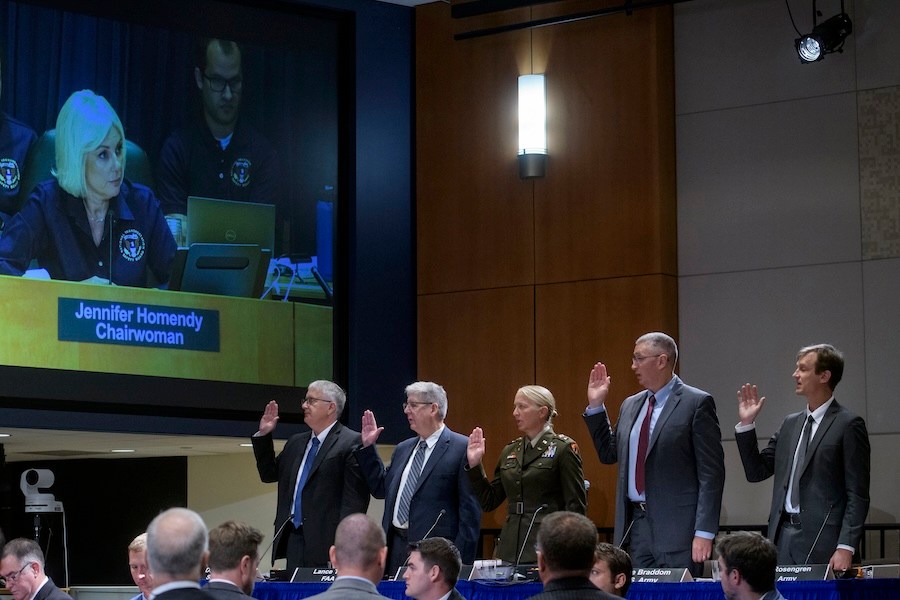
The challenges posed by night-vision goggles were among the topics discussed at the NTSB’s third and final day of public testimony over the fatal midair crash, which killed all 67 people aboard both aircrafts.
Experts said another challenge that evening was distinguishing the plane from lights on the ground while the two aircraft were on a collision course. Plus, the helicopter pilots may not have known where to look for a plane that was landing on a secondary runway that most planes didn’t use.
“Knowing where to look. That’s key,” said Stephen Casner, an expert in human factors who used to work at NASA.