
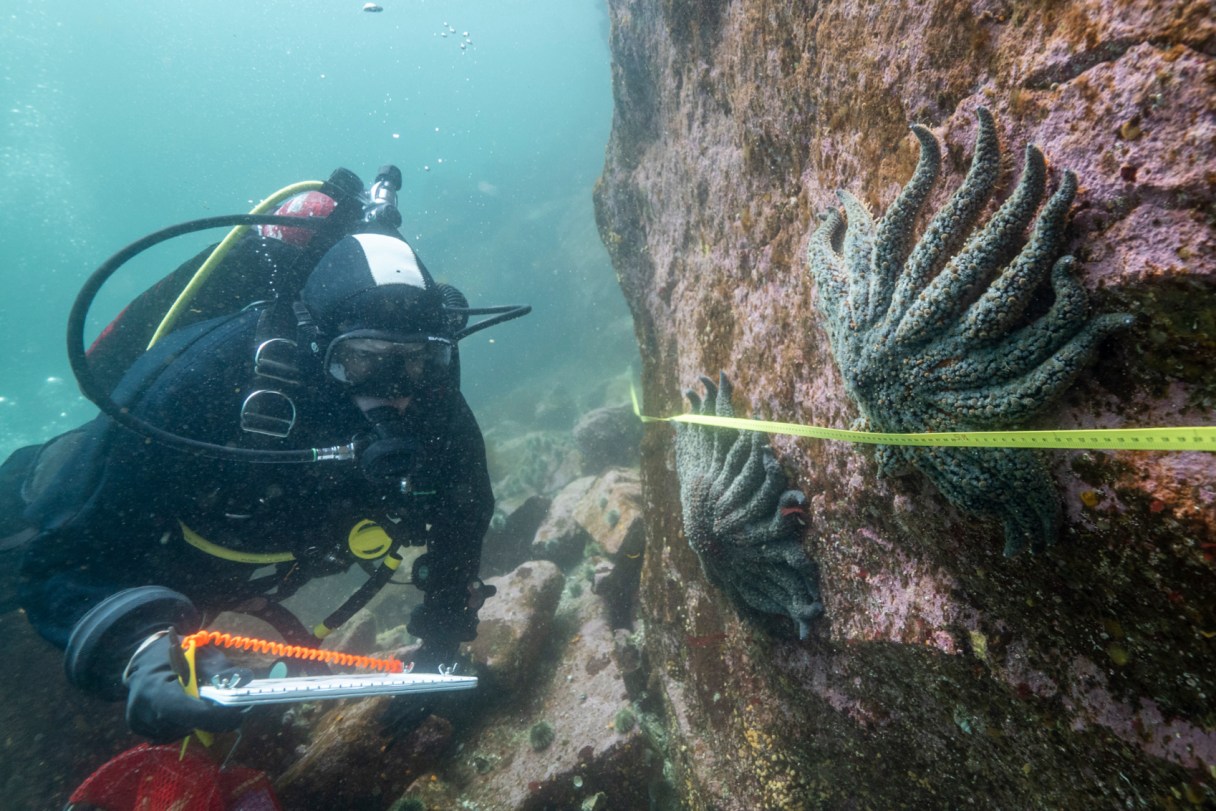
WASHINGTON (AP) — Scientists say they have at last solved the mystery of what killed more than 5 billion sea stars off the Pacific coast of North America in a decade-long epidemic.
Sea stars – often known as starfish – typically have five arms and some species sport up to 24 arms. They range in color from solid orange to tapestries of orange, purple, brown and green.
Starting in 2013, a mysterious sea star wasting disease sparked a mass die-off from Mexico to Alaska. The epidemic has devastated more than 20 species and continues today. Worst hit was a species called the sunflower sea star, which lost around 90% of its population in the outbreak’s first five years.
“It’s really quite gruesome,” said marine disease ecologist Alyssa Gehman at the Hakai Institute in British Columbia, Canada, who helped pinpoint the cause.
Healthy sea stars have “puffy arms sticking straight out,” she said. But the wasting disease causes them to grow lesions and “then their arms actually fall off.”