

Wednesday, November 11, 2026Nov 11

This story is exclusive to subscribers.

Soddy-Daisy increases property tax rate by 21%

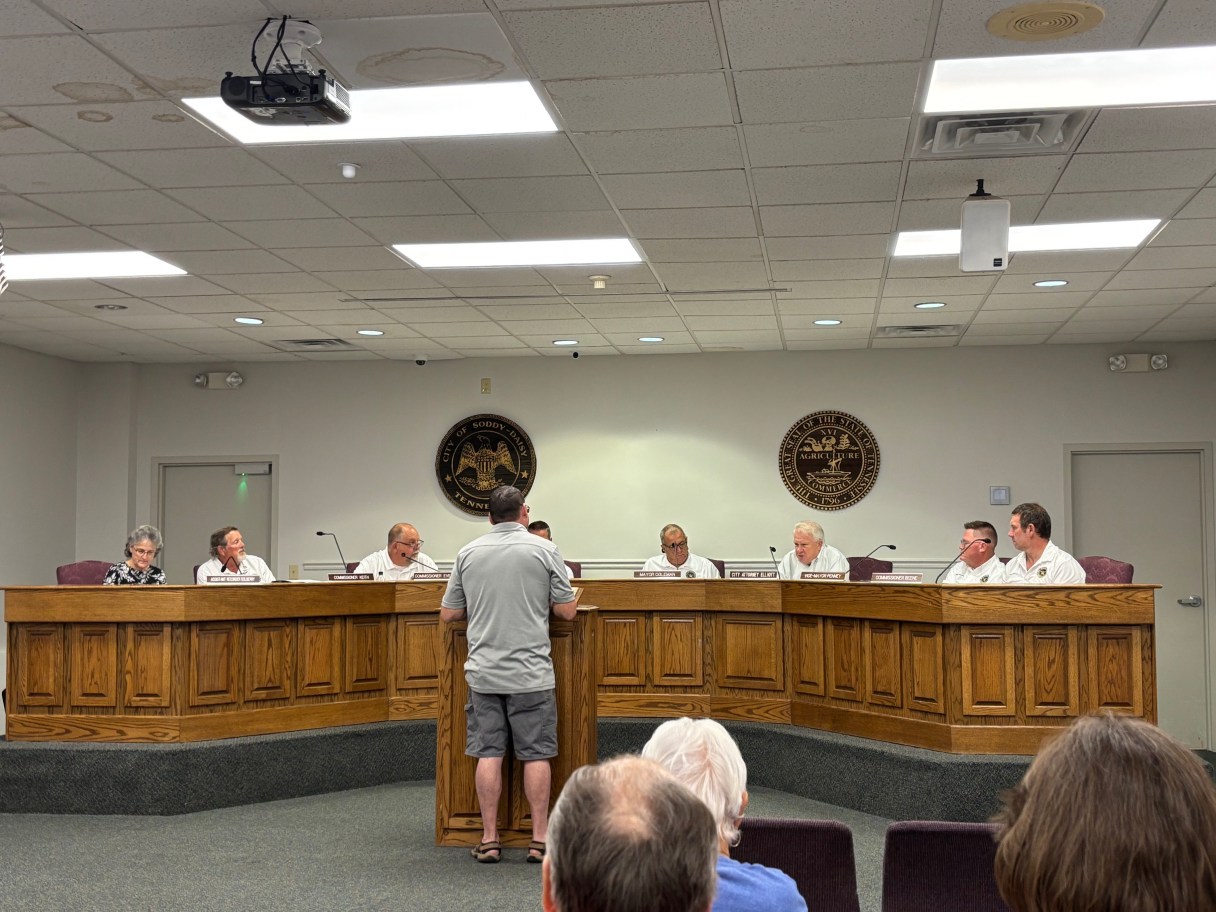
Staff photo by Emily Crisman / Soddy-Daisy resident Curtis Cecil speaks from the podium at City Hall to the city's Board of Commissioners about a proposed property tax increase on Thursday, Aug. 7, 2025. On the dais from left are City Recorder Annette Dolberry, commissioners Marcus Keith and Steve Everett, City Manager Burt Johnson, Mayor Jim Coleman, City Attorney Sam Elliott, Vice Mayor Mark Penney and Commissioner Travis Beene.
Staff photo by Emily Crisman / Soddy-Daisy resident Curtis Cecil speaks from the podium at City Hall to the city's Board of Commissioners about a proposed property tax increase on Thursday, Aug. 7, 2025. On the dais from left are City Recorder Annette Dolberry, commissioners Marcus Keith and Steve Everett, City Manager Burt Johnson, Mayor Jim Coleman, City Attorney Sam Elliott, Vice Mayor Mark Penney and Commissioner Travis Beene. Staff photo by Emily Crisman / Soddy-Daisy resident Curtis Cecil speaks from the podium at City Hall to the city's Board of Commissioners about a proposed property tax increase on Thursday, Aug. 7, 2025. On the dais from left are City Recorder Annette Dolberry, commissioners Marcus Keith and Steve Everett, City Manager Burt Johnson, Mayor Jim Coleman, City Attorney Sam Elliott, Vice Mayor Mark Penney and Commissioner Travis Beene.

Soddy-Daisy city commissioners have voted to increase the city’s property tax rate by about 21% for the 2026 fiscal year, which began July 1.

The certified rate of $0.0907 per $100 of assessed value will increase to $1.10 per $100 of assessed value, resulting in about $1 million in additional revenue, City Manager Burt Johnson said at the meeting.

For the owner of a $350,000 home, the median home price in Soddy-Daisy, the new rate will result in an increase of $169 per year or $14.07 per month.

Although the value of many Soddy-Daisy properties increased with Hamilton County’s recent reappraisals, which occur every four years, Tennessee law prevents municipalities from automatically collecting additional revenue based on increased property values.

Governments are required to set a revenue-neutral “certified rate,” which may result in individual property owners paying more or less depending on where that specific property sits on the scale of depreciation, Johnson said.