
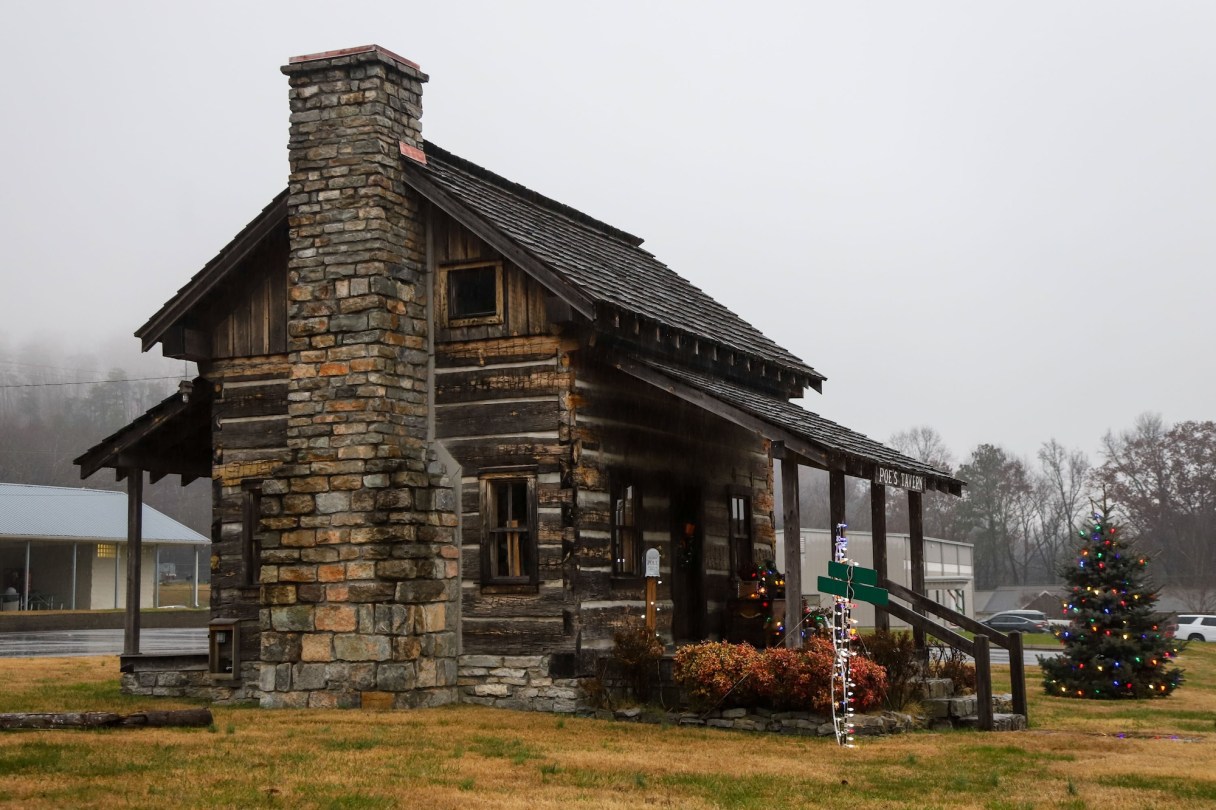
Many citizens are aware that Chattanooga was the fourth seat of Hamilton County government without knowing the details of the early moves from, first, Poe’s Tavern in Soddy, and then to Dallas and Harrison. History tells us that settlers, in violation of agreements between Washington, D.C., and the Cherokee Nation, began moving to the south shore of the Tennessee River in the late 1790s. In 1835, the controversial Treaty of New Echota recognized the statutory expansion of Hamilton Country’s boundaries southward across the river to Ross’s Landing. The Cherokee Removal in 1838 facilitated the gradual populating of the newly chartered Chattanooga.
By the 1840s, a small stream of individuals and families crossed the Tennessee to the rudimentary settlement, even though the majority of the population still lived up-river or in the northern part of Hamilton County. With the Civil War over and Chattanooga becoming the final seat of county government in 1870, the river town grew exponentially due to an influx of new residents with entrepreneurial ideas and any capital they possessed. Many were former Union soldiers who saw the economic opportunities of the Gateway to the South. Locals welcomed the retired northern soldiers and elected former Union Gen. John Wilder as Chattanooga mayor in 1871.
Chattanooga’s City Hall also operated at three different sites before moving to its current location. The first was Market and Fourth streets in what became the Militia Armory. The next was rented quarters at Georgia Avenue and Market Square, used for a number of years. The third home was originally erected to be a city market and then served as the municipal hall before being passing to the Chattanooga Police Department. The current structure at 11th and Lindsey streets was christened in 1909.
Three Chattanooga mayors played a role in establishing the fourth and final City Hall. Alexander W. Chambliss purchased the site on 11th Street. Contracts for the construction of the stately building were issued in December 1907 during William L. Frierson’s term. William R. Crabtree presided over the dedication of the building in August 1909.
The Dec. 11, 1907, Chattanooga News reported that the city was moving forward with the construction of a modern building to house its three branches of government. Alderman Thomas W. Fritts offered a resolution seconded by Councilman D.W. Thomas for the adoption of R.H. Hunt’s plans and his employment as architect. But Alderman Doughty moved and J.J. McMahon seconded a motion to select plans submitted by Golucke and Co. When the vote was called, Hunt, the well-established architect, received eight votes and Golucke received only two. Mayor Frierson was instructed to notify Hunt that his plans had been selected and to meet with the Chattanooga City Council in joint session to ratify the choice.