
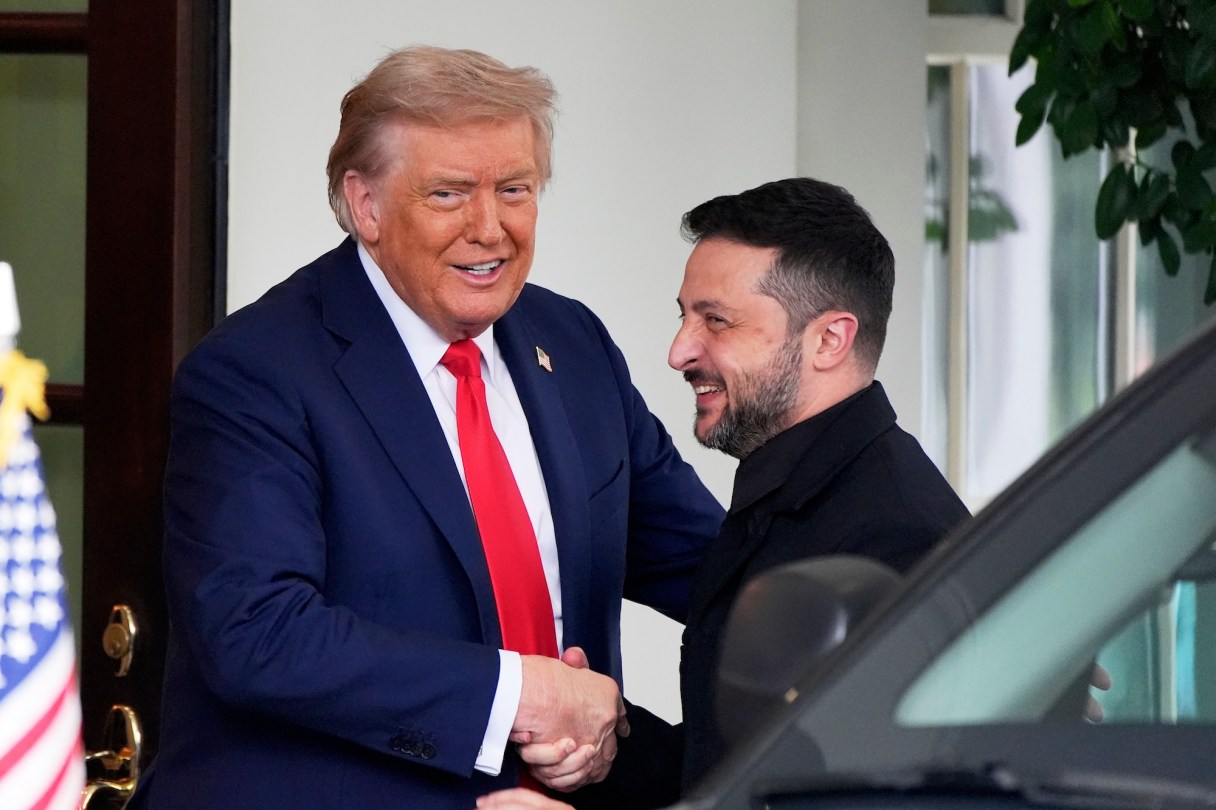
In the 1963 war movie “The Great Escape,” 76 prisoners make it out of their camp in what begins with hope and elation, but ends with all but a handful killed or recaptured. Monday’s meeting between the U.S. and its worried Ukrainian and European allies felt a little like those first exhilarating moments of escape, as the meeting passed off better than anyone could have expected in the wake of Russia’s clear diplomatic win in Alaska.
There was no toxic throwdown between Donald Trump and Ukraine’s Volodymyr Zelenskyy. European leaders weren’t forced into some existential choice between blowing up the transatlantic alliance and agreeing to a peace deal that would spell disaster for Kyiv’s security and their own. Instead, the meeting produced commitments to work out security guarantees for Ukraine and to organize direct negotiations between Zelelnskyy and Russia’s Vladimir Putin.
These were genuine successes, especially given the alternative. But amid the sighs of relief, it’s important to take stock of where we stand on the path to a lasting settlement — and that remains a sobering prospect.
The main positive to come out of Washington’s circus of mutual flattery was Trump’s agreement to offer security guarantees as part of any settlement that Ukraine does eventually sign with Russia. This is the gateway requirement to any discussion of territorial concessions, and therefore of a settlement. That could not work without U.S. participation and, until Monday, that had been far from given.
Trump says those guarantees will be strong, with “lots of protection” for Ukraine. What form they take has yet to be worked out, but ultimately this is about deterrence, so their effectiveness will depend on trust in a mercurial White House. Can Ukraine trust Trump to follow through on any commitment to come to its aid? More importantly, can Putin?