
Friday, November 13, 2026Nov 13

After Trump cancels Black Belt wastewater settlement, nonprofit looks to organize

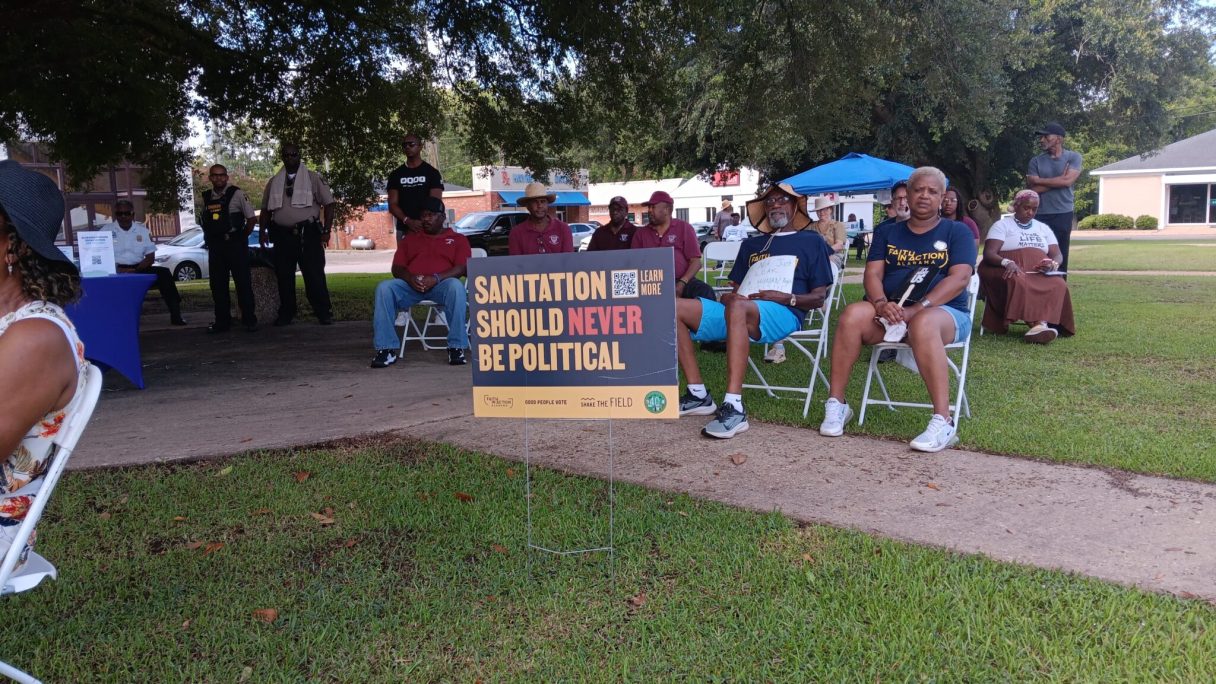
Attendees learn about the raw sewage problem plaguing the Black Belt at an event in July hosted by Faith in Action Alabama. The U.S. Department of Justice terminated an agreement with the Alabama Department of Public Health to help address the crisis, citing an executive order from President Donald Trump attacking diversity, equity and inclusion initiatives. (Ralph Chapoco/Alabama Reflector)
Attendees learn about the raw sewage problem plaguing the Black Belt at an event in July hosted by Faith in Action Alabama. The U.S. Department of Justice terminated an agreement with the Alabama Department of Public Health to help address the crisis, citing an executive order from President Donald Trump attacking diversity, equity and inclusion initiatives. (Ralph Chapoco/Alabama Reflector) Attendees learn about the raw sewage problem plaguing the Black Belt at an event in July hosted by Faith in Action Alabama. The U.S. Department of Justice terminated an agreement with the Alabama Department of Public Health to help address the crisis, citing an executive order from President Donald Trump attacking diversity, equity and inclusion initiatives. (Ralph Chapoco/Alabama Reflector)

A Birmingham-based community organizing group is organizing in the Black Belt amid fears the current presidential administration will not prioritize the ongoing sewage issues plaguing the region.

Faith in Action hosted two events in the past two months in Lowndes County, ground zero for the wastewater crisis. A July meeting informed attendees about the problem and how the Trump administration terminated an agreement with Alabama to address the problem. The second, held last week, was a workshop to engage elected officials to solve the problem.

“We raised awareness, but now we have to be engaging public stakeholders so we can get to a resolution,” said Daniel Schwartz, executive director of Faith in Action Alabama, in an interview last week. “We will be having more public events, which is also important, but we also have these planning meetings to engage public officials.”

The workshop outlined a set of action items to execute an action plan that mobilized community members from the march and rally in July.

Several Black Belt communities have been plagued by a persistent raw sewage problem for years due to poverty, low population and a clay soil that can make septic systems ineffective.