
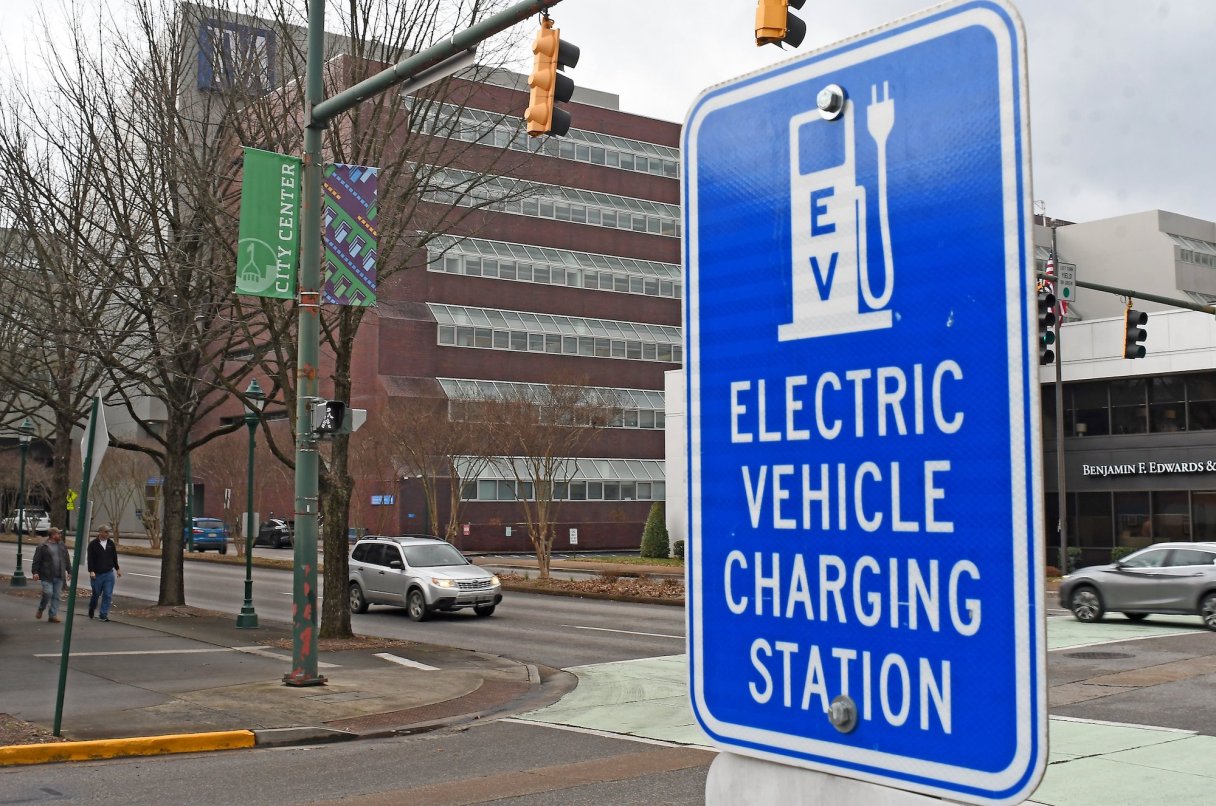
A Tennessee department head is hopeful that new guidance for a federal program supporting the growth of electric vehicle charging networks may ultimately allow the state to proceed with $21 million in contracts that have been frozen since February.
The National Electric Vehicle Infrastructure Program allocated $88 million to Tennessee over five years to fund EV charger installation along major interstates and Highway 64, which runs from Memphis to Pelham roughly along Tennessee’s southern border. The Tennessee Department of Transportation awarded $21 million of the funding to 10 applicants in January 2024 to install 30 new charging locations, each with ports to charge several vehicles, but the contracts were not executed before the federal program’s pause.
Those contracts would complement the state’s own EV charging infrastructure grant program, part of an overall push to support EV adoption. Tennessee’s EV manufacturing industry has grown over the past several years — often supported by state incentives to bring hundreds of jobs to rural communities — giving the state an economic interest in the vehicles’ success. Ford’s new BlueOval City facility in rural West Tennessee recently delayed mass production of its full-size electric truck until 2028 as the company refocuses on the production of cheaper, smaller models in Kentucky.
The $5 billion national program has officially been on ice since February 2025, when the U.S. Federal Highway Administration officially suspended funding to comply with President Donald Trump’s executive order to pause federal grants supporting electric vehicles and clean energy.
Multiple states have challenged the Trump administration’s ability to freeze the funds in federal court. Tennessee is not among them.