
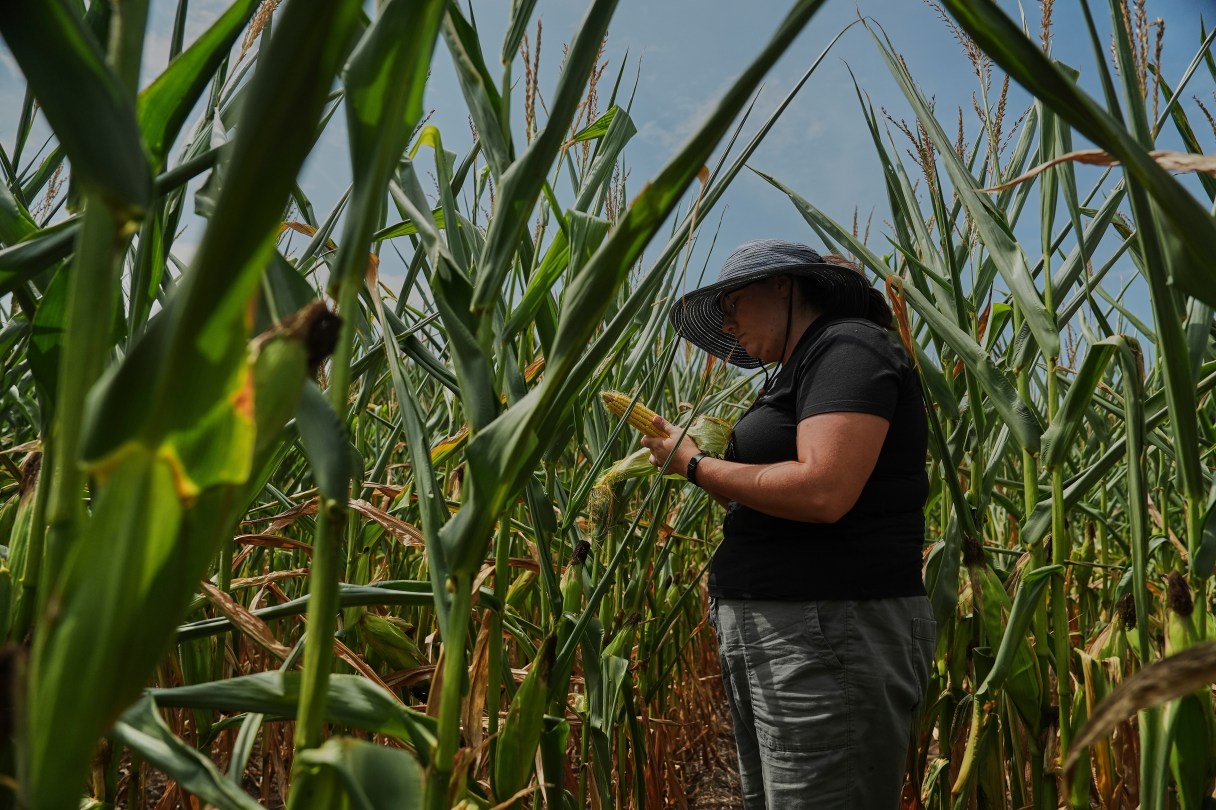
PAW PAW, Mich. (AP) — Robb Rynd and his brother grew up farming and wanted to do more of it outside their day jobs, so they went in together on what’s now a little over 200 acres of corn, soybeans, wheat and sorghum. Last year was a good year, and Rynd said he enjoyed walking the fields with his kids to see how the corn was doing.
This year is a different story.
All summer he’s been scouting for brown and wilting leaves or ears of corn with kernels missing, and now it’s becoming clear that every kernel will count this harvest. “It’s almost kind of depressing to go out there and look at it and say, ‘oh yep, it does look bad,’” he said.
Across major corn-growing states, climate change is fueling conditions that make watching the corn grow a nail-biter for farmers. Factors like consistently high summer overnight temperatures, droughts and heavier-than-usual rains at the wrong time can all disrupt the plants’ pollination — making each full ear of corn less of a guarantee and more of a gamble.
Overall, corn growers got lucky this year with late-season weather that contributed to what is now predicted to be a record bumper crop. But experts say bouts of extreme weather are intensifying the waiting game during a critical time of year between planting and harvest.