
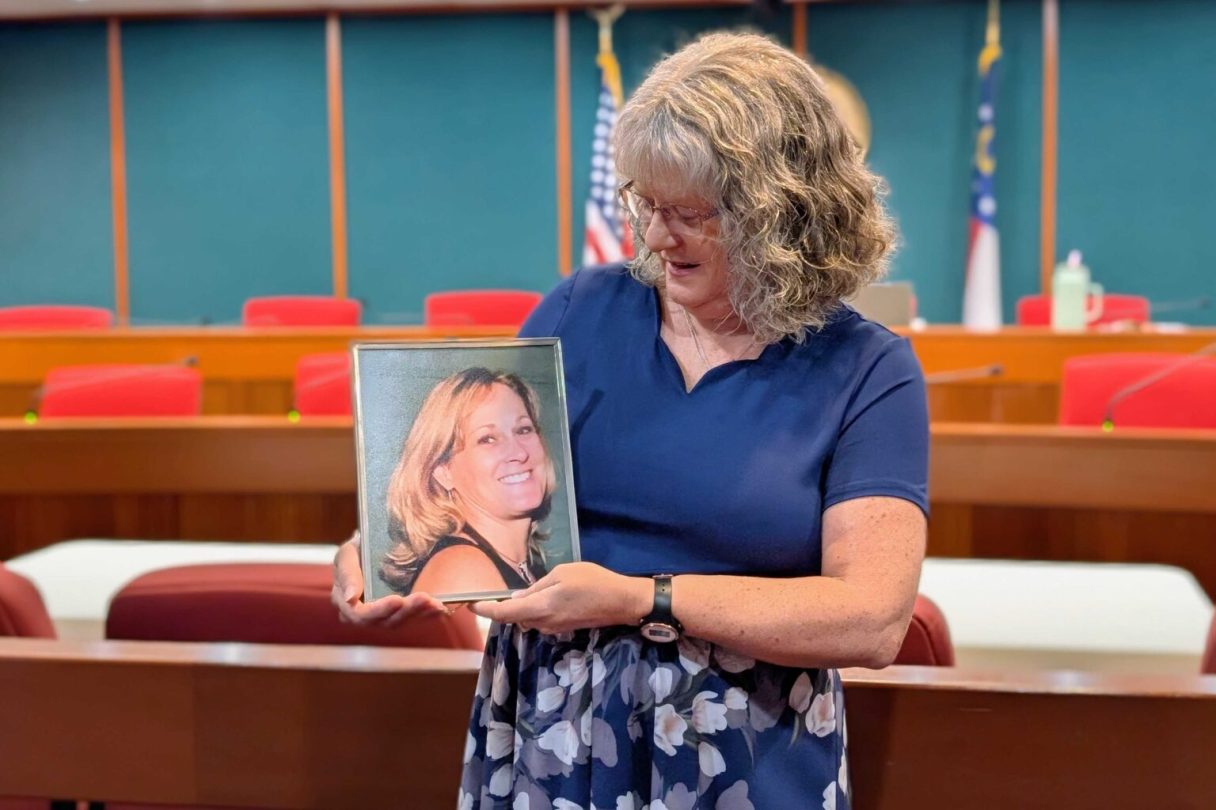
For Jennifer Bullard, the decision to seek a physician-assisted death was not an act of wanting to die but of taking control over how and when she died, said Bullard’s sister, Jamie McNeil.
Speaking to the Georgia House Public and Community Health Committee on Monday, McNeil shared how her sister’s ALS diagnosis progressively paralyzed her muscles, leading to “excruciating” and “brutal” suffering and that despite Bullard’s courage and her family’s round-the-clock care, could not be fully alleviated by conventional medical care. Bullard, McNeil said, was terrified of locked-in syndrome, a state of total paralysis while the mind remains conscious and alert.
“Unable to communicate, unable to speak, unable to move at all — to me, that is the very definition of torture, and my sister didn’t deserve to be tortured,” McNeil said. “Jennifer adamantly did not want to die, but she even more adamantly did not want to go through the locked-in syndrome.”
McNeil said that the medical aid in dying option gave her sister a sense of dignity and peace, allowing her to coordinate a “beautiful passing” that included a final, intimate farewell with family and friends. After receiving the medication, McNeil said she held her sister, who peacefully died within minutes.
“The most harm that you could have done Jennifer would be to have made her live out this disease in that torture,” McNeil said.