
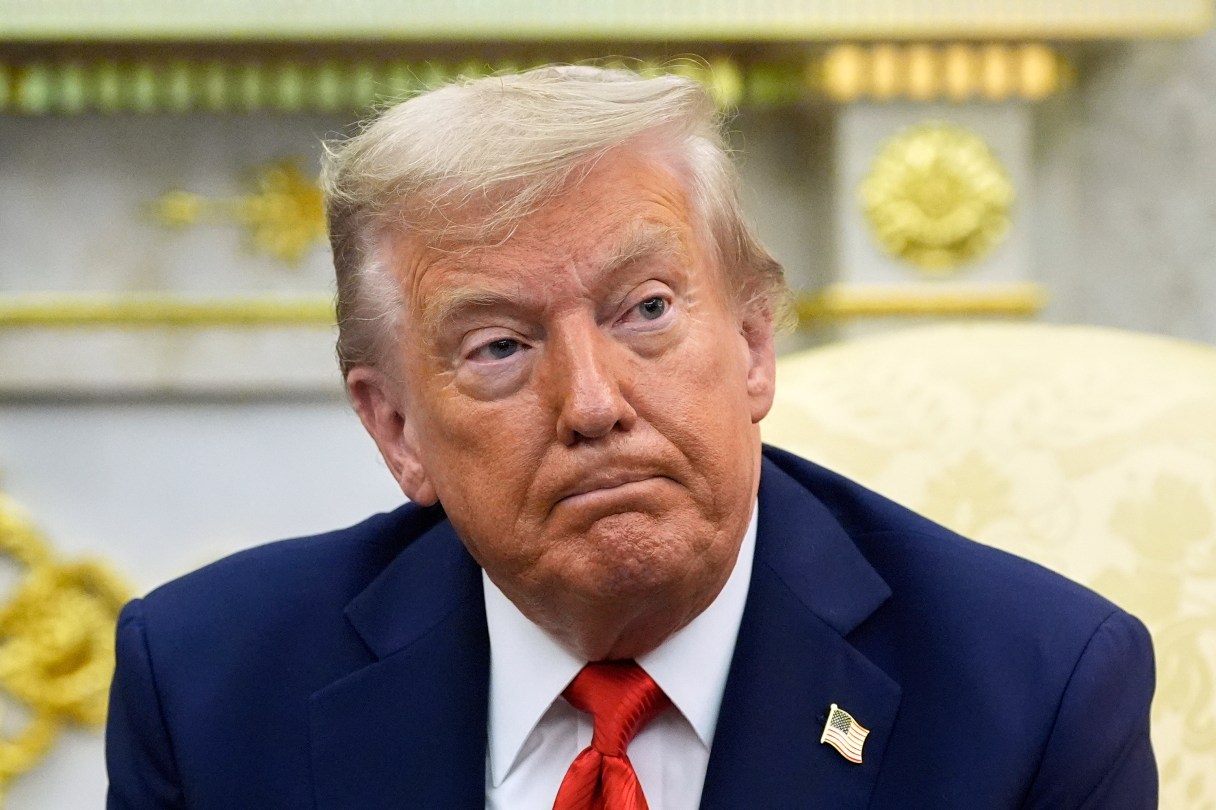
The White House does not belong to President Donald Trump. It is the property of the United States — of the American people. The president is a temporary resident whose claim on the building lasts only as long as his time in office, which is set by the Constitution.
The Smithsonian Institution does not belong to Trump, either. It is not even part of the executive branch. It was established by Congress in 1846 as a “trust instrumentality,” an independent organization backed by the government and administered by a Board of Regents that consists of the chief justice and the vice president of the United States, federal lawmakers and private citizens. In the broad sense, then, the Smithsonian also belongs to the American people, as an expression of their interest in “the increase and diffusion of knowledge.”
And it should go without saying that Washington — a city of 700,000 people with its own government and elected leaders — is neither the president’s plaything nor his possession.
None of this has kept the president from acting as if he does own the White House, the Smithsonian, the District of Columbia and practically everything else under the flag as well. It has not stopped him from paving over the historic Rose Garden or developing plans to construct a gaudy new ballroom for an Executive Mansion now adorned in the same manufactured, faux-baroque glamour as his other, chintz-draped properties.
That Trump lacks any claim on the Smithsonian has not stopped him from trying to impose his vision of American history on its museums. His administration is in the process of trying to censor exhibits that, in his view, spend too much time on the ugly side of the American experience.