

Whether it’s giving a gift under the cover of anonymity or stealing one from a friend, loved one or coworker, gift exchange games are a quintessential part of Christmas nowadays. Secret Santa upholds the earnestness and sincerity of the season, while Dirty Santa adds a level of drama to the yuletide. There are many ways to play, and that results in laughs, tears, maybe a curse word or two, perhaps even a mix of these. But what matters most — more than the gifts — are the memories made with those you care about. Let’s see how Santa has left his mark.
Christmas Is Family
When Karen Nazor Hill was in college, before Venmo and CashApp, her father would routinely send her a check in the mail to support her. Around Christmastime, those checks would be addressed to Karen “Christmas” Lancaster (her maiden name), because the holiday was her favorite time of the year — and still is, she says.
“My dad, he grew up loved and in a very loving family, but he was very poor,” Hill says. “They had a Christmas tree, but they never really had presents. He got things like oranges or apples on Christmas morning, and he was fine with that. But when he had his own kids, he just wanted to make it exciting, and he did an excellent job of it. And so Christmas, to me, is family.”
Having a father who was family-oriented and sentimental inspired Hill to bring her family, both her father’s side and mother’s side, together for Christmas. Over the years, the gathering has sometimes seen as many as 40 relatives unite, according to Hill. She thought doing a gift exchange “would be a fun way to engage everybody, and it turns out it was,” she says.
Hill, a former columnist for the Chattanooga Times Free Press, chronicled her family’s experience with playing Dirty Santa in a 2019 post-Christmas article. When the family first started playing the game, it was just the adults, Hill wrote. But after seeing the fun, the kids wanted in on it, too. By the time that article was published, the family had been playing Dirty Santa for several years. Reflecting on the game now, Hill says “it never got violent, but it was leaning toward that way — a fun violent.”
Hill recalls a time when things did get a little intense one year — when one of her granddaughters had a rather good gift “stolen” by Hill’s aunt. There was anger and near-tears (though, of course, the aunt ultimately gave the gift back).
“It was fun to see my granddaughter be kind of pouty about it, and it was fun to see my aunt tease her so much,” she says. “So that’s why we started loving that game. It was because we played it with enthusiasm.”
After all, it was all in good fun.
“My intent was to bring us back together again,” Hill adds. “And we realized how much fun we still had together.”

What’s in a Game?
When it comes to Christmas traditions, whether it’s food or games, decorations or practices, the history of how a tradition came to be often stretches way back into the past, and it can be enlightening to bring that knowledge to the present. So let’s take a look at the history of two popular gift exchange games: Secret Santa and Dirty Santa.
A quick trip down the Google rabbit hole will reveal that the origins of Secret Santa go back to Scandinavia, to a tradition known as Julklapp (from Swedish: Jul meaning Christmas, and klapp meaning knock), according to the “Study in Sweden” blog. Tradition has it that neighbors would exchange gifts by knocking on the door, leaving a present and running away before anyone saw them. Think ding, dong, ditch, except you actually get something more than just a prank.
The Swedes might have helped start the tradition of Secret Santa, but the idea picked up steam in America in the 20th century. A popular American origin for Secret Santa began in Kansas City in the ’70s, with a man named Larry Dean Stewart. Homeless at the start of the decade, Stewart walked into a diner, where the owner gave him some money, according to a CBS News report. Stewart promised to repay the act of kindness if he ever had the means.
As luck would have it, he earned considerable wealth through cable television and long-distance calling, the report said. And so he kept his promise, proceeding to give away money to strangers as “Secret Santa” for decades, until his death in 2007.
Another possible origin is the social clubs of the 20th century, according to the Wall Street Journal. For example, sorority sisters would exchange gifts for the holidays, but the identity of the gift-giver would only be revealed during the exchange. The concept would proliferate, and now Secret Santa is just one of our many holiday traditions.
Nowadays, Secret Santa involves the exchange of gifts, with players selecting their gift recipients ahead of time and only revealing their identity to the recipients once their gifts have been distributed and opened.
If we want to understand the history of Dirty Santa, then we should perhaps use its other name: White Elephant. (It’s also sometimes called “Yankee Swap.”)
Going back many years, “legend has it that, when the King of Siam wanted to punish one of his courtiers, he did not kill the offender,” according to a New York Times article. “All he had to do was gift him a white elephant.” While beautiful and sacred, a white elephant was “nightmarishly costly to care for,” and so the recipient of the gift had to, “like so many of us during the holiday season,” “smile through gritted teeth and say that he loved the gift.” The game, by whatever name you know it, started and caught on in the 19th and 20th centuries, the article says. Depending on how you play, the gifts exchanged can be meaningful or ridiculous, new or re-gifted. But thankfully, nobody is giving away literal white elephants anymore.
The rules of a Dirty Santa (or White Elephant) might differ from group to group, but generally, the game calls for every person to bring a gift and place it in a central location, such as under the tree. Then, each person chooses a gift during their turn. Where the game gets “dirty” is that taking a gift could mean taking one from somebody else instead of from under the tree. The game continues until everyone has a gift — whether it’s stolen from another player or acquired more graciously.
Your guide to Christmas gift exchanges, from White Elephants to Secret Santas



A Christmas Story … Or a Few
Whether it’s at home, at work, at church or elsewhere, odds are that you or someone you know has played a gift exchange game at some point. Here at Chatter magazine headquarters (better known as the Chattanooga Times Free Press newsroom), we asked around to see what tales the intrepid journalists of the office had to share. These are their stories (dun dun).
Local government reporter Siena Duncan recalls her experience playing White Elephant around 11 years old at a girls’ youth group. For a gift, Duncan’s mother sent her with a plunger in an old car seat box (wrapped), Duncan says. Mother and daughter “watched with increasing horror” as each of the other gifts unwrapped were revealed to be cute journals, stuffed animals and sweet-scented candles. You see, Duncan’s mother, “bless her heart,” Duncan says, had always played White Elephant games where prank gifts were expected. “Needless to say, everyone in the youth group let out a confused, ‘Oh,’ when the plunger was unwrapped,” she says. So let this be a lesson: Always know what kind of gift you’re supposed to bring.
Assistant news editor Shelby Farmer played a game of White Elephant in college. Someone hand-knitted a Christmas scarf for her, she says. But she didn’t know that the person had made it just for her, so when the gift landed in her lap, she traded it. Farmer “didn’t really want it,” she admits, adding that if the gift was meant for her specifically, then she needed a heads up, so as not to have so flippantly traded it away. So let this be a lesson: If you have a gift for someone in particular, maybe just give it to them directly, outside of the game.
Education reporter Shannon Coan did a Secret Santa exchange in math class during her freshman year of high school. Coan’s teacher participated in the game, pulled Coan’s name out of a hat and gifted her two copies of Andy Weir’s novel “The Martian.” You might be asking, “Why would he give two copies of the same book?”
Well, Coan’s twin sister was also in the class, and their teacher figured he’d throw in an extra copy for her twin in case she might be inclined to steal Coan’s copy if she didn’t have her own. Except that Coan never gave that extra book to her sister, instead giving it away at a White Elephant gift exchange that same year. She owns up to the fact that she just didn’t want her sister to have an extra gift — but she was nice enough to let her read her copy of the book. So let this be a lesson: Sharing is caring — unless you have a twin.
Digital producer Cameron McKeon isn’t much of a gift-giver, but he loves an activity, he says. He recalls playing Secret Santa in middle school with his “first little group of friends,” remembering that he gifted his friend a CD — though said friend claims that all he gave her was a bag of peanut M&M’s.
He apparently improved in his gift-giving skills, however, because years later, playing Secret Santa in college, McKeon gave another friend a Wes Anderson book that she loved so much, she cried. So let this be a lesson: Some gifts come and go, while others can have a meaningful effect.

What Gives?
Finding the right gift to give can be like finding a needle in a haystack. Do you give something humorous or something sincere? Do you give something big or small? Should you just take the safe route and give cash? If you’re in need of a gift to give, whether it be a last-minute buy or a premeditated purchase, Chattanooga’s North Shore is the place to shop. Here are five gift options from Frazier Avenue stores that you can gift this season.
(Note: As most gift exchanges typically have a budget to keep things on a level playing field, we’ve given ourselves a gift-giving guideline — each item’s base price has to be $25 or less)
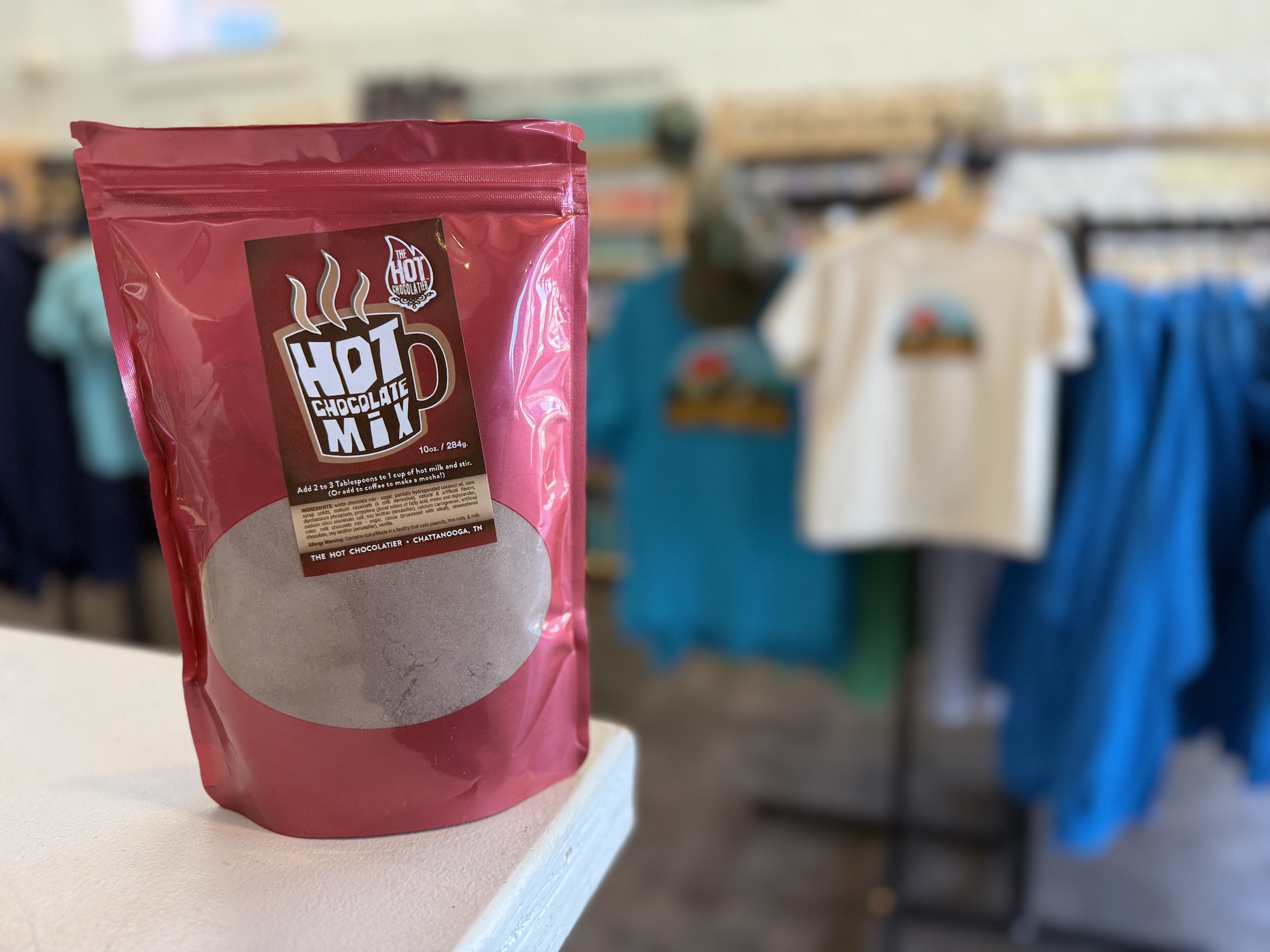
— For the chocolate-lover: The Hot Chocolatier’s hot chocolate mix (varieties available). $17.99 each. Available at Locals Only, 10 Frazier Ave. Learn more at localsonlygiftsandgoods.com.
— For the plant-lover: A philodendron birkin or a Haworthia savanna succulent (both in a 4-inch pot). $19 or $13, respectively. Available at Verre Noir, 36 Frazier Ave. Learn more at verrenoir.co.
— For the candle-lover: “Lookout” scented candle, with a portion of sales going to the Tennessee River Gorge Trust. $20 for small metal-tin option. Available at Almanac Supply Co., 22 Frazier Ave. Learn more at almanacsupplyco.com.
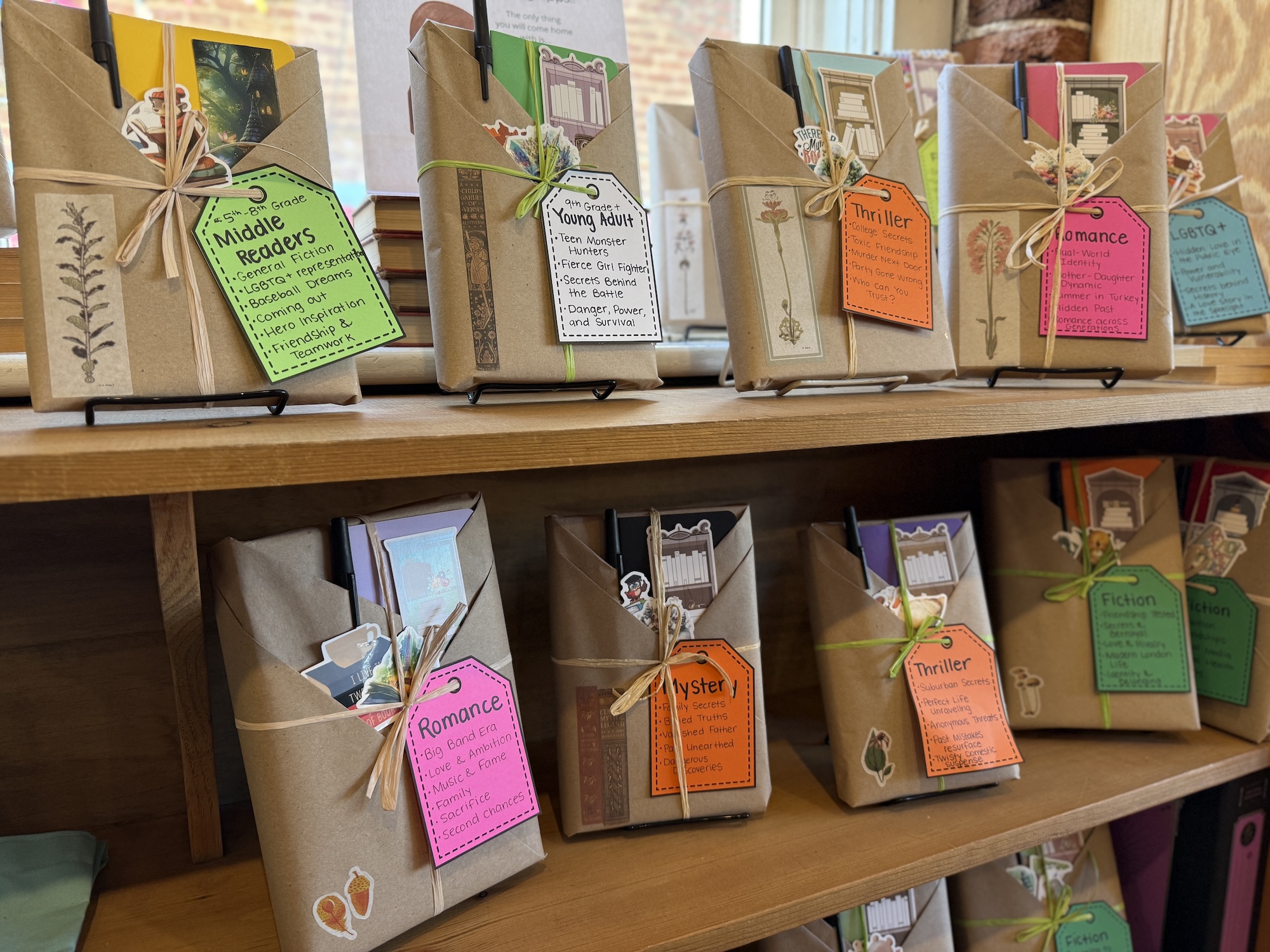
— For the book-lover: “Blind Date With a Book” mystery book (tag describes genre/audience and some details of the book), comes with a pen, small notebook, bookmark and stickers. $24 or less, depending on the book. Available at Winder Binder, 40 Frazier Ave. Learn more at shopwinderbinder.com.
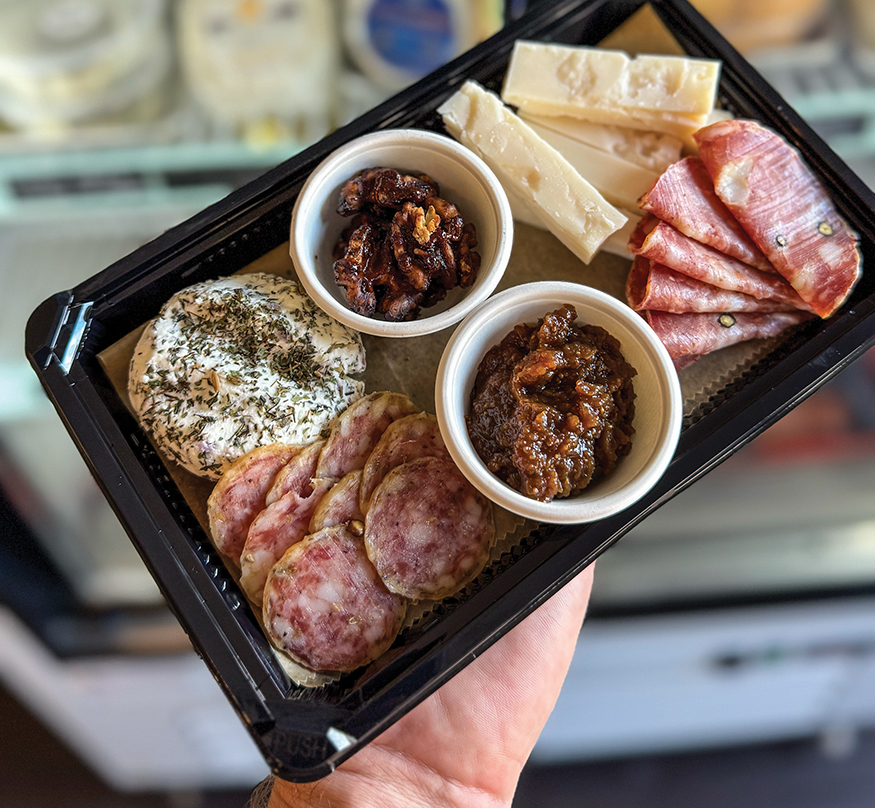
— For the food-lover: Park Pack charcuterie box, with two rotating, locally sourced meats and cheeses, jam and nuts. Made and sold Thursdays, while supplies last (can also be made to order). $17.99 each. Available at Pedestrian Wine & Cheese, 50 Frazier Ave. Learn more at pedestrianwineandcheese.com.